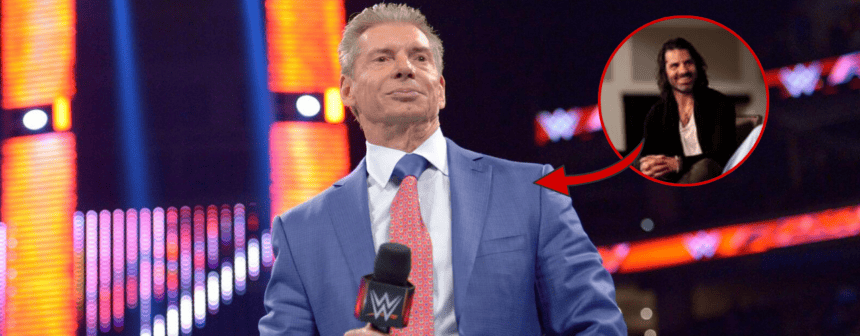
Former WWE writer Jimmy Jacobs has shared his experiences working under Vince McMahon, describing a workplace culture marked by fear, unpredictable criticism, and the constant pursuit of approval. Jimmy Jacobs characterized Vince McMahon as a “bully,” “maniac,” and “psychopath” during an appearance on the After the Bell podcast
During his time in WWE’s creative department, Jacobs worked directly within the system responsible for developing the company’s television storylines. His recollections offer a former employee’s perspective on McMahon’s management style and how it allegedly affected writers and performers behind the scenes.
Jacobs’ comments focus on the pressure employees faced, the close scrutiny of creative decisions, and the difficulty of knowing how McMahon would react to their work.
Jimmy Jacobs on Vince McMahon’s WWE Workplace Culture
Jacobs joined WWE’s creative team in 2015 after establishing himself as a professional wrestler on the independent circuit. He remained with the company until 2017, gaining firsthand experience of its creative process under McMahon’s leadership.
According to Jacobs, McMahon maintained close control over WWE’s television content, from major storyline decisions to individual words in scripts. That level of oversight could leave employees anxious about how their work would be received.
Jacobs recalled a culture in which people increasingly focused on avoiding negative reactions rather than simply producing their best work. In his account, the possibility of criticism or losing a job influenced how employees approached their responsibilities.
His description highlights the challenges of working within a highly centralized creative structure, where approval from one senior executive could have a substantial effect on an employee’s professional experience.
Why Jimmy Jacobs Described Vince McMahon as a “Bully”
One of Jacobs’ strongest criticisms concerned the effect McMahon’s reactions allegedly had on those working around him.
Jacobs described situations in which wrestlers could deliver performances they considered successful but subsequently receive harsh criticism. Experiences like these, he suggested, could leave performers questioning their judgment and wondering where they stood.
He also portrayed approval as difficult to predict. Employees might receive positive feedback at one point and face criticism later, creating uncertainty about what McMahon expected.
Jacobs characterized the culture as one in which people spent considerable energy trying to avoid McMahon’s anger while continuing to seek his approval. That is the context behind his description of McMahon as a “bully, maniac, and psychopath”
These comments reflect Jacobs’ personal recollections, not an independently established assessment of McMahon’s personality or the experiences of every WWE employee. Nevertheless, his account illustrates the workplace pressures he says he encountered during his tenure.
Vince McMahon’s Micromanagement and WWE Creative
Jacobs also discussed McMahon’s close involvement in WWE’s scripts, recalling that the former chairman scrutinized the wording of television material.
In one example, Jacobs remembered being called into McMahon’s office over the use of the word “violence” or “violent” in a script involving Samoa Joe, even though the word was not ultimately spoken on television.
The incident illustrated the level of detail McMahon reportedly monitored. While close oversight can help maintain consistency in a major television production, Jacobs suggested that it could also restrict creative freedom when employees feared the consequences of making the wrong choice.
For Jacobs, the concern was not simply that McMahon had strong creative opinions. It was that the possibility of a negative reaction could influence which ideas employees felt comfortable proposing.
How Jimmy Jacobs’ WWE Departure Shaped His Perspective
Jacobs left WWE in 2017 after an incident involving a photograph with members of the Bullet Club during their activities around a WWE television event.
Reflecting on his time with the company, Jacobs also described feeling judged on personal characteristics and mannerisms rather than exclusively on his creative work. He recalled criticism involving details such as his clothing and gestures, contributing to his frustration with the environment.
Despite those difficulties, Jacobs acknowledged that his WWE experience taught him valuable lessons. He also described his departure as a turning point that helped him recognize when a professional situation was no longer right for him.
What Jimmy Jacobs’ Vince McMahon Comments Reveal
Jacobs’ account provides insight into how leadership style can affect morale, communication, and creativity in professional wrestling. His recollections of close supervision, unpredictable criticism, and the pursuit of approval illustrate the pressures he says shaped his experience in WWE.
His interview should not be treated as proof that every employee experienced the company in the same way. Instead, it offers one former writer’s perspective on working under McMahon during a specific period of WWE history.
Ultimately, Jacobs’ central criticism concerns the effect of fear on creative work. When employees focus more on avoiding mistakes than developing ideas, collaboration can become more difficult. His account raises broader questions about the balance between executive control and creative freedom behind the scenes of professional wrestling.