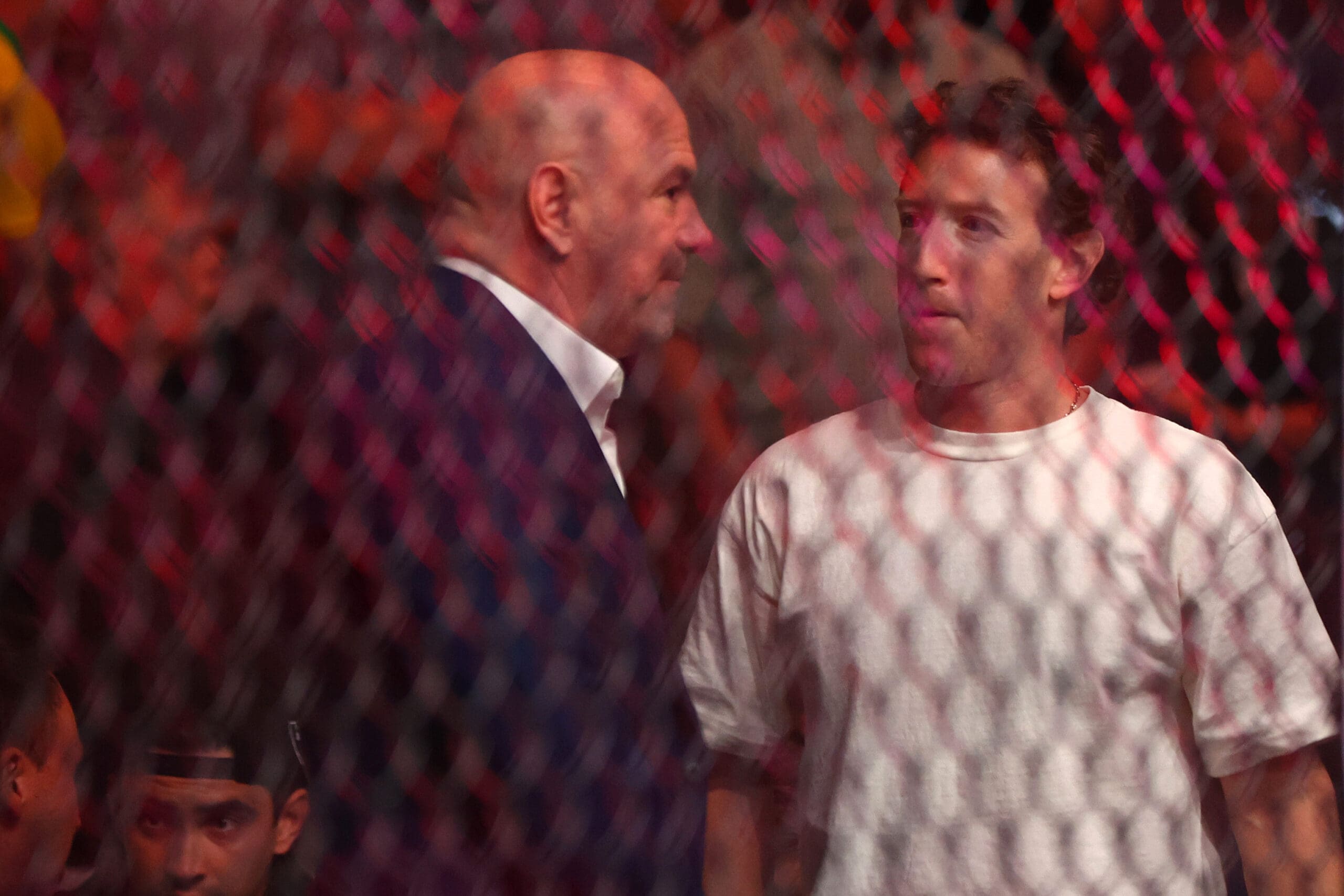
It appears the UFC has finally found a solution to one of the most criticized aspects of the sport: its rankings system. More than 13 years after introducing its media-voted rankings, the promotion has officially launched a new model designed to eliminate human bias and subjectivity. During the UFC Vegas 118 broadcast, the company revealed it was developing a revamped rankings system based on measurable performance and consistency. That system has now arrived.
On Monday, the UFC officially unveiled the Meta UFC Rankings, developed in partnership with Meta, led by Mark Zuckerberg. The new system replaces analyst voting and human intervention with a mathematical model that evaluates fighters using objective performance-based metrics. Development of the rankings began in earnest in February 2025, following months of criticism from Dana White, who repeatedly voiced his dissatisfaction with the media-driven voting system that debuted in 2013.
According to a UFC press release, the Meta UFC Rankings generate ratings for every fighter in every division using “a comprehensive set of objective metrics, including outcome probability, win type, fighter trajectory, and weight-class sensitivities.” Those ratings are then used to create the official rankings order. The transition to the new system begins this week, with rankings updated every Monday. For now, both the Meta UFC Rankings and the traditional Media Rankings will remain visible on UFC.com.
How the new UFC Meta rankings work. pic.twitter.com/gOqido7BIQ
— Jed I. Goodman © (@jedigoodman) June 23, 2026
ALSO READ: UFC 329: The Biggest Storylines Heading Into Conor McGregor vs. Max Holloway 2
However, unless major issues emerge, the long-term plan is to fully phase out the media voting system. One important clarification made during a presentation with partnered media is that the rankings are not powered by artificial intelligence, despite comments Dana White made in recent months suggesting otherwise. Instead, the system is based on the Elo rating system, a mathematical method used to calculate fighter ratings.
In a statement to CBS Sports, a UFC representative explained, “We didn’t build an A.I. to rank fighters. A.I. was used in creating the system, but on a week-to-week basis, when you see the rankings come out, it’s not because A.I. said so. A mathematical model is doing the work on the back end, computing things and spitting out numbers. Those numbers are ranked. There is no intelligence. It’s not smart. It cannot see. It doesn’t judge. This is math. Did you win, and who you beat effectively accounts for 95% of why someone is ranked.”
The new rankings system still places significant emphasis on what happens inside the Octagon each week. According to UFC representatives, activity and performance are among the most important factors in determining a fighter’s rating. Apart from this, under the Meta UFC Rankings, a fighter’s score will gradually reduce if they do not compete within an 18-month period. The value of past victories also diminishes over time, with fights older than five years carrying progressively less weight. As a result, rankings are expected to fluctuate more frequently, with recent achievements being rewarded more heavily than accomplishments from years ago.
The impact of the new system was immediately noticeable. Three former UFC champions were among 27 fighters who lost their rankings when the media-voted list was compared to the new Meta rankings. One of the biggest examples is Rafael Fiziev, who enters UFC Baku unranked at lightweight despite previously holding the No. 11 position in the media rankings. Former UFC women’s bantamweight champion Raquel Pennington also suffered a dramatic drop. While she was ranked No. 2 under the media system, she now sits at No. 15 in the Meta rankings after not competing since her loss to Julianna Pena at UFC 307 in October 2024.
MMA statistics account Ovin Vithanage highlighted the extent of the changes on X, noting that 27 fighters fell out of the rankings entirely following the transition. Alongside Fiziev, notable names such as Robert Whittaker, Marlon Vera, Payton Talbott, Yair Rodriguez, Derrick Lewis, Miesha Tate, and Jessica Andrade all lost their places in the top 15 under the updated model.
A total of 27 fighters have lost their ranking positions in the new Meta UFC rankings. Some notable names:
Robert Whittaker
Marlon Vera
Payton Talbott
Raul Rosas Jr.
Yair Rodriguez
Brian Ortega
Josh Emmett
Rafael Fiziev
Beneil Dariush
Derrick Lewis
Jéssica Andrade
Miesha Tate pic.twitter.com/AEPwGLhM5q— Ovin Vithanage (@OvinVithanage) June 22, 2026
As already stated, frequent activity and finishes are rewarded more heavily, creating a stronger incentive for fighters to remain active. Among the biggest beneficiaries is Pat Sabatini. Previously unranked at featherweight, Sabatini now holds the No. 7 spot in the Meta rankings after putting together a four-fight winning streak against quality opposition. Another notable example is Joaquin Buckley, who is ranked No. 9 at welterweight, one position ahead of former champion Kamaru Usman at No. 10. Despite losing to Usman at UFC Atlanta, Buckley’s recent activity has allowed him to edge ahead in the new rankings formula.
Over the past two years, White has repeatedly voiced his frustration with the UFC’s rankings system. The UFC CEO has frequently criticized the media-voted model, arguing that it often fails to accurately reflect fighters’ performances and their true standing within their respective divisions. One of the most notable examples came after UFC 307 in October 2024. Despite delivering a valiant performance against Alex Pereira in a light heavyweight title fight, Khalil Rountree Jr. remained ranked No. 8 in the division. White openly questioned how a fighter could push the champion to his limits and still see no meaningful movement in the rankings.
White also took issue with the pound-for-pound list, particularly when Islam Makhachev occupied the No. 1 spot while Jon Jones was still actively competing. The UFC boss maintained that Jones was the greatest fighter of all time and therefore deserved to be ranked above everyone else. The rankings faced further scrutiny following UFC Paris in 2024. Renato Moicano earned a dominant stoppage victory over Benoit Saint-Denis, yet remained stuck at No. 11 in the lightweight rankings. Moicano publicly criticized the system, and White strongly supported his stance, even going as far as calling the reporters responsible for the rankings bums.
Another point of contention came after UFC 300, when Max Holloway produced one of the most memorable knockouts in UFC history by finishing Justin Gaethje in the final seconds of their BMF title fight. Despite the emphatic victory, Holloway still found himself ranked below Gaethje, a result White viewed as further evidence that the system was broken. Now that the Meta UFC Rankings have been introduced, attention will inevitably shift toward how much influence they will have on the UFC’s matchmaking process. If the promotion chooses to lean heavily on the new performance-based model, advocates of meritocracy may welcome the change. If not, questions will remain about the practical significance of replacing the media rankings in the first place.
View this post on Instagram
Although the UFC has historically allowed media members to determine the rankings, the promotion has always maintained full control over matchmaking, event placement, fight order, and title opportunities. That authority is unlikely to change. However, the introduction of a performance-based rankings system could lessen the impact of popularity, name value, and public perception, placing greater emphasis on activity, results, and recent accomplishments when evaluating fighters.

Kshitiz Kumar Singh is a UFC Writer at NY Fights with over three years of experience in sports journalism and content creation. Known for his sharp storytelling and passion for combat sports, he has written in-depth features on stars like Brock Lesnar, Randy Couture, and Ilia Topuria. Before joining NY Fights, Kshitiz worked as a UFC Editor at EssentiallySports while currently serving as a WWE Editor at FirstSportz. His admiration for legends like Georges St-Pierre continues to inspire his detailed and engaging MMA coverage. Whether he’s covering the Octagon or the squared circle, Kshitiz is committed to delivering accurate, high-quality content. Outside the world of sports, he’s a dedicated cinephile, often found practicing monologues from his favorite Al Pacino films, combining his love for cinema with storytelling.