What to Know
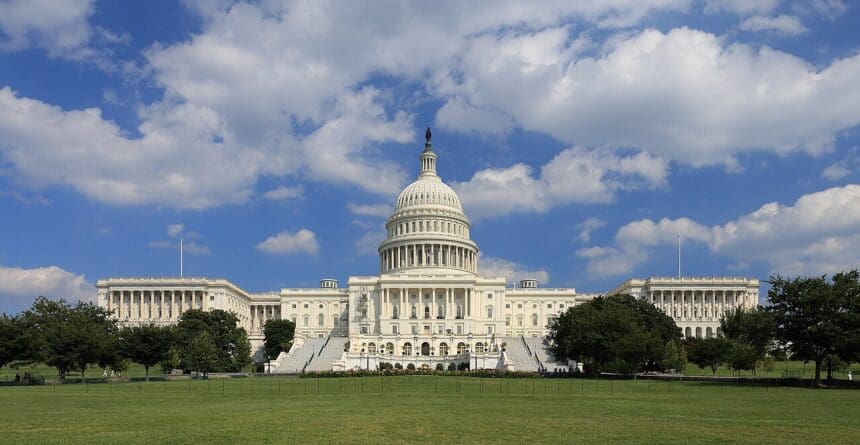
- On Thursday, November 19, 2026, the U.S. Senate Committee on Commerce, Science and Transportation announced passage of the Ali Revival Act by the U.S. Senate.
- The bill must now return to the U.S. House of Representatives for a vote on the amended language. If it passes, it goes to President Donald Trump for signature.
- If the bill passes, Unified Boxing Organizations (UBOs) may operate in boxing like the UFC operates in mixed martial arts, as monopoly businesses.
On Thursday, November 19, 2026, the U.S. Senate Committee on Commerce, Science and Transportation announced in a news release that the U.S. Senate passed the Muhammad Ali American Boxing Revival Act of 2026 (H.R. 4624) by unanimous consent. The legislation, which is jointly sponsored by Republican Senator Ted Cruz of Texas, who is the committee chairman; and Democratic Senator Jacky Rosen of Nevada, will now return for a vote in the House of Representatives.
The legislation passed with no roll call vote and no objection from any senator on the floor. The Senate Press Gallery announced the passage at 3:49 p.m. ET, followed swiftly by the news release.
What Happens to the Ali Revival Act to Become Law
In March, the House passed its version, but with the addition of an amendment section to the Senate version, which is in fact the House version of the bill with its changes, not the original Senate version (got that?), the House must vote on those changes made by the Senate. Upon passing which is expected, it then goes to President Donald Trump for signature.
Should President Trump sign the bill, it applies to all fights taking place 240 days after the signature date. This will be approximately mid-August 2027. The language hedges a bit, saying anyone who “demonstrates substantial compliance” and is “proceeding in good faith to achieve full compliance” gets up to one additional year. This is new language added by the Senate to the House’s version.
You can read the version passed today here.
While it is not yet official, it’s all but a done deal. There is some urgency, as there are only 13 more days the current lame-duck Congress will be in session in 2026. Any bill not passed by December 20 will be considered dead. So H.R. 4624’s fate will be known by then.
“We’re going to make boxing great again with the bipartisan Muhammad Ali American Boxing Revival Act,” Senator Cruz said in the release. “The bill expands opportunities for fighters, strengthens safety protections, and brings back the marquee matchups fans love.
“I hope the House quickly sends this bill to the President’s desk and delivers a knockout win for fighters and fans.”
Senator Rosen, who is a co-sponsor, was also quoted: “Las Vegas is the center of the boxing universe, and when boxing thrives, more visitors come to Nevada and help boost our economy.
“I’ve proudly worked on this bill with Chairman Cruz and numerous stakeholders, including Muhammad Ali’s grandson Nico Ali Walsh, in order to revitalize this great sport and make important reforms to protect boxers. I’m thrilled to see our bipartisan legislation pass the Senate today, and I’m hopeful that the House will quickly pass it as well.”
Key Provisions of the Ali Revival Act
The TL; DR version: The act will bring UFC-style promotion and promoter control to the sport of boxing. The act includes safety and pay measures to soften the hard edges of the monopoly.
If you love how the UFC operates and treats its athletes, you’ll welcome UBOs into boxing. If you don’t, you will have many concerns and objections.
Unified Boxing Organizations (UBOs): The bill allows the formation of closed league-style promotions along the lines of the UFC in mixed martial arts. UBOs can sign fighters to exclusive contracts, match them against one another, and run their own rankings and titles alongside and outside the traditional boxing sanctioning bodies.
Contracts are limited to four years, except for a first contract, which is three years. The fighters can begin negotiating with other promoters during the 90 days before their contract expires but they can’t sign until their contract officially ends.
The bill includes language that imposes these U.S. federal limits on all boxers and all promoters, not only UBO-style promoters.
UBOs can set up their own weight divisions, titles, and rankings. But they may also recognize independent organizations’ titles and rankings, including the existing sanctioning bodies (WBC, WBA, WBO, and IBF) and titles such as the Ring Magazine title, if they choose to do so.
Fighter Pay and Benefits: The bill expands required health insurance coverage requirements and establishes national minimum pay standards for professional boxers at $200 per round.
UBOs must offer their contracted boxers at least two fights every 12 months, or pay ten times his or her minimum round rate.
Safety Measures: The bill requires new anti-doping programs (including pre-fight testing), state commission drug-testing procedures, at least two ambulances on site per match, supplemental physical exams for boxers age 40 and older, and access to training and rehabilitation facilities.
It requires a series of exams for every boxer. These include a complete physical with blood work, a dilated eye exam, an electrocardiogram, antibody tests every six months, and for brain health, an MRI of the brain or a neurologic examination by a neurologist for a boxer under 40, and both an MRI and an MRA for a boxer 40 or older, who also needs a cardiac stress test.
Within two years, all ringside physicians must be certified through a state commission, a medical board, or an Association of Boxing Commissions program run with the Association of Ringside Physicians.
UBOs that run their own ratings must provide the Federal Trade Commission and the Association of Boxing Commissions with their written criteria, bylaws, appeals procedure, and the names and addresses of their voting officials annually by January 31. A UBO can also meet this requirement by posting the information on a public website instead.
A UBO World In Boxing
Remember, the Muhammad Ali American Boxing Revival Act is U.S. federal legislation. It doesn’t automatically govern boxing matches promoted outside the United States. But it can affect foreign promoters when they operate within the U.S.’s jurisdiction, sign fighters to U.S.-governed contracts, or partner with American entities.
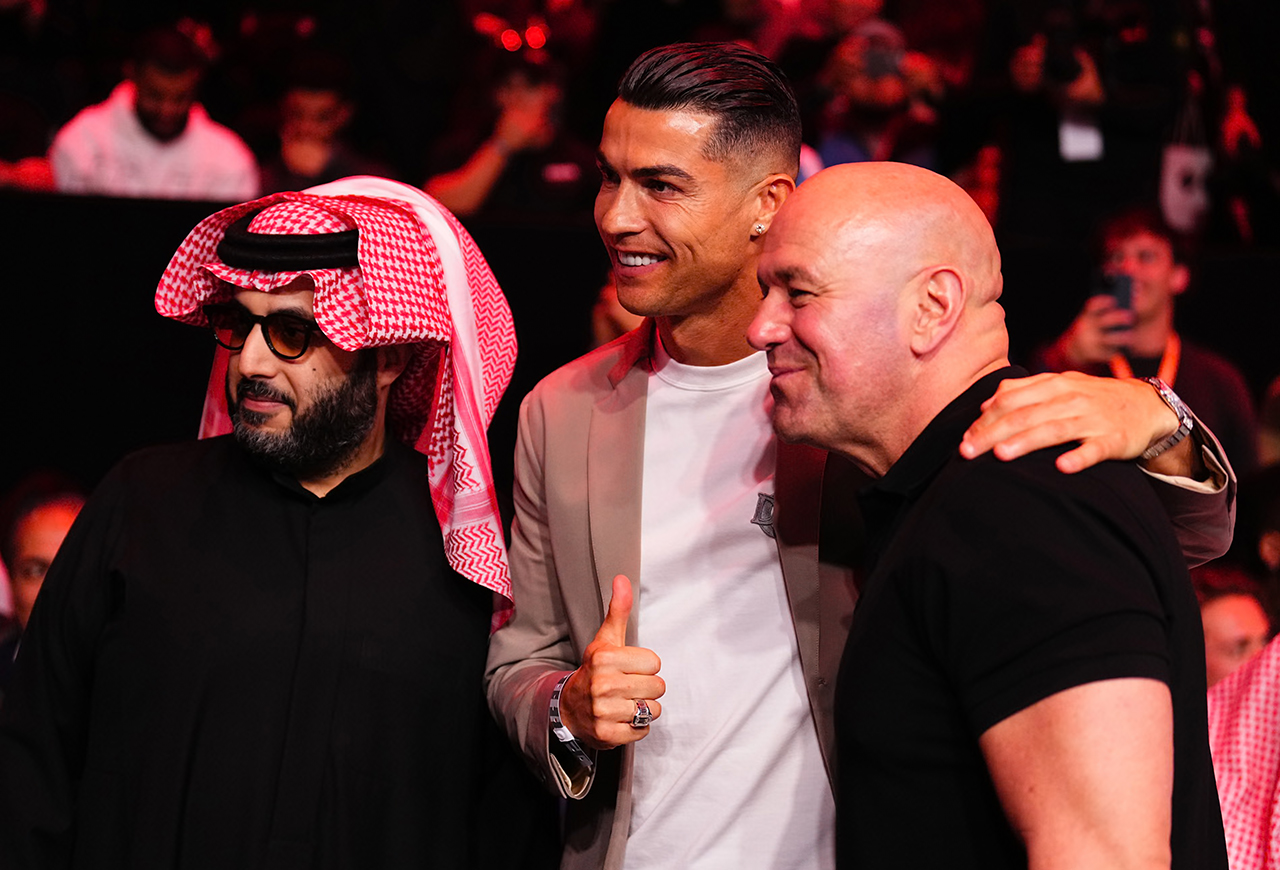
This means companies like Zuffa Boxing, owned by TKO Group Holdings, which has foreign investment from Saudi Arabia-based Sela, can participate in a UBO operation.
No one could reasonably object to improvements in health protections and medical coverage, minimum pay scales, and drug testing in boxing. What critics find troubling is allowing a promoter to try to corner the market, as UFC has in mixed martial arts and WWE has in professional wrestling. Both have essentially put their competitors out of business.
Once those competitors are out of the way, the UFC has been able to treat its athletes as indentured servants, with a “our way or the highway” attitude – and there are no other places to set up business and no rest stops on that highway, unless someone tries to start up a new business.
Dangers of the Ali Revival Act
The bill allows Zuffa Boxing to bypass boxing’s current guardrails and become boxing’s version of the UFC. One need only look at the numerous UFC champions who have become highly critical of the organization.
In 2024, the UFC agreed to settle a lawsuit filed by a group of mixed martial arts athletes for $335 million. Their antitrust lawsuit accused the UFC of abusing its market position to suppress fighter pay. TKO Holdings admitted no wrongdoing by offering the settlement.
It was a bargain for TKO. If the UFC had lost in a costly public trial with its dirty laundry aired, it could have been forced to pay the fighters up to $5 billion. At an evidentiary hearing in 2018, one expert for the plaintiffs said fighters had been deprived of $1.6 billion in pay. In antitrust cases, damages are tripled.
Today, nearing the end of Zuffa Boxing’s first year in business, its efforts have been less than successful. Already, one of of its major signing in Shakur Stevenson has departed Zuffa. It is widely thought that cruiserweight champion Jai Opetaia may follow Stevenson out the door.
Other signings to expensive contracts such as Conor Benn and Edgar Berlanga haven’t provided the return on investment any business would require to stay solvent in the long run.
But Zuffa is potentially being thrown a lifeline by the passage of its signature legislation. It will be able to legally create a UBO, and this will give it some much-needed help to achieve its goal, which CEO Dana White has been candid in saying is to take over boxing.
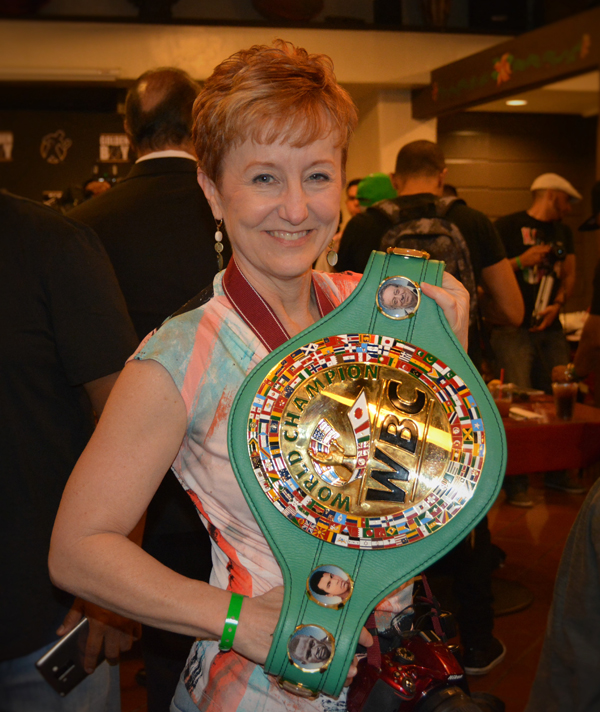
Gayle Falkenthal is an award-winning boxing journalist with more than four dozen awards for both written and video coverage from the Boxing Writers Association of America, Society of Professional Journalists, and San Diego Press Club, where she is the past president. She is the only woman journalist who is a full voting member of the BWAA. She is the Boxing Editor for NY Fights based in San Diego, California.