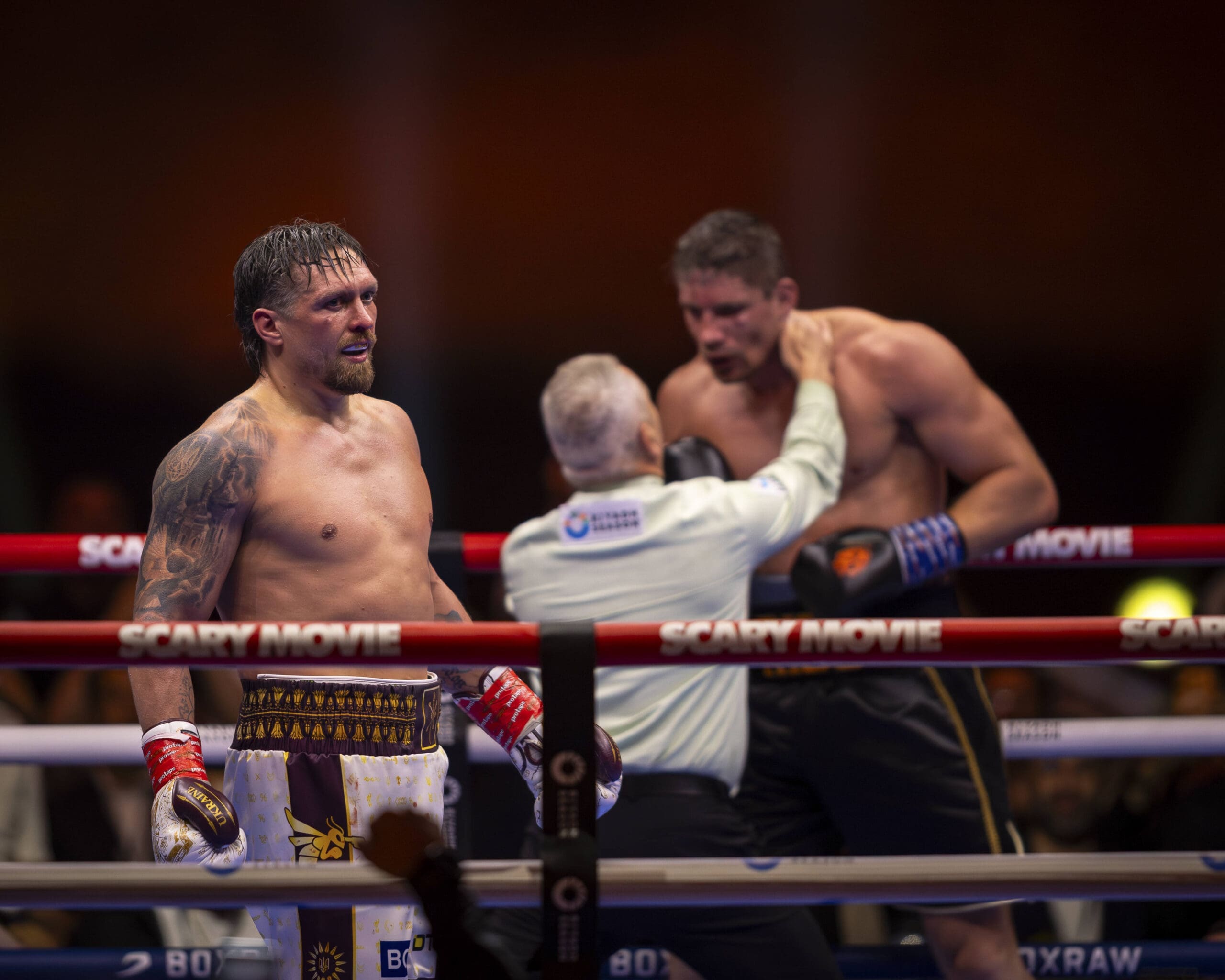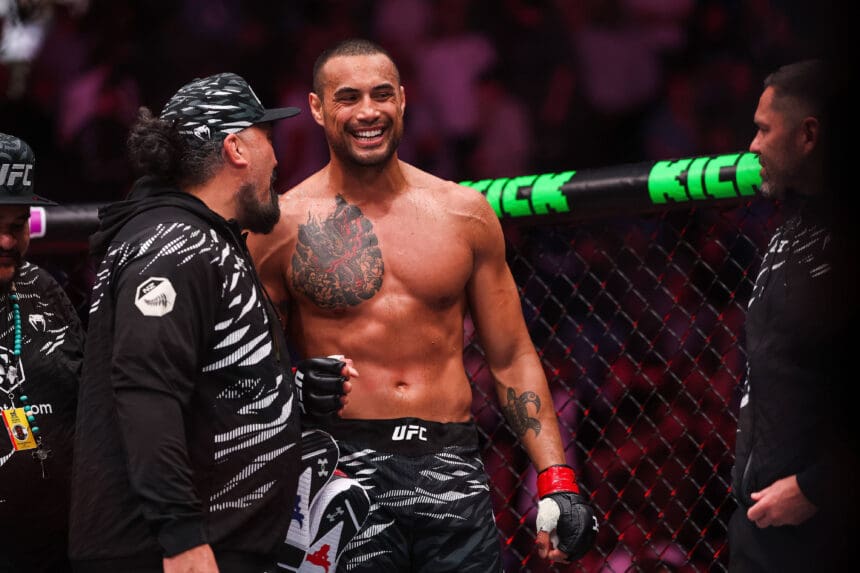
Navajo Stirling has arguably emerged as the leading contender for the UFC light heavyweight championship. Following his stunning knockout victory over Jiri Prochazka at UFC Qatar, the undefeated New Zealander improved his record to 12-0 and strengthened his case for a title opportunity.
However, with fellow City Kickboxing teammate Carlos Ulberg currently ruling the division, Stirling refrained from calling for a shot at the championship during his post-fight interview. Instead, the 29-year-old later named former champions Magomed Ankalaev and Alex Pereira as potential opponents for his next outing.
View this post on Instagram
His decision has drawn criticism from several members of the MMA community, including Brendan Schaub and Daniel Cormier, who believe Stirling should prioritize his own championship ambitions rather than what is best for City Kickboxing as a team. However, the undefeated contender has now hit back at those questioning his stance.
In a recent interview with Full Send MMA, Stirling explained why the dynamics at City Kickboxing are different from those at larger American gyms such as American Top Team (ATT) and American Kickboxing Academy (AKA), where teammates regularly find themselves competing against each other.
He said, “Yeah, (I wouldn’t go against Ulberg), it’s like way different here in New Zealand compared to (America). It’s different; I’ve seen some people weigh in on it, and it’s not like America. I’ve seen, like at ATT, your guys’ gym is massive, you’ve got rooms on rooms, and training partners and coaches; it’s not like there.”
Stirling emphasized the close-knit environment at City Kickboxing and explained why fighting a teammate is viewed differently in New Zealand.
“I can imagine there it would be normal to fight each other because you probably have different guys coming in and training with different guys. It’s way different in New Zealand; we have a real small brotherhood, and it’s a lot different.”
Eugene Bareman Reveals City Kickboxing’s No-Fighting-Teammates Rule
Any doubts about whether Stirling and Ulberg could eventually compete for the light heavyweight championship were seemingly put to rest by their head coach, Eugene Bareman. The veteran coach has made it clear that the two teammates will not fight each other, regardless of the championship implications.
As reported by The New Zealand Herald, Bareman confirmed that a potential matchup between Stirling and Ulberg would remain off the table even after the reigning champion recovers from his ACL injury.
He said, “It’s been like this forever. The boys from the same gym don’t fight. We have had that agreement from the very onset of this gym when it first started that if you join this team, you have got to commit to not fighting each other.”
Bareman further explained that both fighters have always understood and respected the arrangement, emphasizing that their relationship outside the Octagon takes precedence over a potential fight.
“Both the boys have known that; both the boys are in agreement with that. They have been in agreement with the start. Some things are bigger than fighting, friendship and a bond you have had with someone. Sometimes that is a lot bigger than fighting each other. And yeah, that’s the basic decision that we haven’t come up with today. That’s been the decision from the very onset.”
The City Kickboxing head coach also revealed that the rule applies to every fighter who joins the gym, regardless of their standing or experience.
“Every fighter that comes here, whether it be the new ones like Tom Nolan, I tell them, look, you are allowed to come here, but you are never allowed to contemplate fighting Dan Hooker, for instance. It’s just a rule in the gym that’s existed, and we reserve that right to make that decision.”
Bareman echoed Stirling’s comments about the unique brotherhood at City Kickboxing, pointing to New Zealand’s relatively small MMA community as a major reason behind the arrangement.
He also highlighted the difference between CKB and larger American gyms such as ATT and Jackson Wink MMA. Fighters from outside the United States often travel to these facilities for training camps lasting around seven to eight weeks before returning to their respective countries.
City Kickboxing, however, operates differently, with its fighters training together throughout the year rather than periodically joining the gym for specific camps. According to Bareman, maintaining that close-knit environment is essential to the team’s success and ability to compete with some of the biggest gyms in the sport.
Consequently, Stirling’s refusal to pursue a fight against Ulberg is not simply a personal preference but part of a longstanding agreement at City Kickboxing. Even if both men eventually find themselves competing for the same championship, their gym’s no-fighting-teammates rule appears unlikely to change.

Kshitiz Kumar Singh is a UFC Writer at NY Fights with over three years of experience in sports journalism and content creation. Known for his sharp storytelling and passion for combat sports, he has written in-depth features on stars like Brock Lesnar, Randy Couture, and Ilia Topuria. Before joining NY Fights, Kshitiz worked as a UFC Editor at EssentiallySports while currently serving as a WWE Editor at FirstSportz. His admiration for legends like Georges St-Pierre continues to inspire his detailed and engaging MMA coverage. Whether he’s covering the Octagon or the squared circle, Kshitiz is committed to delivering accurate, high-quality content. Outside the world of sports, he’s a dedicated cinephile, often found practicing monologues from his favorite Al Pacino films, combining his love for cinema with storytelling.