What To Know
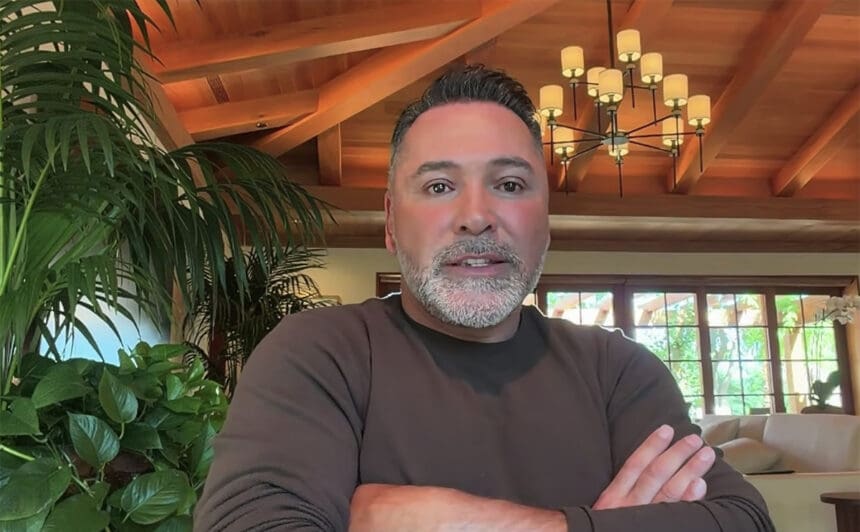
- In a wide-ranging interview on Monday, October 5, on The Ariel Helwani show, Hall of Fame boxer and promoter Oscar De La Hoya discussed the current state of boxing and the damage from Saudi-backed investments.
- De La Hoya said except for a handful of fights, boxers are not active and fans are being denied the matchups they deserve.
- De La Hoya says he hopes a rumored sale of Ring Magazine will restore its reputation under a new owner.
Aside from a few exceptions, Hall of Fame boxer Oscar De La Hoya stands virtually alone among major boxing promoters as a former athlete himself. Although a polarizing figure to many, there is no denying De La Hoya’s knowledge of boxing’s internal machinery.
So De La Hoya’s take on current issues in boxing during a long-sought-after interview with Ariel Helwani on Monday was chock full of news takes on the current landscape. The Golden Boy was especially blunt, declaring boxing “a mess.”
And he blames the influx of big paydays from petrodollars for it.
“The way I see boxing now, it’s a big mess. It’s worse than it’s ever been,” said De La Hoya.
De La Hoya: Top Athletes Sitting on Sidelines
“I’ve been in boxing for 20-something years now as a promoter. Boxing is in the worst place it’s ever been. All these top guys are waiting for that ultimate purse,” said De La Hoya, going on to explain that it makes the top talents and others following their example to sit on the sidelines waiting for their own big paydays.
“Guys, you have to fight! You have to prove yourself. You have to become world champion and and continue your career. You can’t just be idle and wait for the big money to come. What if it never comes? What if this is LIV 2.0 all over again?”
For those who need a refresher, LIV Golf was a hostile business operation funded by Saudi Arabian capital investments to break the hold on golf by the PGA Tour. LIV Golf is named for the Roman numeral 54 (LIV), which describes the 54-hole format of competition. It offered guaranteed nine-figure contracts to lure top talent away from the PGA, including names like Bryson DeChambeau, Jon Rahm, and Phil Mickelson.
But the format didn’t catch on. The athletes found themselves competing in a bubble that lacked the high level of competition of the traditional format, which turned fans off. LIV Golf ultimately failed, and after five years, the Saudi Public Investment Fund pulled its multi-billion-dollar investment.
De La Hoya: Canelo Is A Sellout
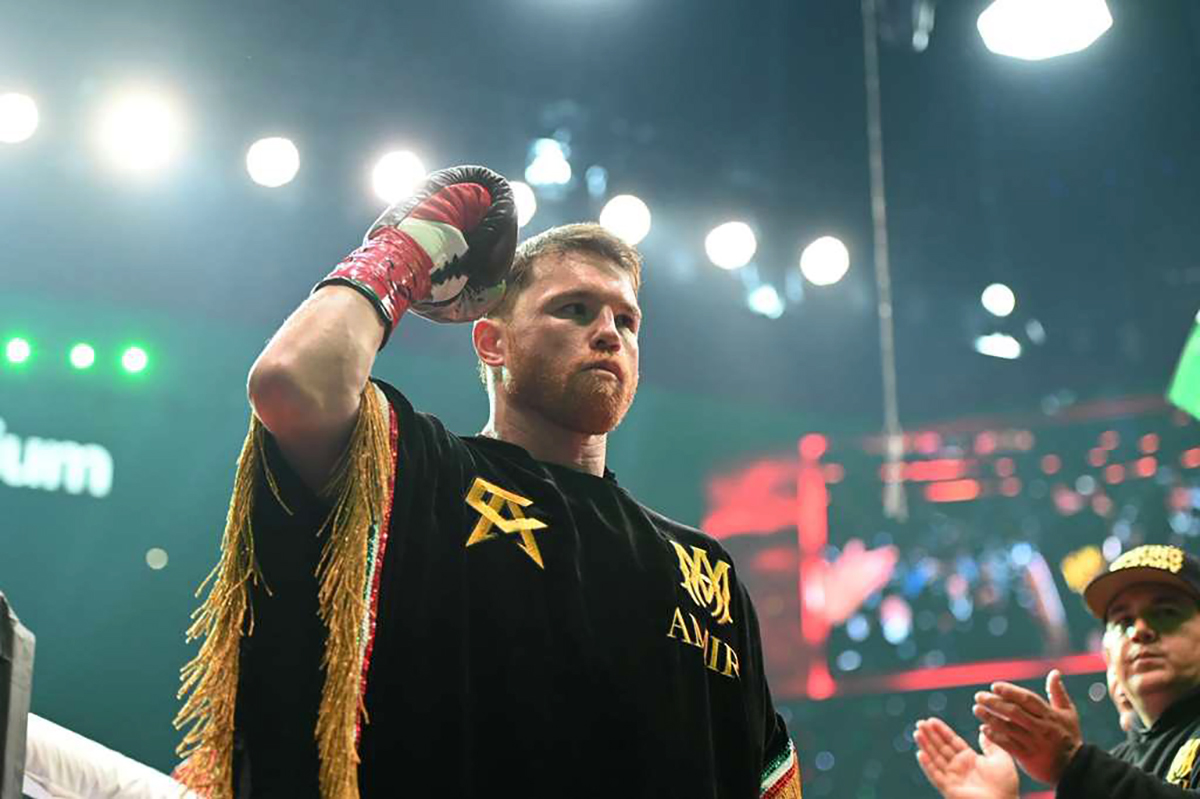
De La Hoya pointed to Canelo Alvarez as an example of what happened. He said the Mexican star, who was formerly signed with De La Hoya’s Golden Boy Promotions, is a sellout.
“I mean, how you have the biggest Mexican fighter on the planet fighting on Halloween? You should be fighting in September. You should be fighting on your Mexican holidays the final leg of your career, the final hurrah. You know, go out there and fight for your Mexican fans, fight on the dates that we feel proud of supporting you in September and May.
“Don’t fight at 3 a.m. in the morning against a guy that I don’t even know. I respect all fighters. I respect (Christian) Mbilli, but I really don’t know how he got to deserve this title shot,” said De La Hoya. He added that it’s simply not good for the sport of boxing to fight in Riyadh in a nearly empty venue, without access to most boxing fans.
Saudi PIF Fund Money A Blessing Or a Curse?
Helwani pointed out that boxing has had a long history of problems, including networks like HBO and Showtime and rival promoters not allowing their fighters to face each other. With Saudi funding, weren’t the fans finally getting the big fights they always wanted?
“Yeah, we’ve seen some,” said De La Hoya. “We’ve seen a sprinkle of a handful of fights, you know, that have been taking place, all because, you know, it’s expensive to make these huge fights happen.”
De La Hoya said the Public Investment Fund, controlled by Turki Alalshikh as a representative of the Saudi government, has the money to cover the expenses of the “handful” of the biggest fights. But De La Hoya says this is not a feasible business model long term. He said boxing needs more consistently meaningful fights rather than isolated major events.
“Boxing is a business that you have to maintain year-long. We just don’t want fights the first quarter or the last quarter of the year. No, we want great fights throughout the whole year that leads up to something for the next year. We want to continue building world champions.
“You know, I truly feel that of all the fighters that are out there, world champions and contenders, the top elite fighters … They’re not fighting each other,” declared De La Hoya.
Future of Ring Magazine
De La Hoya was also asked about the rumored sale of Ring Magazine, perhaps the canary in the boxing coal mine. Alalshikh purchased the magazine from De La Hoya two years ago after De La Hoya owned it for a decade. He said he doesn’t have any specific knowledge as he relinquished ownership. But the Ring operation drew scathing criticism.
“I’ll tell you one thing: the Ring, the Ring brand and the magazine, it’s gone to shit.
“I mean, it’s no secret. It’s worthless. It doesn’t mean anything anymore,” said De La Hoya, saying its reputation and credibility has been damaged. He said he hopes whatever entity purchases Ring Magazine can restore its original intent and place.
“The Ring was a trusted brand globally when I had it, and now it’s just it’s literally just gone to shit. The rankings are terrible, the propaganda, the bias, oh my God,” pointing to the Ring Magazine show carried by DAZN Boxing and criticizing host Max Kellerman as a once-knowledgeable figure in boxing who has ruined his own reputation. “I just don’t know what the hell he’s doing.”
If a rumored purchase of Ring Magazine, its rating system, and the Ring Magazine belt is made by DAZN, De La Hoya said that if it takes care of the ranking system and reestablishes itself, it can come back.
De La Hoya said the rating committee under his ownership brought together boxing writers worldwide to meet and rank fighters, without any interference from De La Hoya. “The writing was not biased. It was honest. That’s why the Ring Magazine was so prestigious, but now it’s like, my gosh!” But De La Hoya said he is optimistic the magazine can resurrect its prestige “in no time.”
De La Hoya seemed frustrated by his inability to influence the current state of boxing more than he can achieve.
“Look, I have so much knowledge. I have so much knowledge inside the ring, outside the ring. I just want to share it. I want to share it and give it to the fighters, so they won’t make those mistakes,” said De La Hoya.
Helwani then revealed he’s receiving messages from athletes and key figures telling him Oscar is right, “and I should have listened to you five years ago.”
“I really do care about boxing, the fighters, the sport,” replied De La Hoya. “You know, I just want to give my two cents, and hopefully fighters don’t make the same mistakes that I made in my career.”
Is Oscar De La Hoya Right About Boxing’s Future?
Oscar De La Hoya is not a completely neutral and unbiased observer. Even De La Hoya would have to admit he’s a business owner who needs to make a profit. He has struggled with elite athletes whose careers were developed under the Golden Boy Boxing banner who De La Hoya believes turned on him when they became stars. We all know the names: Canelo, Ryan Garcia, Vergil Ortiz Jr.
De La Hoya said he never envisioned joining forces with his British rival, Eddie Hearn of Matchroom Sport, to wage war against the Saudi-backed effort to establish Zuffa Boxing as a rival to LIV Golf, with its own rankings and championship titles. It’s the strange bedfellows principle in boxing – or maybe it’s the enemy of my enemy is my friend.
Will the sale of Ring Magazine, which, like so many legacy media operations, fails to make a profit, end up being, in hindsight, the first sign of doubt by Saudi investors in boxing as a marketing and sportswashing effort?
Gayle Falkenthal is an award-winning boxing journalist with more than four dozen awards for both written and video coverage from the Boxing Writers Association of America, Society of Professional Journalists, and San Diego Press Club, where she is the past president. She is the only woman journalist who is a full voting member of the BWAA. She is the Boxing Editor for NY Fights based in San Diego, California.