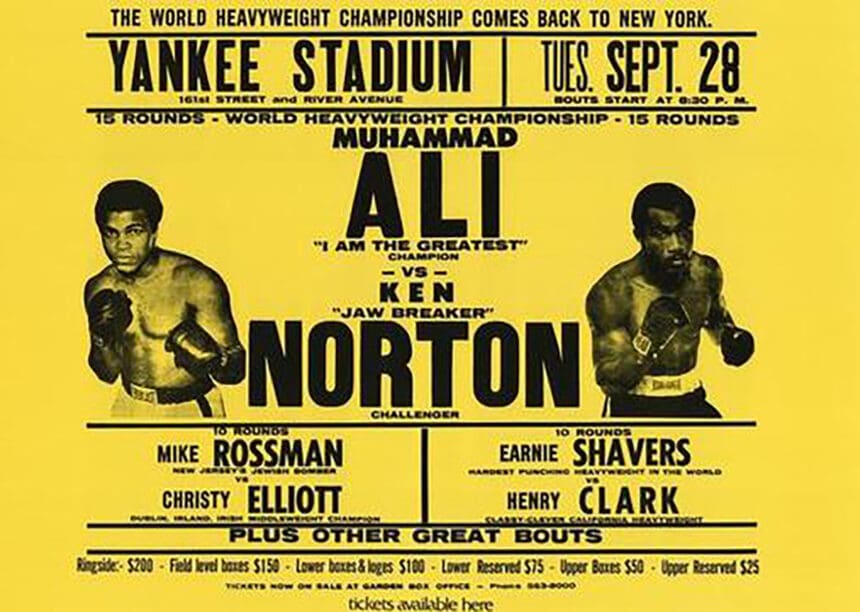
When tracing the historic, albeit chaotic, lineage of the legitimate heavyweight championship, from the bare-knuckle days of John L. Sullivan right up to the modern undisputed reign of Oleksandr Usyk, few nights encapsulate the theater of boxing chaos quite like September 28, 1976.
As we approach the 50th anniversary of Muhammad Ali and Ken Norton’s trilogy-closing clash, the event remains a fascinating time capsule of New York City grit, traffic nightmares, and enduring fistic controversy.
Steinbrenner’s Grass, Glitzy Spectators, and a City on Edge
Bringing the heavyweight crown back to the Bronx for the first time since 1959 was far from a certainty. The original Yankee Stadium had a deeply storied boxing pedigree, famously hosting iconic clashes like Joe Louis’s historic demolition of Max Schmeling, as well as legendary bouts featuring Rocky Marciano’s last fight and Ingemar Johansson lifting the heavyweight title from Floyd Patterson in a major upset.
However, earlier in the year, Yankees owner George Steinbrenner outright refused to host the George Foreman versus Joe Frazier rematch, citing potential damage to the stadium’s field. That bout was ultimately moved to the Nassau Coliseum for a mid-June date.
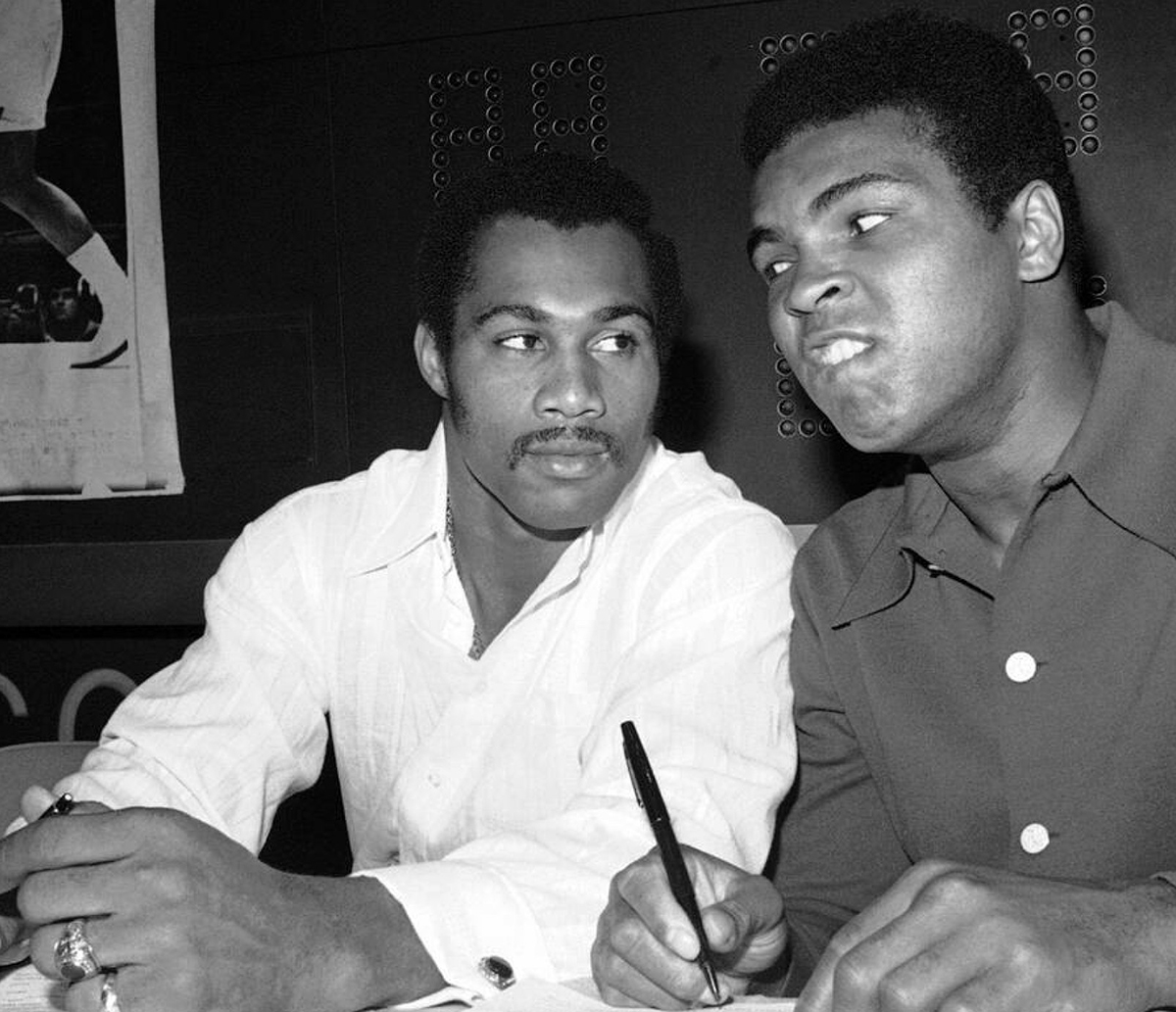
The late-September timing for Ali Norton 3, plus Ali being the biggest sports star in the universe, changed the calculus. Steinbrenner defended the decision through a spokesman, explaining, “The fact that the fight will be staged in late September will give the new grass at the stadium a full summer for growth and will not have the effect on the field it would have had during the crucial months of July and August.”
Norton, meanwhile, was brimming with confidence when the bout was secured, referencing his knockout of Ron Stander on the undercard of Ali-Young. “I will knock out Ali quicker,” Norton warned, adding, “if I get the opportunity.”
While the outfield grass was safe, the atmosphere surrounding the stadium was anything but. An unruly scene of gate crashers and autograph hunters descended on the Bronx, creating violent disruptions that forced officials to temporarily close several entrance gates.
Fans who managed to sneak in without tickets made life miserable for paying customers in the $100 and $200 seats, sparking running battles with security and police throughout the night.
The gridlock was so severe that Ali’s own vehicle was trapped on the stadium outskirts for 45 minutes. Gene Kilroy, Ali’s business manager, described people banging on the windows and breaking the car’s aerial while chanting for the champion.
Ali finally reached the press gate at 9:27 p.m. under police escort, arriving disheveled just in time for his final preparations. Yet, according to Kilroy, the champion was unfazed by the terrifying crush of bodies: “He sat back and just said, ‘The fans really loved me.'”
Despite the mayhem, ringside was packed with star power, featuring icons like Redd Foxx, Telly Savalas, Floyd Patterson, and former champion Joe Louis. Legendary Yankee outfielder Joe DiMaggio drew a big round of applause from the Bronx crowd when he arrived alongside Mike Burke, the former managing partner and president of the Yankees, who was then serving as president of Madison Square Garden, co-promoters of the fight.
The Undercard: Local Legends and Fast Finishes
Before the main event drama unfolded in the unseasonable 54-degree chill, the Yankee Stadium crowd was warmed up by an explosive preliminary card.
The featured 10-round bout showcased devastating puncher Earnie Shavers of Warren, Ohio, against San Francisco’s Henry Clark. Shavers, weighing in at 213 pounds to Clark’s 222, immediately moved on the attack, staggering the Californian with head shots for the first minute of the fight.
The end came swiftly at 2:19 of the second round when Shavers trapped Clark in a corner, forcing referee Johnny LoBianco to intervene after a vicious four-punch flurry culminated in a high right hand to the head. Shavers would go on to face both main event combatants, a first-round destruction of Ken Norton and a bone-rattling, heart-stopping, close unanimous decision loss to Ali.
The rest of the undercard delivered a rapid-fire sequence of stoppages and highlighted a deep roster of local star-crossed talent.
Mike Rossman: The Turnersville, N.J., middleweight prospect overpowered Ireland’s Christy Elliott, securing a stoppage at 1:59 of the third round. Fighting with the Star of David on his trunks, the popular gate attraction known as “The Jewish Bomber” was building the momentum that would carry him to the WBA light heavyweight championship of the world just two years later.
Bernardo Mercado: The heavy-handed fighter out of Reno, Nevada, secured a third-round stoppage against New York heavyweight James Woody. Woody brought deep local connections to the ring as a Bronx native fighting in his own backyard, having spent his formative years in the 1960s training out of the legendary Bobby Gleason’s Gym in the South Bronx.
Gilberto Acuna: Fighting out of Costa Rica, the heavyweight overwhelmed New York’s Peter Muller in just 1:18 of the opening frame. Muller was a true Brooklyn product who trained out of the Red Hook Parks Department Gym and had previously captured the New York Golden Gloves Sub-Novice Heavyweight Championship. Muller would never fight again.
Bill Sharkey: Adding to the New York flavor, the heavy-handed Queens native ground out a hard-fought four-round decision over Hartford journeyman Joe Maye. Sharkey, a rough-and-tumble former street gang member turned professional, was riding a 14-fight winning streak that made him a popular draw for local fight fans. Sharkey would sadly meet an untimely demise, having been murdered in an unsolved case in 1988.
Dennis Jordan: The Wethersfield, Connecticut, heavyweight produced the fastest finish of the night by obliterating Paterson, N.J.’s Jerry Thompkins. Despite Thompkins looking to make a splash close to home, Jordan secured a blistering knockout in just 46 seconds of the first round.
Otis Gordon and Kevin Smith: Gordon, a Hartford light heavyweight, made quick work of Jersey City’s Kevin Smith, stopping him at 2:08 of the first round. Smith’s story remains one of the sport’s tragic arcs; taking this massive stage at just 17, he would go on to build a 12-2-1 professional record before passing away suddenly in 1978 at 19.
A Bitter Decision in the Cold
When the bell finally rang for the main event, Ali, who was guaranteed a staggering $6 million purse, looked for a spectacular finish. He threw amateurish right-hand leads early on, attempting to make good on his prediction of a knockout within the first five rounds. The theatrics were on full display; in the fourth round, Ali backed the ex-Marine against the ropes and could be heard barking, “I’m going to destroy you.”
Instead, Norton, assured a minimum of $1.1 million, laughed off the taunts, utilized his trademark crouch, and maintained steady forward pressure. Ali attempted his “rope-a-dope” strategy in the fifth and sixth rounds, but a supremely conditioned Norton refused to punch himself out the way Foreman had in Zaire.
The bout ultimately hinged on the championship rounds. Trailing on the scorecards, Ali finally opened up his offense, ensuring he took the pivotal 15th round while Norton punched desperately but ineffectively.
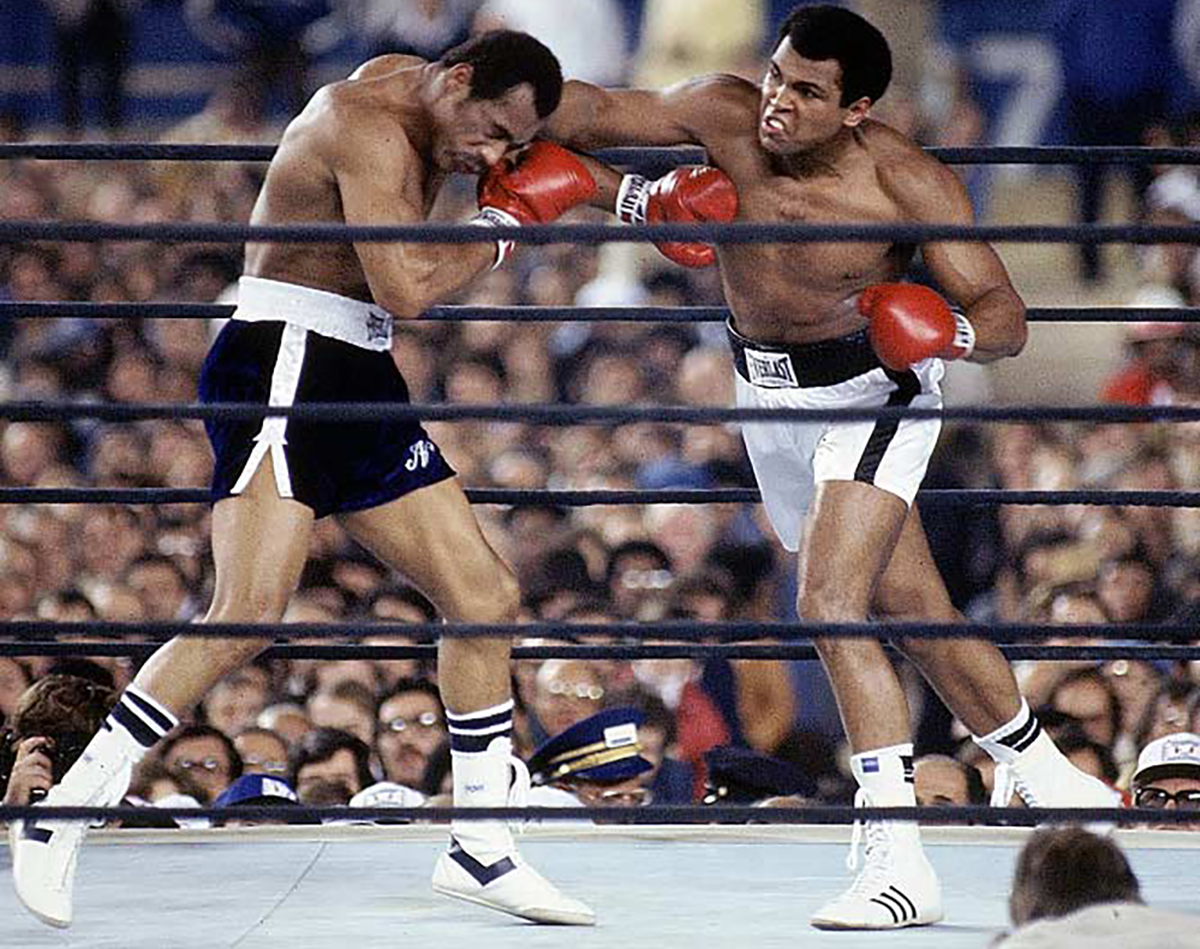
When the scorecards were announced, referee Arthur Mercante scored it 8-6 for Ali with one round even, while judges Barney Smith and Harold Lederman both scored it 8-7 in favor of the champion. The BoxRec fan database of 78 respondents has it scored 142.11-142.1 in favor of Ali. (I personally had it 145-141 for Norton).
The unanimous decision was met with stunned muttering rather than cheers from the 30,298 spectators, leaving a tearful Norton in complete disbelief. “I thought I won it,” the challenger said later, nursing his heartbreak. “Ali knew I won it. The people knew I won it.’
The champion, however, defended the verdict, confident that his late rally had secured his crown. “I knew I was ahead,” Ali stated. “I didn’t think I needed to win the last round to win. My corner was keeping tabs.”
The End of an Era in the Bronx
While Ali retained his title, the night marked a definitive end for Yankee Stadium as a boxing mecca. The stadium had just reopened in 1976 after undergoing a massive two-year structural renovation. Given the disappointing attendance and logistical challenges, this chaotic September night ultimately served as the first and only boxing card ever held in the renovated Yankee Stadium.
Promoter Bob Arum frequently talked about how a simultaneous New York City police strike created an atmosphere of absolute lawlessness. Mobs stormed the unprotected stadium, and instead of the expected 10,000 walk-up ticket sales on fight night, only 8 to 10 walk-up tickets were actually sold.
Between the security breakdown from the police strike, the disastrous walk-up sales, and the general mayhem surrounding the venue, the promotion was a massive headache.
Bob Arum and Top Rank shifted their major stadium and outdoor site fee focus elsewhere in the ensuing years, moving toward massive events in places like Las Vegas, New Orleans, or international sites, making Yankee Stadium a one-and-done experiment for that era of heavyweight championship boxing.
Decades passed before the sport returned to the Bronx, not arriving until Miguel Cotto and Yuri Foreman fought in 2010, hosted across the street in the newly constructed version of the stadium. Ali-Norton III remains a defining, complex chapter in boxing history, permanently etching the final boxing memory into the grass of the House That Ruth Built.
Sources:
• Anderson, Dave. “Ali Outpoints Norton and Retains His Heavyweight Crown.” The New York Times, 29 Sept. 1976, pp. 33–89. ProQuest Historical Newspapers.
• Eskenazi, Gerald. “The Heavyweights Return and the City Recaptures a Glow.” The New York Times, 4 June 1976, pp. 22. ProQuest Historical Newspapers.
• Matthews, Les. “Ali Keeps His Crown, Decision Unpopular.” New York Amsterdam News, 2 Oct. 1976, pp. A1–A2. ProQuest Historical Newspapers.
• Nack, Bill. “GALLERY: Ali Got Caught in Traffic.” Newsday, 29 Sept. 1976, pp. 109. ProQuest Historical Newspapers.
• Waters, Bob. “Ali-Norton Bout OKd by Stadium.” Newsday, 15 May 1976, pp. 28. ProQuest Historical Newspapers.
• Loubet, Nat. “Ali-Norton #3: Lackluster Bout Controversial.” The Ring, December 1976. pp. 6
• Boxrec: https://boxrec.com/en/scoring/25989

A lifelong resident of Long Island, New York, Matthew Pomara, MMP, has always followed the sweet science. He caught the tail end of the Ali era, was a staunch follower of the Four Kings of the 80’s, loved the great expansion of the sport in the 90’s and has stayed with boxing through the 2000s. He has been published in The Ring Magazine and loves contributing to @NYFights. He can be found on Twitter @pomara_matt