Step into almost any high school gymnasium in America after hours, and the smell and sounds are instantly familiar. It is a space defined by the scent of fresh floor wax, the bright glare of fluorescent lights bouncing off polished hardwood, and the rhythmic, echoed squeak of basketball sneakers against a court mapped out by blue and red lines. It is a setting designed for the clean geometry of scholastic sports.
The Wegman-Napier Gymnasium is very far from ordinary. The air and the atmosphere are wildly different. While it houses students competing in an athletic contest. This is where the similarities end.
It doesn’t hold that familiar hardwood polish, nor does it ring with the casual chatter of a standard after-school practice. Instead, in the brisk chill of March in Rochester, New York, the atmosphere shifts entirely. The standard bleachers and three-point lines recede into the shadows, replaced by something far more visceral. Here, the air is thick with the heavy, unmistakable smell of canvas, worn leather, and nervous anticipation.
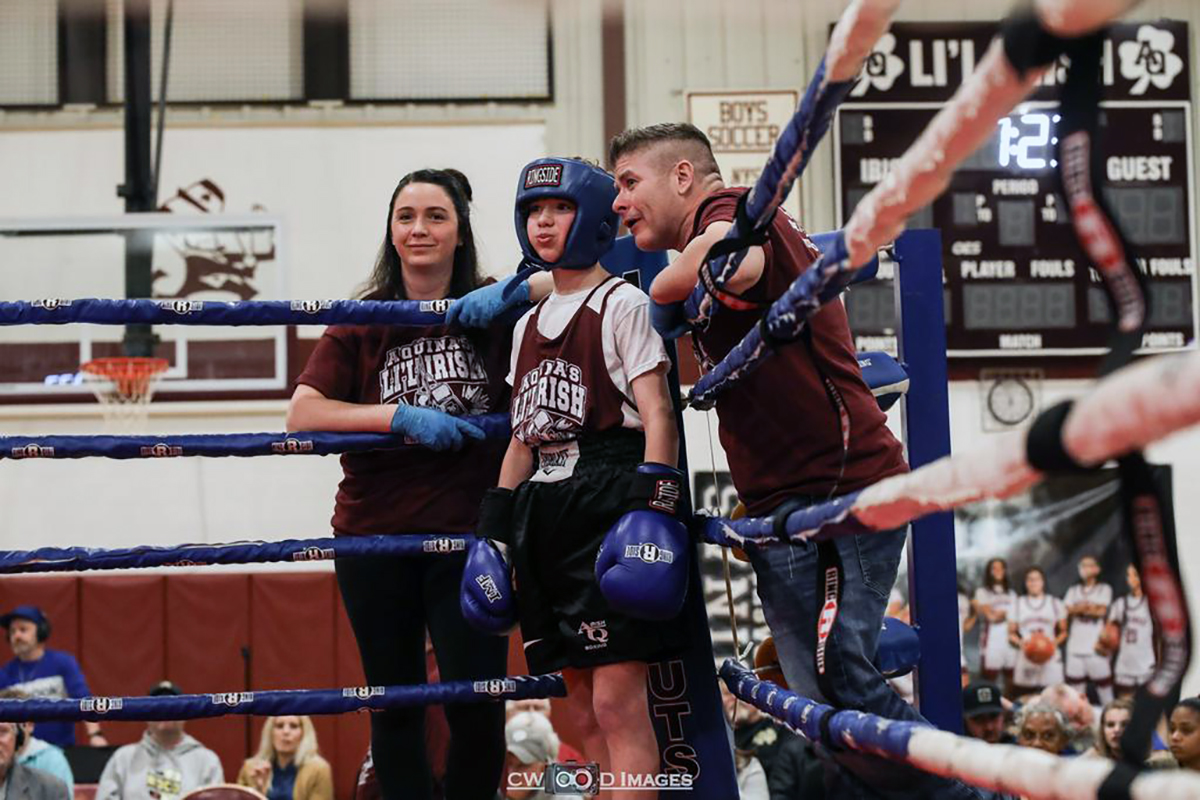
When the lights go down, and a solitary beam illuminates the 20-by-20 ring sitting dead center on the floor, the modern world, with its standardized curricula and aversion to risk, slowly disappears and fades to black. Here, at the Aquinas Institute, they not only still believe in the sweet science, they live it. It is as much a part of their culture and curriculum as U.S. history or algebra.
The Last Sanctuary of the Sweet Science
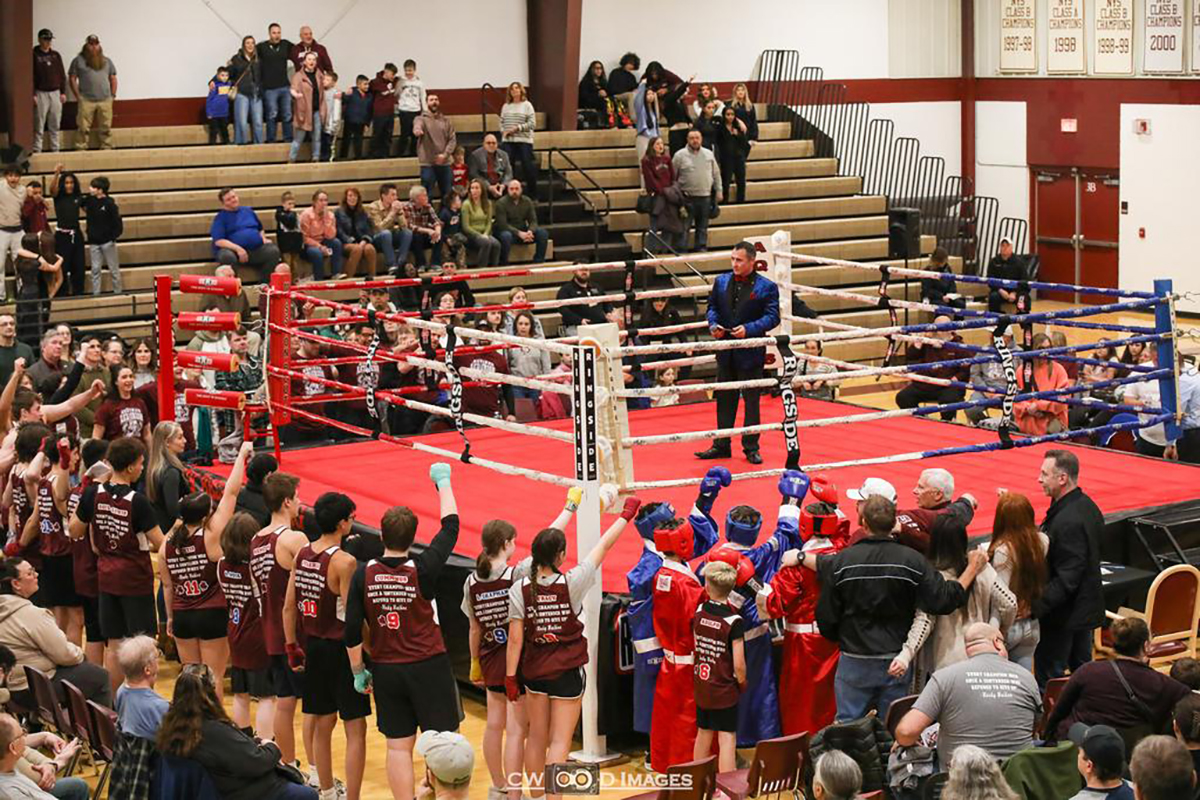
For 95 years, the Annual Mission Bouts run by the program officially known as ‘The Richard A. Corbett ‘56 Boxing Program’ have served as a profoundly physical rite of passage. While the rest of the country’s scholastic institutions have long since locked away the gloves, Aquinas has held its ground. They are widely recognized as the only high school in the United States to maintain a fully sanctioned, in-house boxing program. It is not merely a club operating on the fringes of the student body. It is a vital part of the school’s identity.
When an Aquinas student steps through those ropes, stripped of the digital tools of the 21st century, they are confronted with the oldest truth in human history: you are entirely alone when you step through the ropes. There is no bench to retreat to, no teammate to pass the ball to when the pressure mounts. There is only the opponent across the canvas, the referee in the center, and the voices of the cornermen who got you here. You learn the most important respect you can earn is self-respect.
Yet, for the young men and women who lace them up for Aquinas, that ultimate isolation is actually an illusion.
“In any other gym, at the end of the day, you’re walking out there by yourself,” co-head coach Josh Leonardo points out, highlighting what makes the Aquinas environment entirely unique. “But on Mission Bouts night, we’re walking out there together as a team. We even do a ring circle where all the fighters come out and stand around the ropes before we even step foot in the ring. We don’t want anybody to feel like they’re ever alone, because it’s a boxing team.”
Every time they slip a jab, plant their feet, or force themselves off the mat after taking a heavy shot, they are participating in a nearly century-old ritual. They are learning the exact curriculum the program was designed to teach, that in life, as in boxing, you cannot avoid failure, disappointment, or heartbreak. The measure of a person is never in how they avoid the punch, but in how they answer the bell after it lands.
The Legacy of a Corner
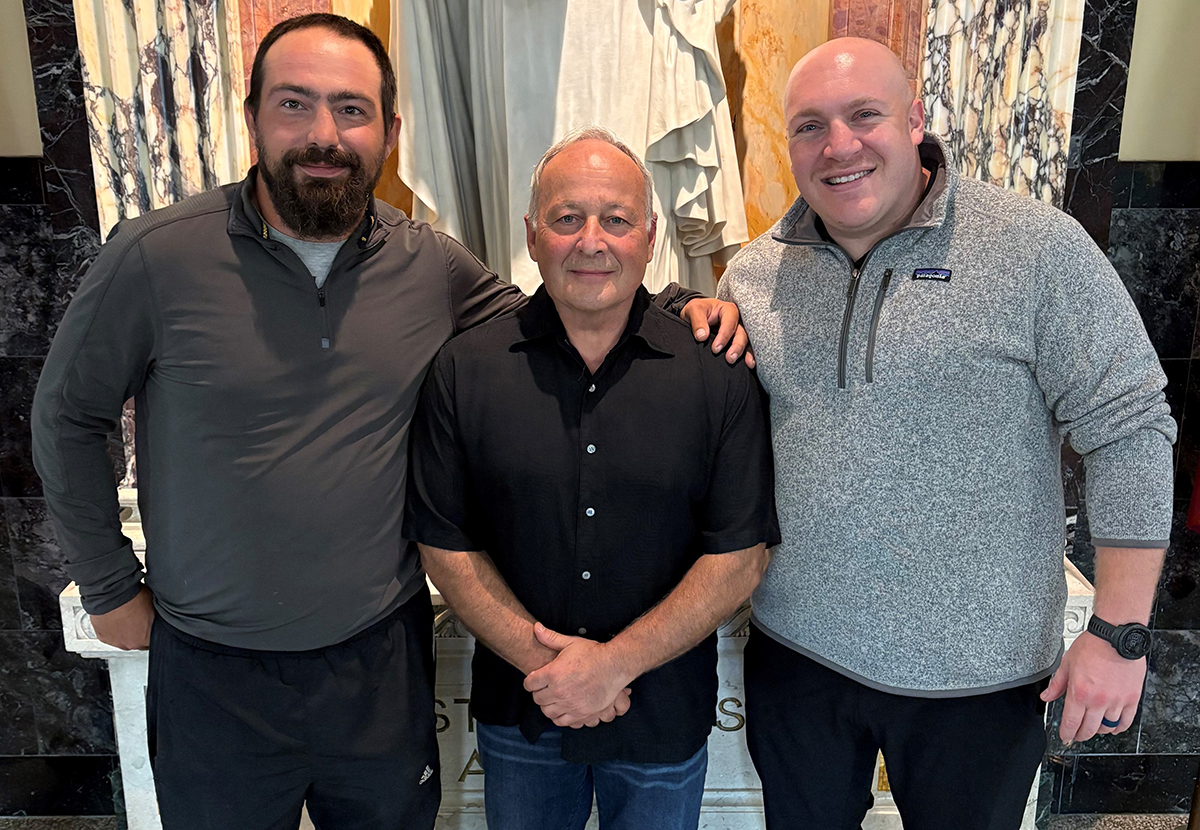
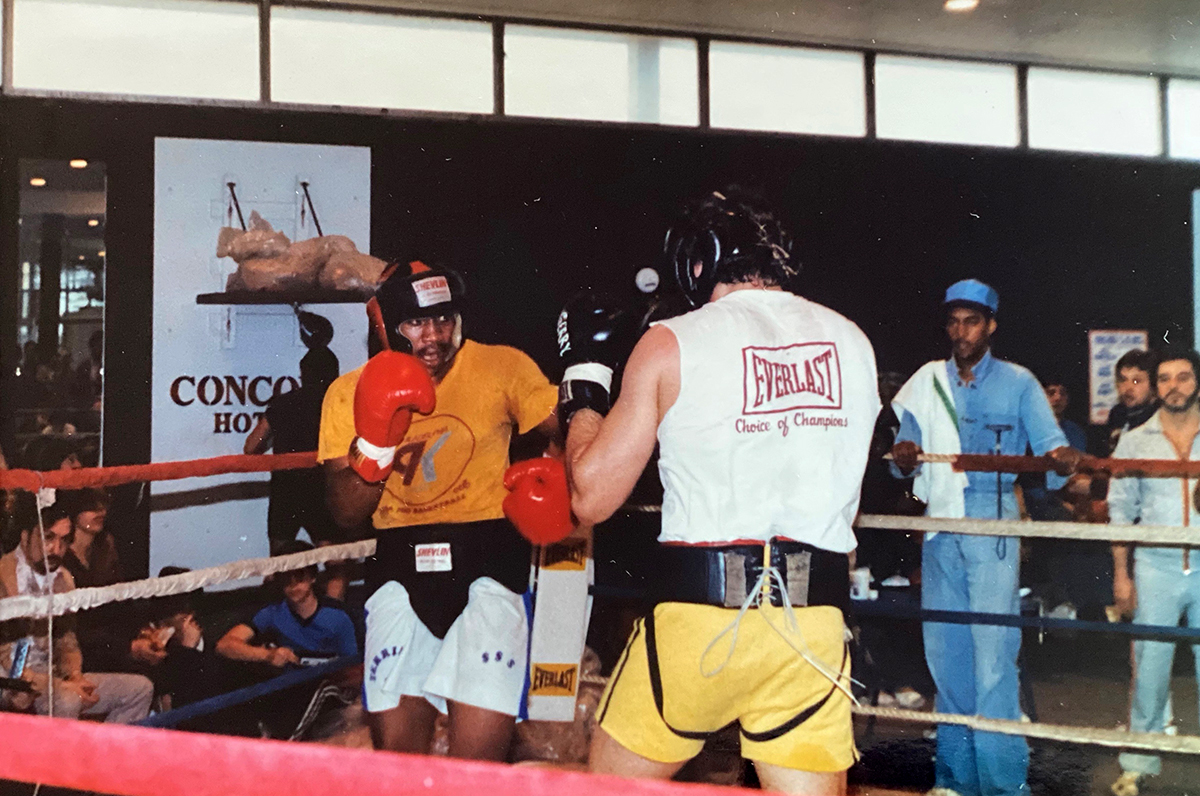
For 45 years, the architect of that ritual was Dom Arioli. To call Arioli a boxing coach is the equivalent of saying Van Gogh was a painter. It is a profound understatement; he has been the custodian of a philosophy. A former Aquinas fighter himself, Arioli took the helm of the boxing program in 1980. Over the ensuing decades, a span that saw the program host Muhammad Ali in 1994 and weather countless cultural shifts, he didn’t just train fighters. He forged citizens and made people better for it.
Under Arioli’s stewardship, the jump rope, the heavy bag, and the speed bag were merely tools for a much larger curriculum. The true work happened in the quiet moments between rounds. It is a hallmark of the Aquinas program that every practice does not end with a sprint or a physical drill, but with an emphasis on character. Arioli understood that teaching a teenager how to throw a technically perfect left hook was secondary to teaching them how to harness their aggression, master their fears, and respect the opponent standing across from them.
That profound respect was something Josh Leonardo and Henry Kaester learned firsthand long before they ever inherited the corner. They are the new Co-Head Coaches, but they didn’t just come up through the program; they became part of its modern lore. Training under Coach Dom, the two pushed each other daily, sparred dozens of rounds in preparation, and ultimately faced each other in back-to-back years in the ring for the big night.
It was a fierce, friendly rivalry, an iron-sharpening-iron dynamic where one person stepping up motivated the other to do the same. When they fought, it wasn’t about animosity; it was about two co-captains putting everything they had into the canvas. Their battle was so legendary that they walked away sharing the prestigious Fight of the Night award, a trophy that, in the vein of legacy and tradition, Josh’s own father had won in the Mission Bouts exactly forty years earlier.
“Coach Dom likes to share one specific quote at the beginning of every season: ‘It’s not about the destination, it’s about the journey,'” the new coaching staff explains, carrying on his exact opening-day tradition. “Training for a fight is great, but if you’re so focused on that fight day, you’re never going to get better. You’ve got to focus on the day-in, day-out, the hard work and enjoying the ride with your teammates and your coaches. We tell them, ‘Hey, we got an uphill battle, we got to climb, but we’re going to see a lot of cool things along the way, so stop and soak it all in while we’re here.'”
The Hypocrisy of Contact: The Gridiron/Mat Paradox
The eradication of scholastic boxing nationwide was carried out under the banner of student safety. School boards and administrators, terrified of liability, declared the squared circle too brutal for the developing minds and bodies of American youth.
And while it too has come under fire, step onto the campus of almost any high school in the country on a Friday night in October, and you will witness a glaring paradox. Under the stadium lights, athletes engage in football, a sport predicated on high-velocity collisions, where sub-concussive trauma is an inherent, inescapable feature of every single snap. In the winter, the gymnasiums are rolled with mats for wrestling, a grueling display of physical domination, joint manipulation, and intense weight-cutting. These sports are not merely permitted. They are celebrated, heavily funded, and culturally entrenched.
So why did boxing face the guillotine while the gridiron and the wrestling mat survived?
The answer lies in the illusion of intent. Football masks its violence behind the pursuit of scoring touchdowns; wrestling cloaks its physical dominance under the banner of grappling. Boxing offers no such illusions. The intent is explicitly physical combat, and for a modern scholastic system increasingly uncomfortable with raw, unvarnished confrontation, the honesty of a left hook is overwhelmingly frightening.
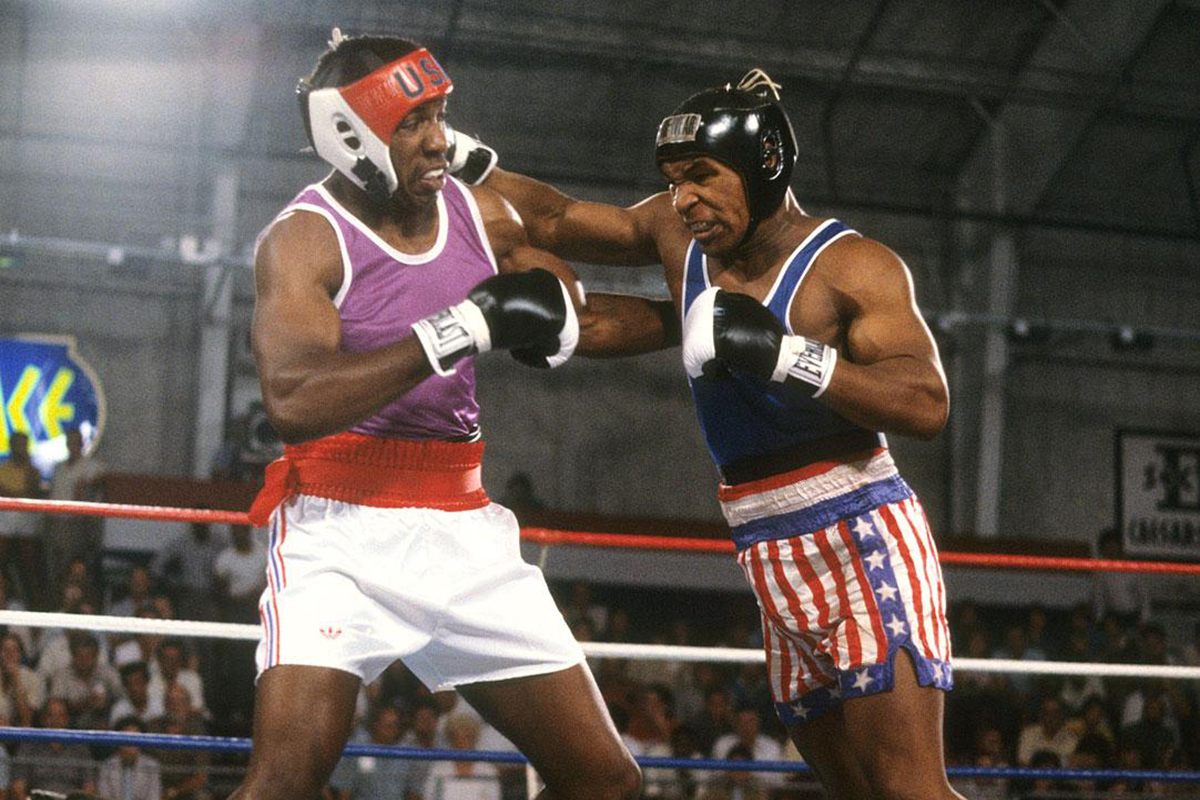
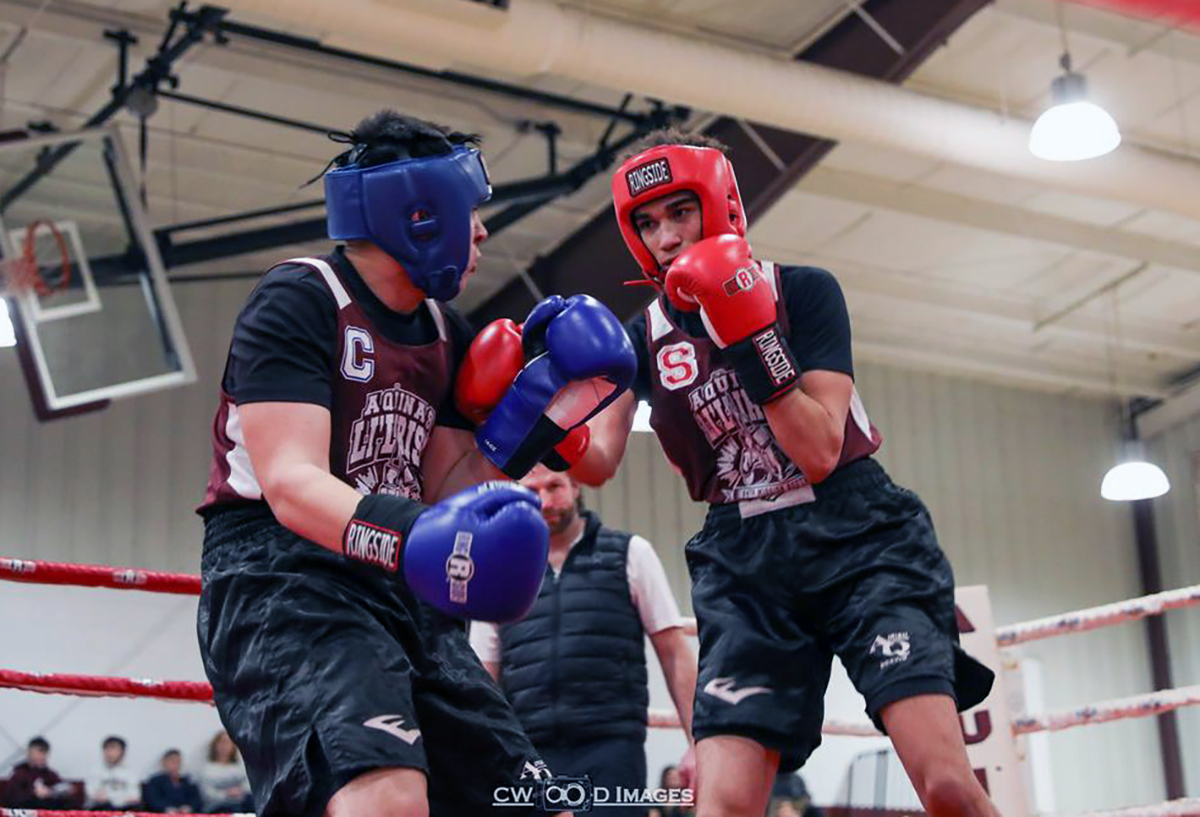
What the administrators who banned the sport failed to recognize, and what Aquinas has known for nearly a century, is the safety inherent in that very honesty. Scholastic boxing does not look like a 12-round prizefight. It is governed by heavily padded 16-ounce gloves, mandatory protective headgear, the standing eight count, and referees whose primary directive is absolute caution. There are no blindside blocks in the ring. There is no targeting of the knees. It is not 45 random car crashes on a Friday night under the lights in front of adoring fans.
“Football consistently has more concussions than boxing,” said Josh Leonardo, Co-Head Coach, dismantling the cultural double standard. “In football, you’re wearing a heavy helmet on your head, spearing people. That’s just not what we teach. We don’t teach the power or the hard-hitting. We teach the finesse and the skill. We teach them how to move their head and be light on their feet so that they’re never really in bad positions. We keep everything entirely safe and controlled.”
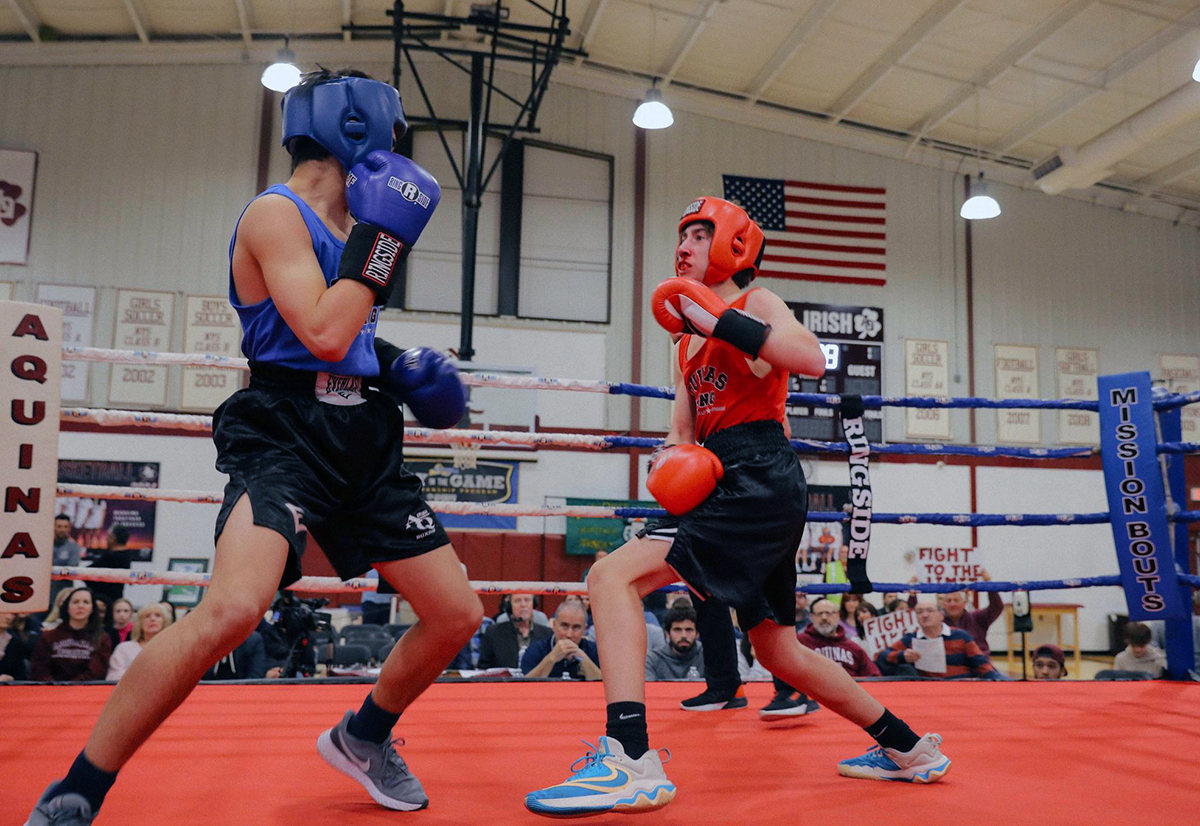
“There’s a lot more thinking that goes into fighting than just barreling in there and trying to knock out your opponent,” adds Co-Head Coach Henry Kaester, driving home the mechanical discipline of the sweet science. “We want the kids to be intentional with not only their punches but their defensive moves, their footwork, all of it goes into making a good fighter. Punching’s great, but if your feet can’t put you in the position to land those punches, then your punches are kind of worthless. It’s not all about just the aggression; there’s thought and intentionality to what we are showing them.”
By keeping the ring intact while the rest of the country opted for the gridiron, Aquinas embraced a profound truth: you do not protect young men and women by pretending physical adversity doesn’t exist. You protect them by putting a referee in the center, touching gloves, and teaching them exactly how to navigate it.
Watch the 2026 94th annual Mission Bouts event.
The National Landscape and the Club Conundrum
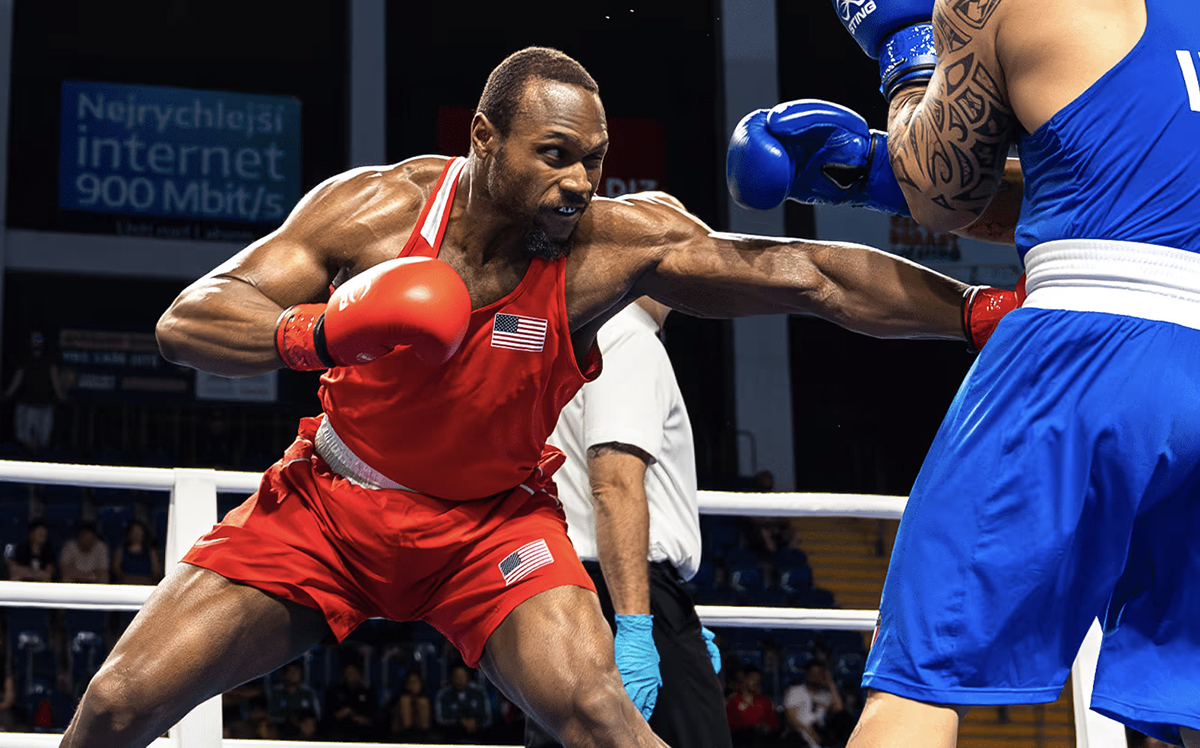
To understand the gravity of what Aquinas has preserved, you need to understand what the rest of the country lost. Scholastic boxing was once a staple of American athletic life. But following the tragic death of Wisconsin boxer Charlie Mohr in the 1960 NCAA tournament, the sport was gutted at the collegiate level, and high schools across the country followed suit in a rapid, domino-like retreat.
Today, if you scour the country for high school boxing, you will find only a few, if any, surviving heartbeats. But they look vastly different from what happens in Rochester.
The Cincinnati High School Boxing Team is an example. It is a fantastic, highly respected program that has trained fighters for over 25 years. However, it operates on a regional club model. It pools students from around 15 different area high schools and holds its practices off-campus at a private commercial facility.
Similarly, Lincoln Park High School in Chicago proudly lists a Boxing Club among its extracurriculars. It is an incredible resource for students to learn proper training, yet it functions primarily as an after-school fitness activity rather than a sanctioned, legacy-defining athletic event.
This is where the Aquinas Institute separates itself from the pack. They are not a regional conglomerate training off-site, nor are they an after-school fitness club hitting the heavy bag in the basement.
- Aquinas assumes the liability
- Aquinas maintains the ring
- Aquinas embraces the culture
The boxing program is woven directly into the fabric of the school. When the bell rings for the Mission Bouts, those fighters aren’t walking into a private commercial gym; they are walking into their own gymnasium, cheered on by their classmates, their teachers, and generations of alumni. While other institutions outsourced the liability or pretended the sport stopped existing that fateful day in 1960, Aquinas kept the sweet science exactly where it belonged: right in the center of the curriculum.
The Final Round and the Next Bell
As the 95th Annual Mission Bouts concluded, a historic chapter closed. Coach Dom Arioli officially stepped down, handing the program over to Josh Leonardo and Henry Kaester, two head coaches who had once learned how to tape their hands and weather the storm under his watchful eye.
This passing of the torch is the ultimate testament to the program’s enduring strength. The alumni are stepping into the shoes of their mentor, not just to teach the sweet science, but to protect the sanctuary he maintained.
“Growth of the kids is how we measure our success, for sure,” Leonardo reflects on their foundational goal as leaders. “We take these kids who have never boxed before, and every winter sports season we teach them how to box. We want them to look at their first sparring round, look at their last, and realize how much they grew and how far they’ve come.”
“It’s kind of a full-circle moment now with us both being head coaches,” reflects Henry Kaester, Co-Head Coach, on the weight of maintaining the gym’s history.
“Our names both go down in Aquinas history together as the first dual coaches of the program, and we couldn’t be more proud. The sport teaches you how to rely on yourself. You have to prepare yourself, pay attention to detail, and get better than what you did yesterday. At the end of the day, you win when you give it all your heart. Winning isn’t necessarily the win and loss, it’s when you put everything you got into what you’re doing.”
The gloves may get replaced, the canvas will be re-stretched, and the men in the corner will eventually change. But as long as Aquinas keeps the lights on over that twenty-by-twenty ring, the lesson remains the same. The bell will ring. You will have to step forward. And you will find out exactly what you are made of.

A lifelong resident of Long Island, New York, Matthew Pomara, MMP, has always followed the sweet science. He caught the tail end of the Ali era, was a staunch follower of the Four Kings of the 80’s, loved the great expansion of the sport in the 90’s and has stayed with boxing through the 2000s. He has been published in The Ring Magazine and loves contributing to @NYFights. He can be found on Twitter @pomara_matt