Netflix wanted a massive hit when Most Valuable Promotions (MVP), the combat sports league founded by Jake Paul, made its historic MMA debut on Saturday. With two of the biggest names in women’s MMA, Ronda Rousey and Gina Carano, headlining the main event, the hype was immense. And the number didn’t disappoint.
According to Netflix, 17 million global peak viewers and a 9.3 million domestic average set a U.S. MMA record, proving that streaming works for combat sports. On paper, it was a massive success.
However, the event failed to hold those hungry eyeballs for long because the main event lasted only 17 seconds. Rousey returned after nearly ten years, took Carano down after an opening kick, and ended the fight with her signature armbar.
The bout was over before it actually got started. And Canadian-American sports journalist Ariel Helwani thinks this quick ending cost the streaming giant a huge chunk of potential long-term viewers.
Ronda Rousey’s 17-Second Armbar Submission Robbed Netflix of a Genuine Viewership Ceiling
Before Saturday, Paul publicly targeted 20 million viewers for MVP MMA 1, calling it a conservative prediction.
“I know it’s going to do amazing,” Paul told Uncrowned ahead of the card. “But I also think there’s something parabolic that could happen here, where it even shocks us with how big it is.”
The event fell 3 million views short of Paul’s expectations, peaking at 17 million global viewers. In the U.S., the main card averaged 9.3 million and peaked at 11.6 million during the main event. This broke the domestic MMA viewership record previously held by the Cain Velasquez vs. Junior dos Santos broadcast on FOX in 2011.
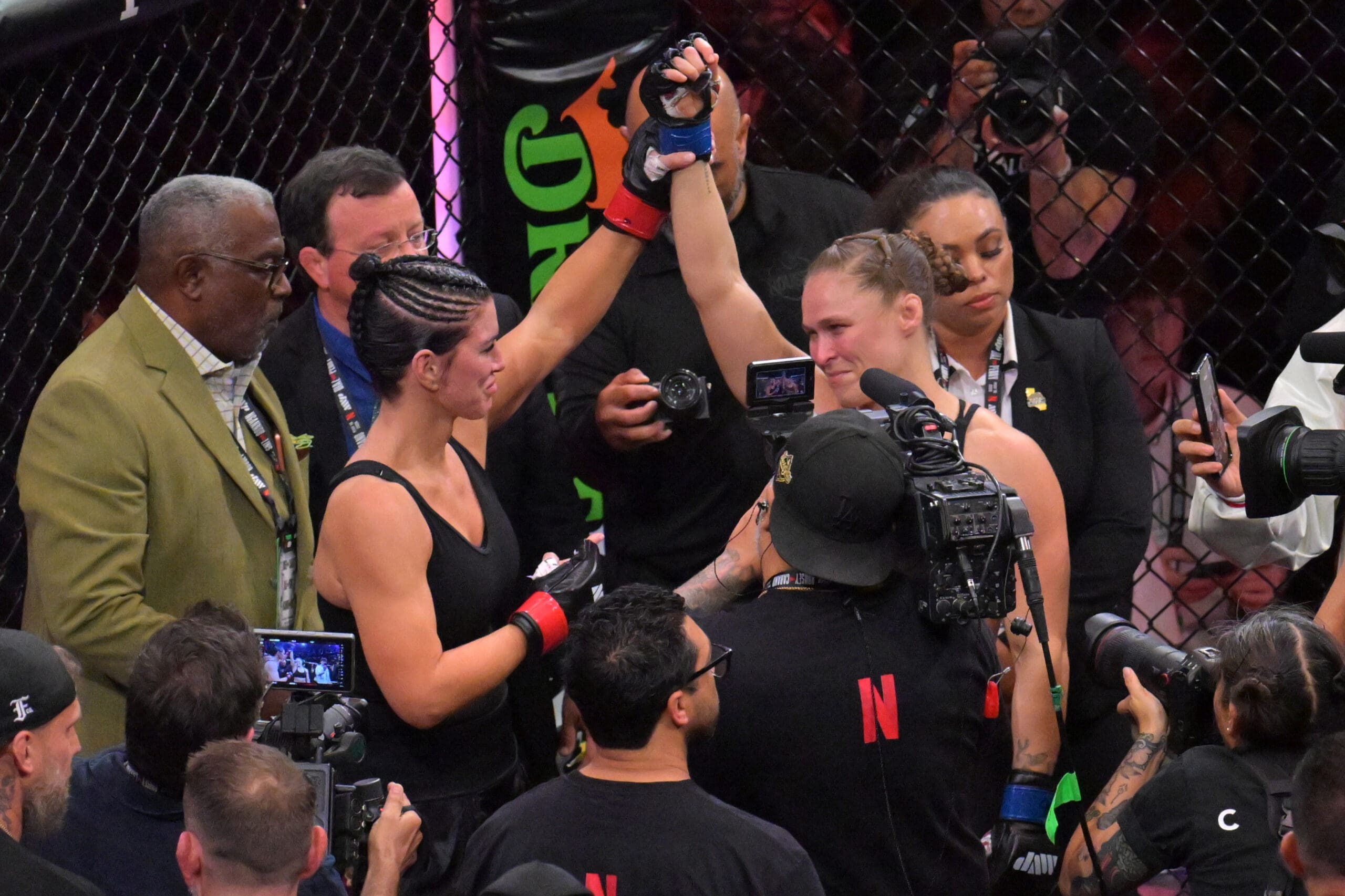
However, that peak only reflects how many people tuned in, not how long they stayed. A 17-second fight cannot hold a massive audience for long, especially since a big chunk of these people were only hyped for the main event. Instead of keeping people watching, a quick finish drives fans straight to social media to drop their complaints.
Ariel Helwani pointed this out on his show after the numbers dropped, arguing that the event would have reached at least 20 million viewers if the fight had gone just two rounds.
He said, “It says that Rousey-Carano peaked at 17 million. That’s what I read, right? Imagine if it went two rounds. You know what I mean? Imagine if it went two rounds; it would have probably hit that 20 million number.”
Breaking: Ronda Rousey x Gina Carano peaked at 17 million global viewers, per Netflix.
The final three fights averaged 12.4 million viewers.
Domestically, the main card averaged 9.3 million viewers and peaked at 11.6 million during the main event, making it the most-watched MMA… pic.twitter.com/Mnqi8on48Z
— Ariel Helwani (@arielhelwani) May 19, 2026
His logic is accurate. Viewership peaks when main events are competitive and prolonged. For example, the Jake Paul vs. Mike Tyson fight on Netflix peaked at 60 million viewers.
Though it was a slow, uneventful eight-round boxing match involving a 58-year-old Tyson, it held its audience because of time. As the rounds continued, the audience remained excited to see the final result.
Rousey had not fought since December 2016, and Gina Carano had been away since 2009. A multi-round battle between them would have built real-time momentum on social media, keeping the audience engaged enough to clear the 20 million mark.
But it was classic Rousey. The mother of two did in the octagon what she does best. From a business standpoint, however, the 17 million record number feels slightly disappointing given Paul’s early 20 million prediction.