It’s fair to say the MMA world was left stunned when reports surfaced that Conor Benn had secured a staggering $15 million payday to face Regis Prograis on April 26 under the Zuffa Boxing banner. In a sport long criticized for its pay structure since the UFC’s inception in 1993, the figure reignited debate across the roster. Current stars like Sean O’Malley and former flyweight great Demetrious Johnson openly questioned how a single boxing bout could command such a purse, while many MMA fighters continue to operate under the widely scrutinized “$12,000 to show and $12,000 to win” structure.
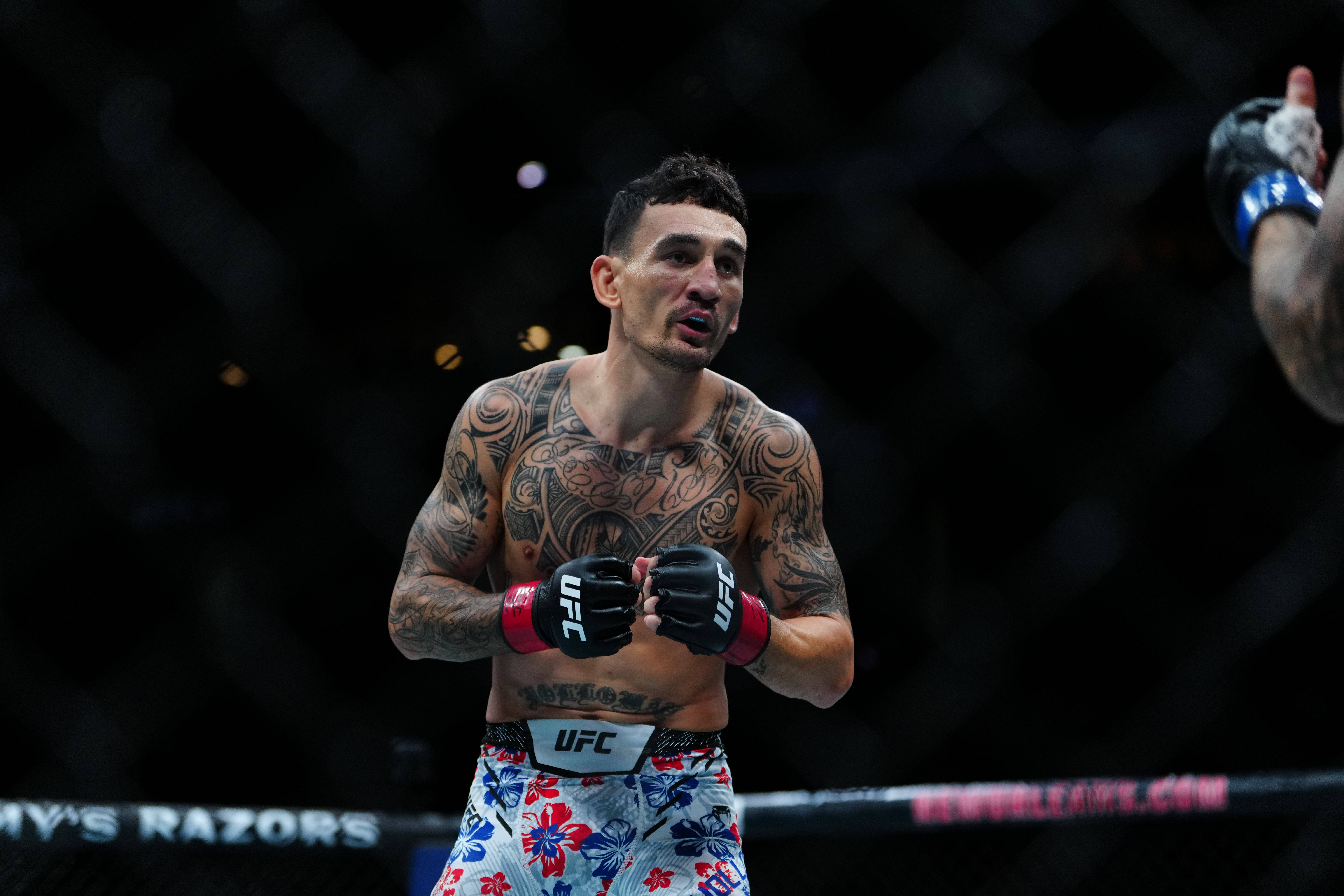
TKO President Mark Shapiro clarified that TKO is not absorbing the financial hit for Benn’s deal. Instead, the reported payout is being backed by Zuffa Boxing’s financial partner, SELA, the Saudi Arabia-based entertainment company led by Turki Alalshikh. Even reigning BMF champion Max Holloway admitted he was blown away by the number. Holloway used the moment to call for unity among MMA fighters, urging them to band together and push for compensation that better reflects their value and drawing power in combat sports.
Max Holloway Highlights Derrick Lewis’ Jon Jones Undercut as Cautionary Tale for UFC Roster
During a recent appearance on Demetrious Johnson’s YouTube channel, Max Holloway pointed to a pivotal 2021 negotiation involving Jon Jones and Francis Ngannou as a cautionary tale for fighters navigating pay disputes.
At the time, Jones publicly pushed back against facing Ngannou for the heavyweight title for a reported $8-10 million purse. ‘Bones’ maintained that he had been underpaid throughout much of his prime, claiming he earned roughly $2 million per fight in his 20s while consistently competing against elite opposition like Daniel Cormier, Rampage Jackson, and Lyoto Machida.
Reports suggested Jones was ultimately seeking closer to $30 million, a figure that was famously dismissed by UFC CEO Dana White as “Deontay Wilder money” during a press conference.
The situation took another turn when Derrick Lewis, who was riding a four-fight win streak at the time, appeared to undercut Jones by tweeting that he would accept the same $8–10 million figure to fight Ngannou.
I’ll do it for 8 million shiiiittt @ufc
— Derrick Lewis (@Thebeast_ufc) March 31, 2021
ALSO READ: Alexander Volkanovski Doubts Charles Oliveira Survives Five Rounds With Max Holloway at UFC 326
Holloway reflected on that moment as an example of why fighters must stand united during contract negotiations. “One time that will always stick out to my mind was when – I love Derrick Lewis, he’s the man, but when Jon Jones said, ‘I’ll fight Francis, give me $10 million,’ or whatever it was, and the UFC said, ‘Hell no, we’re not paying you that.”
He continued, “Derrick Lewis, I believe, was ranked at the time, and he said, ‘What? Jon is doing this for 10. Give me a mil, and I’ll fight Francis now.’ We cannot be doing that, brother. You needed to be almost stand in Jon’s corner, and be like, ‘Yeah, Jon, you deserve $10 million, go get that 10.”
The former featherweight champion stressed that collective leverage is critical in a sport where athletes negotiate individually rather than through a union. “Because guess what, if he’s fighting for ten, your base pay probably comes up too. I hope that these new fighters coming in just know your worth.”
Holloway’s comments arrive against the backdrop of financial disclosures revealed sometime back during one of the UFC’s antitrust lawsuits. Those documents showed that fighter compensation has generally ranged between approximately 16 and 20 percent of the promotion’s total revenue, a markedly smaller share compared to leagues like the NFL and NBA, where players receive close to 50 percent through collectively bargained agreements.
Although the UFC’s new $7.7 billion broadcast deal with Paramount+ has doubled post-fight bonuses from $50,000 to $100,000, questions remain over whether base salaries and overall revenue sharing will meaningfully increase in the years ahead.

Kshitiz Kumar Singh is a UFC Writer at NY Fights with over three years of experience in sports journalism and content creation. Known for his sharp storytelling and passion for combat sports, he has written in-depth features on stars like Brock Lesnar, Randy Couture, and Ilia Topuria. Before joining NY Fights, Kshitiz worked as a UFC Editor at EssentiallySports while currently serving as a WWE Editor at FirstSportz. His admiration for legends like Georges St-Pierre continues to inspire his detailed and engaging MMA coverage. Whether he’s covering the Octagon or the squared circle, Kshitiz is committed to delivering accurate, high-quality content. Outside the world of sports, he’s a dedicated cinephile, often found practicing monologues from his favorite Al Pacino films, combining his love for cinema with storytelling.