The UFC’s traditional pay-per-view model has seen a noticeable decline in recent years, largely due to the rise of streaming platforms like ESPN and now Paramount, which have reshaped how fight fans consume fights. Data reported in the March 27 edition of the Wrestling Observer Newsletter, via Dave Meltzer, highlighted the PPV performance of several UFC events between April 2024 and February 2025, and the numbers reflect a clear shift in the landscape.
While current figures are understandably lower than the blockbuster highs of the mid-2010s, Alex Pereira proved he remains a significant draw. Headlining UFC 300 against Jamahal Hill, Pereira helped the landmark event pull in a reported 615,000 buys, at a time when the promotion was still operating under its ESPN deal at a $79.99 price point in the United States.
🚨 Dave Meltzer of @WONF4W has released the PPV buys of several UFC events from 2024/2025
▫️ UFC 300: Pereira vs Hill (615K)
▫️ UFC 301: Pantoja vs Erceg (67K)
▫️ UFC 302: Makhachev vs Poirier (410K)
▫️ UFC 303: Pereira vs Prochazka (274K)
▫️ UFC 311: Makhachev vs Moicano (240K) pic.twitter.com/fp255rvpHU— ACD MMA (@acdmma_) March 27, 2026
ALSO READ: Dana White Contradicts Ali Abdelaziz, Hints at UFC 331 As Islam Makhachev’s Return Target
However, not every card matched that level of success. UFC 301, headlined by Alexandre Pantoja vs. Steve Erceg for the flyweight title in Brazil, drew a miserable 67,000 buys. The numbers rebounded somewhat with UFC 302, where Islam Makhachev defended his lightweight belt against Dustin Poirier, generating approximately 410,000 buys.
The International Fight Week event, UFC 303, brought in 274,000 buys, headlined by Pereira’s rematch with Jiří Procházka. Originally, the card was expected to feature the long-awaited return of Conor McGregor against Michael Chandler, but McGregor’s withdrawal dampened its commercial potential, and he has still yet to return nearly two years later.
Subsequent events continued to reflect the cooling trend, with UFC 311 and UFC 312 reportedly drawing 240,000 and 176,000 buys, respectively. Notably, one of the six events mentioned in the report failed to even cross the six-figure threshold, underlining the inconsistency in modern PPV performance.
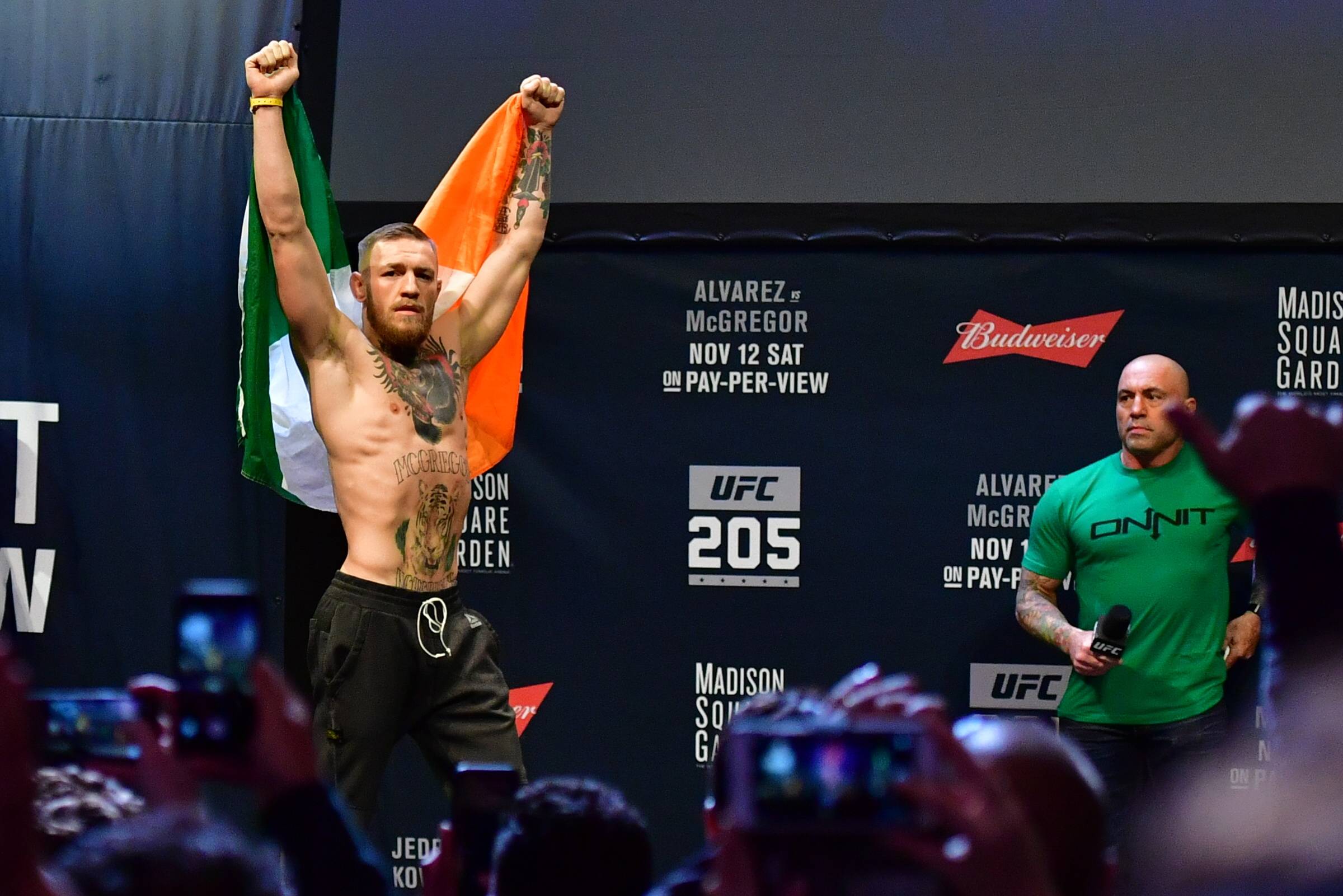
Amid the slowdown, McGregor, long considered the UFC’s biggest box office attraction, took to social media to mock the figures, writing, “My last one done more than all of these combined.”
My last one done more than all of these combined. https://t.co/PBm5iOySXo
— Conor McGregor (@TheNotoriousMMA) March 27, 2026
The comment isn’t without merit. During his peak, McGregor dominated the PPV market, headlining eight of the ten biggest-selling events in UFC history. His clash with Khabib Nurmagomedov at UFC 229 holds the all-time record with 2.29 million buys, while his rematch with Nate Diaz at UFC 202 drew 1.6 million.
Additionally, his last two fights with Poirier at UFC 257 and UFC 264 generated 1.6 million and 1.5 million buys, respectively. In total, McGregor is estimated to have driven around 10 million PPV buys across his career, a level of commercial success that now feels like a relic of a different era.
That era, however, has officially come to an end. The UFC’s 2018 broadcast deal with ESPN, valued at approximately $500 million annually already began shifting the promotion away from a pure PPV model.
Now, the transition is complete. Beginning in 2026, the UFC has entered a seven-year, $7.7 billion agreement with Paramount, eliminating the pay-per-view structure entirely. Fans in the United States, Latin America, and Australia can now access all UFC events through a Paramount+ subscription, marking a fundamental shift in how the sport is delivered and monetized.

Kshitiz Kumar Singh is a UFC Writer at NY Fights with over three years of experience in sports journalism and content creation. Known for his sharp storytelling and passion for combat sports, he has written in-depth features on stars like Brock Lesnar, Randy Couture, and Ilia Topuria. Before joining NY Fights, Kshitiz worked as a UFC Editor at EssentiallySports while currently serving as a WWE Editor at FirstSportz. His admiration for legends like Georges St-Pierre continues to inspire his detailed and engaging MMA coverage. Whether he’s covering the Octagon or the squared circle, Kshitiz is committed to delivering accurate, high-quality content. Outside the world of sports, he’s a dedicated cinephile, often found practicing monologues from his favorite Al Pacino films, combining his love for cinema with storytelling.