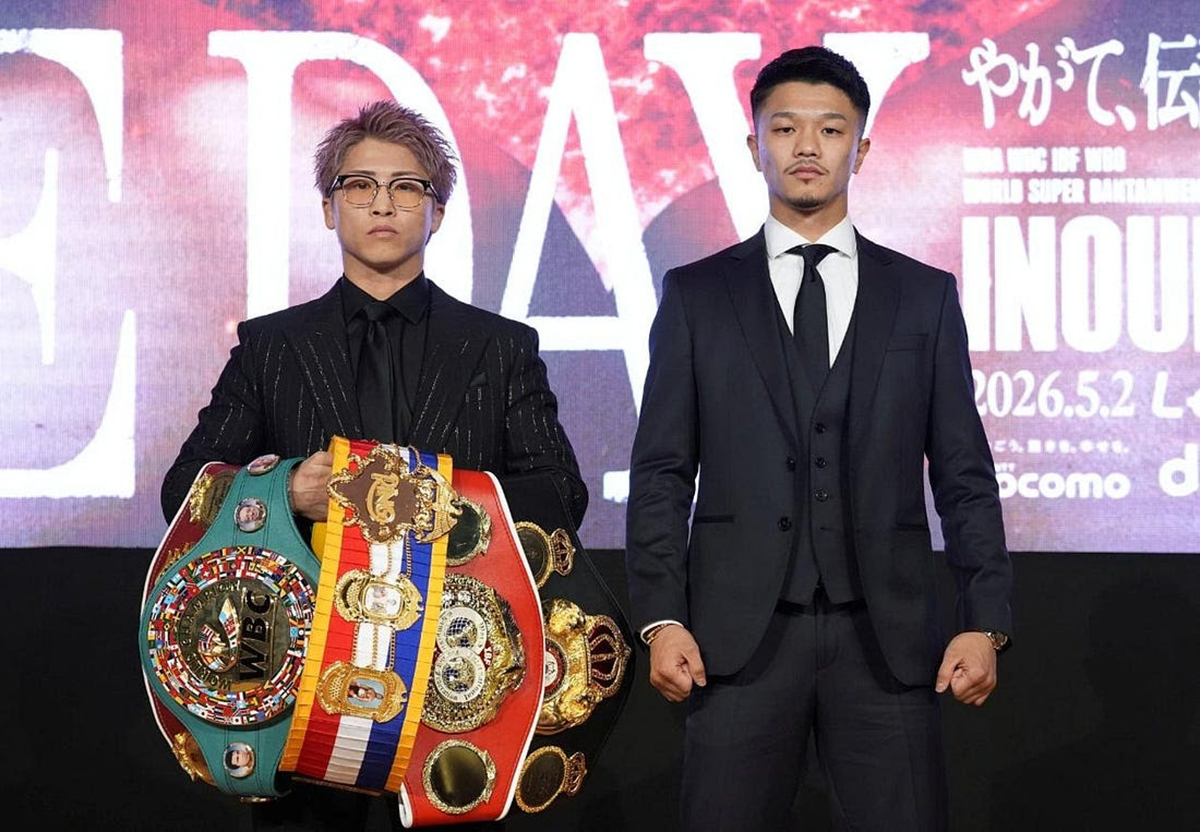
The biggest boxing matchup of all time in Japan and one of the biggest fights of 2026 is just hours away. Unified and undisputed super bantamweight champion Naoya Inoue of Yokohama faces Junto Nakatani of Sagamihara. Inoue vs Nakatani will go down at a sold-out 55,000-seat Tokyo Dome early on Saturday, May 2.
The card has been picked up for U.S. audiences on DAZN Boxing starting at 5:40 a.m. ET/2:40 a.m. PT. Ringwalks in the United States at approximately 8 a.m. ET/5 a.m. PT.
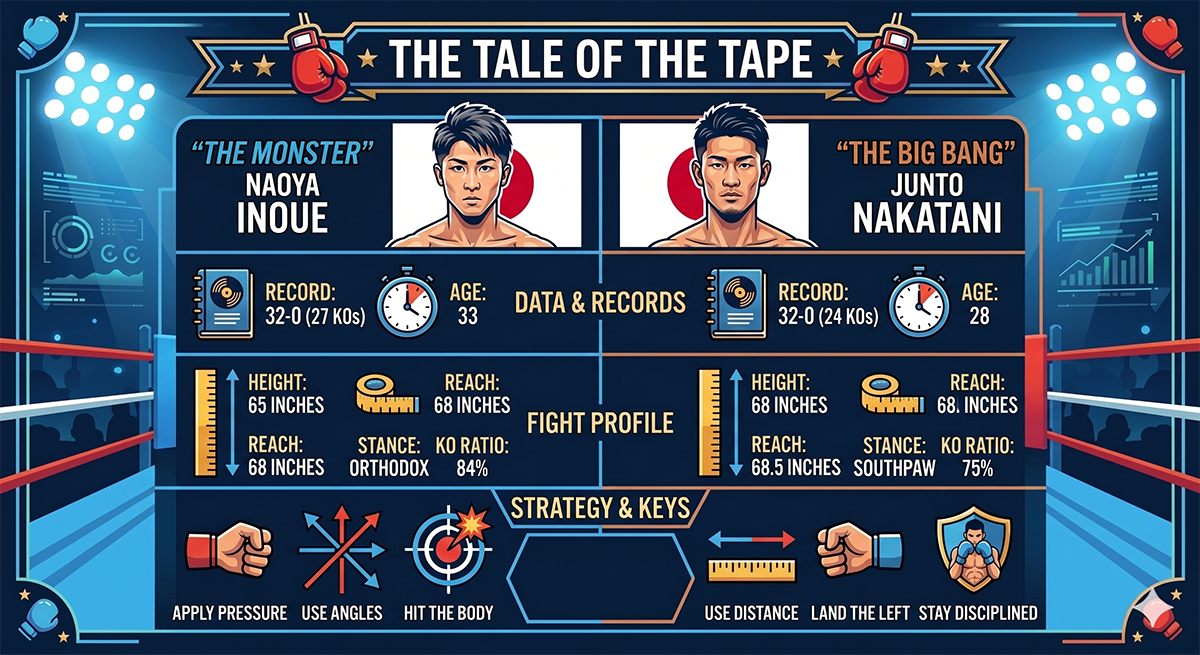
Inoue, age 32, and Nakatani, age 28, have identical undefeated records of 32 wins and no losses. Inoue has 27 knockout wins; Nakatani is close with 24 knockout wins. Inoue is widely considered among the top pound-for-pound fighters in the world. With the retirement of Terence Crawford, Inoue’s only true rival currently is heavyweight champion Oleksandr Usyk. Unless Nakatani beats him.
Nakatani is also ranked among the top ten, making this fight among rivals a matchup at the highest level of the sport.
So why isn’t there more buzz and excitement among boxing fans outside of Japan? Sure, every boxing podcaster is talking up the fight, and everyone who thinks they are a boxing expert on YouTube is discussing it.
But not a single person I know has asked me about this fight. My family, friends, and colleagues ALWAYS ask me about Canelo Alvarez. They ask me about the heavyweights. They ask me about local fights.
Perplexing Lack Of Energy About Inoue vs Nakatani
I’ve watched boxing ringside for decades. The fact that we even have to ask why this fight isn’t being talked up in the Western Hemisphere tells me something about what’s wrong with modern boxing.
Even on the DAZN Boxing website, you have to scroll down a long way, past all the Benavidez vs Zurdo videos, features on regional British fights, and articles about Skye Nicoloson and Wardley vs Dubois (no offense intended, they are fine athletes) before you get to the meager content and the link to the fight stream for Saturday.
I get it. I’m a hardcore fan who believes the most exciting fights take place in the lower weight divisions. I’ve argued before that the talented fighters below lightweight rarely get the sort of praise and fan interest they deserve.
To me, Inoue vs Nakatani is the boxing equivalent of a flawless diamond. A beautiful diamond sells itself. Everyone knows its worth. A boxing diamond shouldn’t require a promoter’s hype or staged press-conference beefing to sell it.
Fans Are Used To The Hot Sauce
Modern boxing fans in the Western world have grown addicted to the pro-wrestling flavor of boxing. They need to put hot sauce on everything. They want the Twitter feuds, the broken glass, and the personal insults because the fights themselves struggle to meet expectations. Fans need something spicy as a condiment to cover up a bland entrée.
But Inoue vs Nakatani stands on its own as a gourmet meal. Its purity is the point.
In Japanese boxing culture, there is a traditional, martial-arts-driven respect. Fighters don’t hold personal grudges. They both have the same goal: to prove themselves. The greater the test, the greater the victory.
When two top ten pound-for-pound undefeated champions agree to get in the ring and risk their undefeated records for 36 minutes, the sweet taste of the sweet science is the point.
Sensational Smaller Divisions
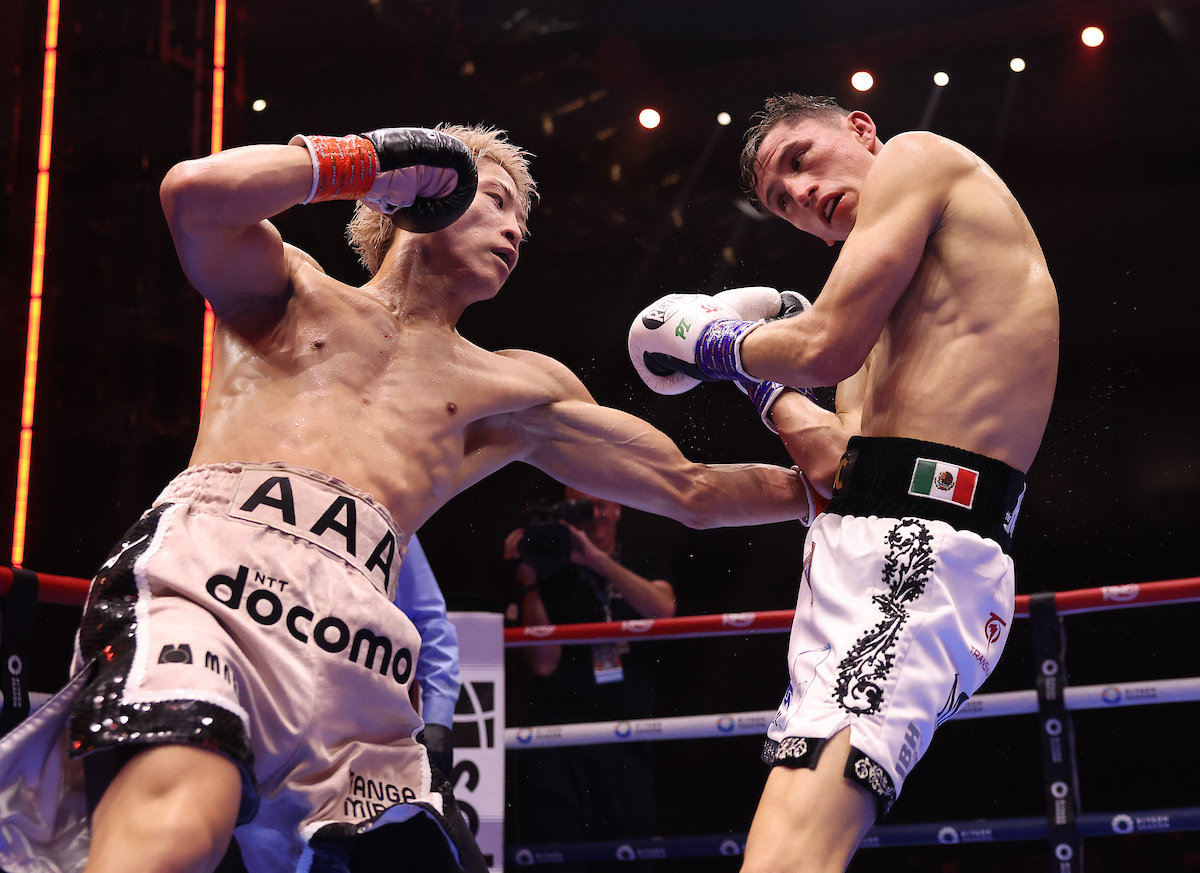
People who dismiss a matchup in the super bantamweight division are missing out. Yes, there’s another terrific fight among the big men at cruiserweight this Saturday in Las Vegas. But the expert eyes will be firmly fixed on Tokyo early on Saturday.
Speed vs. Momentum: In the larger weight division, you’re often watching two mountains move. It’s about one big mistake. At super bantamweight, you’re watching high-speed chess played at 100 mph. The combinations are as fast as the human eye can track, yet the technical precision remains perfect.
Power per Pound: People think smaller fighters don’t punch as hard. Watch any man’s reaction to an Inoue body shot. Because smaller men carry less dead weight, their rotational speed is higher. The force-to-body-weight ratio in these divisions is scarier than in the heavyweights. Inoue isn’t just fast for his size He punches with the relative impact of a sledgehammer.
Punches That Count: It’s true the fighters in the smaller weight divisions throw more punches per round on average, but the difference per CompuBox isn’t huge. What matters more is the ratio of jabs to power punches. Heavyweights throw more jabs and fewer power punches. Fighters below welterweight throw more power shots. Super bantamweight and below, the average power punches per round are approximately 37. For heavyweight, it’s 27. The work rate and the meaningful punch output mean there are rarely slow or ‘boring’ rounds.
The Silence Outside Japan
In addition to the longstanding bias against the smaller weight divisions, there are a few additional reasons for the lack of buzz on this side of the Pacific Ocean.
- The Breakfast Boxing Factor: For U.S. fans, the main event starts around 8 a.m. ET and 5 a.m. PT. Unless you’re a hardcore fan or an early riser and love your caffeine, a Saturday morning live stream is a tough sell compared to a prime-time card from Las Vegas.
- The All-Japan Matchup: Because both fighters are Japanese and the event is in Tokyo, Western promoters don’t have a national clash with a Western opponent to hang a storyline on. There’s also a language barrier. Even among Spanish-speaking opponents in the U.S., most Americans know at least the basics to follow along.
- Lack of Social Media Squabbling: Both Inoue and Nakatani are incredibly respectful. Fans have gotten used to the era where influencer boxing and trash-talking pro wrestlers are often the show, with the fight of secondary interest. Two silent assassins who simply want to prove who is better at boxing don’t tickle the algorithm’s fancy.
If you value boxing for its intrinsic drama, this is your Super Bowl. Don’t let the lack of Western hype lure you into forgetting that this is the highest level of combat sport available on the planet right now.
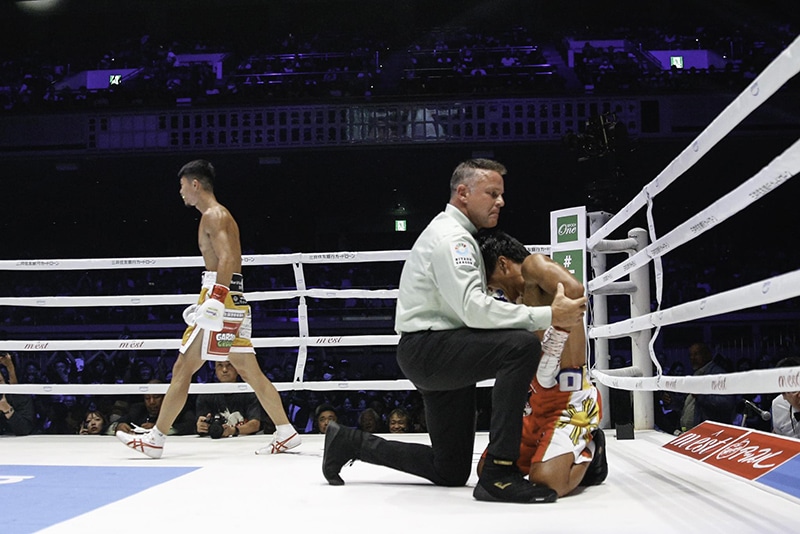
Inoue vs Nakatani recommends itself because it is a generational rarity. Since the four-belt era began, it’s been very few times fans have gotten two undefeated, prime, multi-weight world champions both in the global Top 10 fight each other without five years of marinating?
Almost never.
If you’re a fan of the sport as a spectacle, this fight is a dream come true. Any lack of buzz around you isn’t a reflection of the fight’s quality. It’s a reflection of an English-speaking, Western audience failing to appreciate the athletic mastery without a side of manufactured drama.
On May 2, the Tokyo Dome won’t need a script. When the first bell rings and that first world-class jab snaps Nakatani’s head back, or when Inoue has to navigate a 5’8″ southpaw sniper for the first time, the narrative will be written in real time. That’s more than enough for me. Even if I have to set my alarm in Las Vegas plenty early.
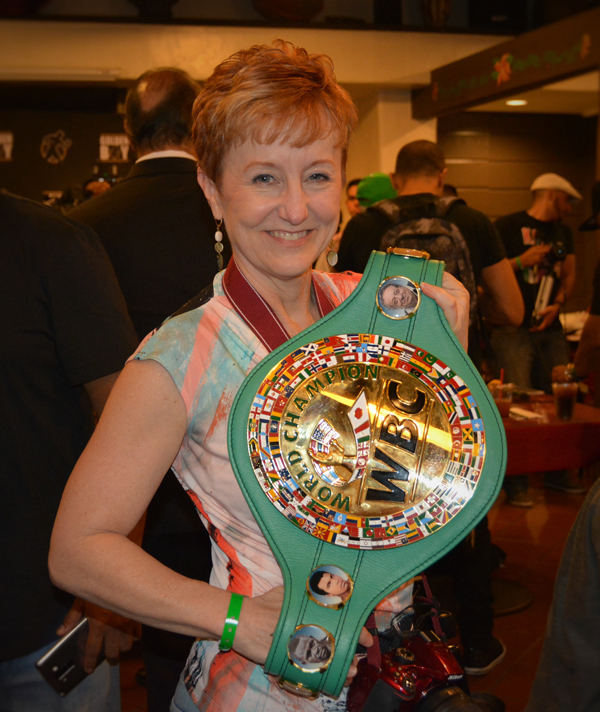
Gayle Falkenthal is an award-winning boxing journalist with more than four dozen awards for both written and video coverage from the Boxing Writers Association of America, Society of Professional Journalists, and San Diego Press Club, where she is the past president. She is the only woman journalist who is a full voting member of the BWAA. She is the Boxing Editor for NY Fights based in San Diego, California.