Key Fight Facts
- Inoue vs Nakatani pits two undefeated multi-division champions against each other in the biggest fight in Japanese boxing history
- The fight takes place in a sold out Tokyo Dome where 55,000 fans are expected on Saturday, May 2
- The card will air on DAZN Boxing starting at 5:40 a.m. ET/2:40 a.m. PT. Ringwalks in the United States at approximately 8 a.m. ET/5 a.m. PT.
The long-awaited, much-discussed, long-dreamed-of superfight between the two biggest stars of Japanese boxing will become a reality in a matter of hours. Inoue vs Nakatani is, without a doubt, the biggest all-Japanese fight in history.
Naoya “The Monster” Inoue will defend his undisputed super bantamweight titles against Junto “Big Bang” Nakatani in the main event Saturday in front of 55,000 fans at a sold-out Tokyo Dome.
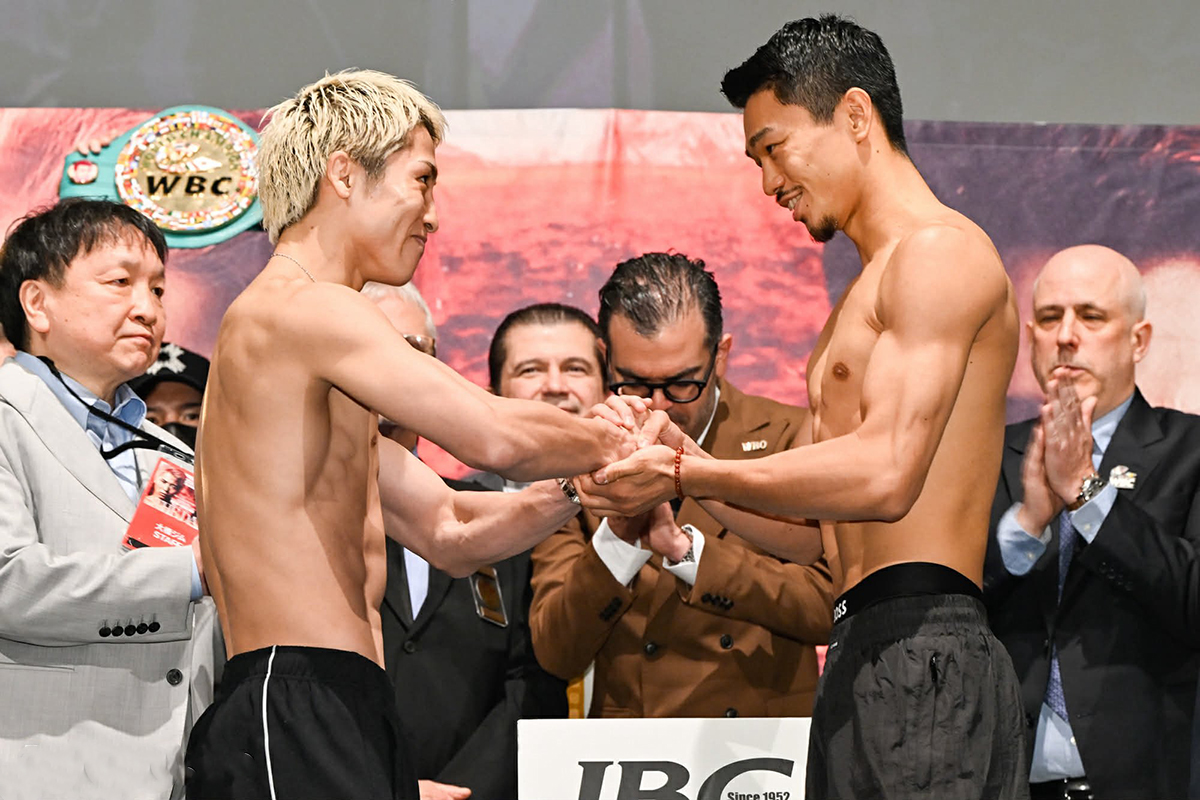
Both men made weight on Friday. Naoya Inoue weighed in at 121.9 pounds, and Junto Nakatani weighed in at 121.4 pounds.
READ MORE: No Beef, No Buzz? Inoue vs Nakatani Under The Boxing Radar
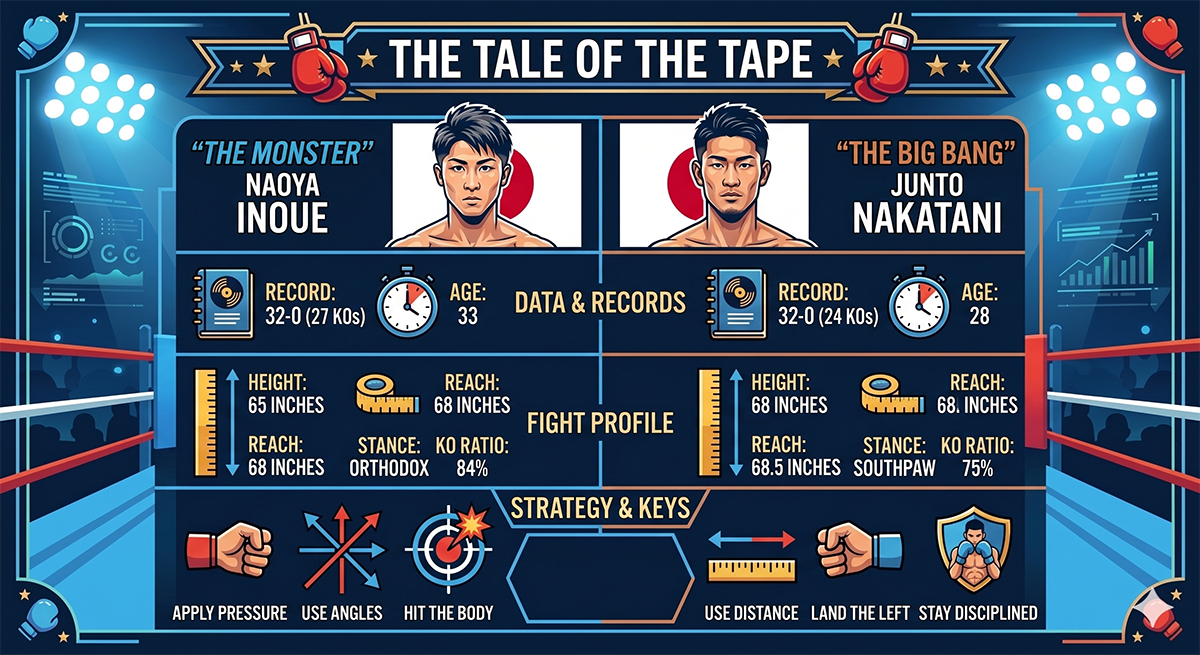
Inoue (32-0, 27 KOs), age 33, is a four-division world champion and has been undisputed in two of them, including his current run at super bantamweight. He defended his titles four times in 2025. No other male champion defended his titles as frequently as Inoue. He is trained by his father, Shingo, who has been named Trainer of the Year alongside his son’s honors as Fighter of the Year on multiple occasions.
Nakatani (32-0, 24 KOs), age 28, is a two-division champion, and like Inoue, he is undefeated. Should he win on Saturday, he will be a three-division champion. He trains in Los Angeles with Rudy Hernandez, where they have worked at the LA Boxing Gym in Little Tokyo since 2013.
Nakatani will be fighting at super bantamweight for the second time. In his first fight at 122 pounds, he won by decision against Sebastian Hernandez of Mexico on December 27 on the “Night of the Samurai” card in Saudi Arabia.
Inoue’s last fight of 2025 was on the same card, and he also won a decision over challenger David Picasso of Mexico. His performance was far more dominant than Nakatani. The fight with Nakatani is expected to be his last at super bantamweight before moving up to the featherweight division.
Let’s break down the Inoue vs Nakatani showdown for each man.
The Risks: What They Must Watch For
For Naoya Inoue:
- Southpaw Blind Spot: Nakatani is a southpaw with a massive reach advantage for his size. If Inoue struggles with anything, it’s with looping left hands early in fights. This is what worked for Luis Nery, who scored a first-round knockdown against Inoue, though he went on to lose. If Inoue can’t bridge the gap safely, he’ll be eating Nakatani’s jab all night.
- Size Matters: Nakatani is the naturally bigger man moving up a division. If Inoue’s power doesn’t earn Nakatani’s respect in the first three rounds, the Monster might find himself physically bullied and facing pressure for the first time in his career.
For Junto Nakatani:
- Liver Shot Delivers: Inoue is the best body-puncher in boxing. In Nakatani’s previous fight against Hernandez, he showed vulnerability to body pressure. Nakatani is much taller than Inoue with plenty of midriff real estate to aim for. If Inoue digs his left hook into Nakatani’s ribs, the taller man might crumble.
- Inoue IQ: Nakatani often resets after throwing. Against most opponents it’s not an issue. Against Inoue, a half-second pause is an invitation for a three-punch combination that ends the fight.
Both Inoue and Nakatani are capable of winning this superfight. Neither has ever lost. It’s true that Inoue has the superior resume. But Nakatani has dispatched every man he’s faced. Recall how Andrew Maloney, David Contreras, or Angel Acosta fared. Nakatani stops all three of these world class challengers.
The Nakatani Questions
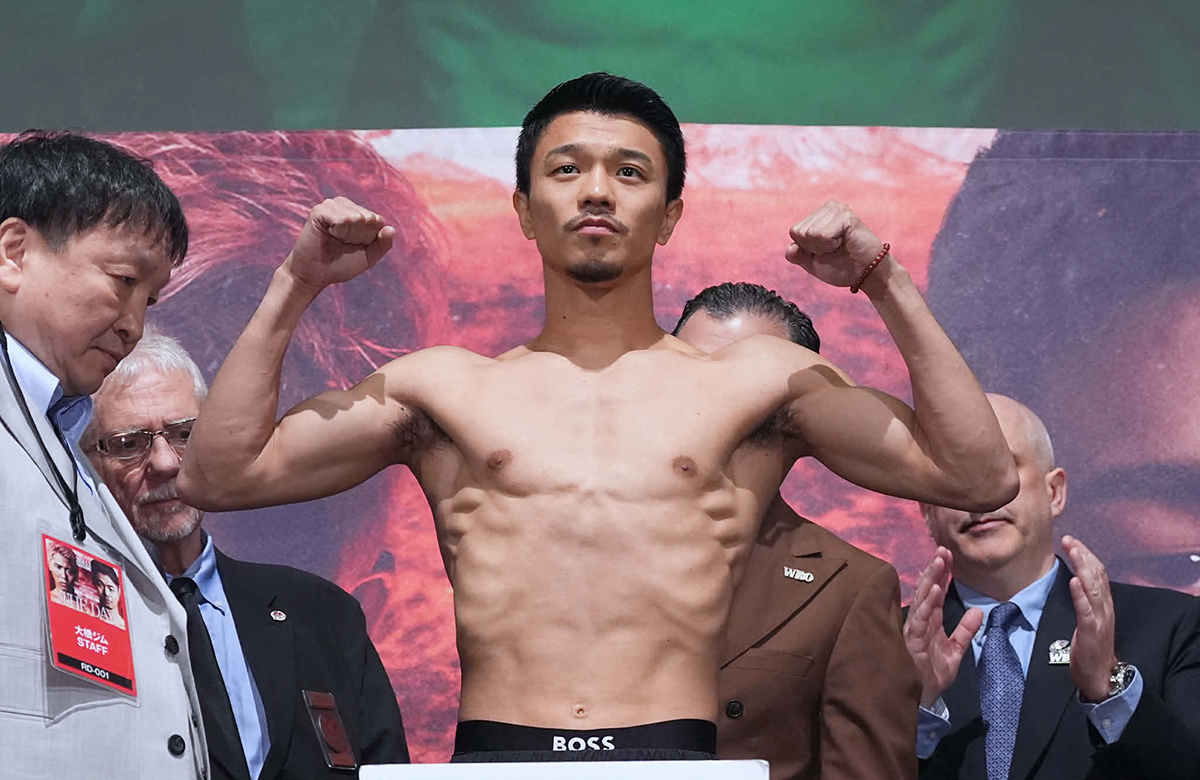
Nakatani is a brilliant technician, but he has mostly been the hammer rather than the nail. A fighter who has never faced serious adversity in the ring can be ill-equipped in the heat of the moment.
The fight in December against Hernandez was perhaps Nakatani’s closest brush with disaster. Sebastian Hernandez turned their fight into a brutal, high-volume trench war. Nakatani was swollen and bleeding, but he never touched the canvas. He showed stamina and grit, but he didn’t have to get off the deck.
There is a specific psychological scar tissue that forms when a fighter gets dropped and comes back to win, especially if that win comes by stoppage. They know for a fact they can survive the worst-case scenario, because they’ve done it.
Nakatani has never been dropped as a pro. He had a single knockdown when fighting youth tournaments. But he hasn’t had to face that moment of truth on the world stage.
It’s one thing to have the perfect game plan when everything is going your way; it’s another thing entirely to have your world turned upside down and still find a way to win.
Inoue has been through the fire. Nakatani’s chin has largely been a no-fly zone, but will he be that skilled or that lucky on Saturday?
The Monster’s Resilience
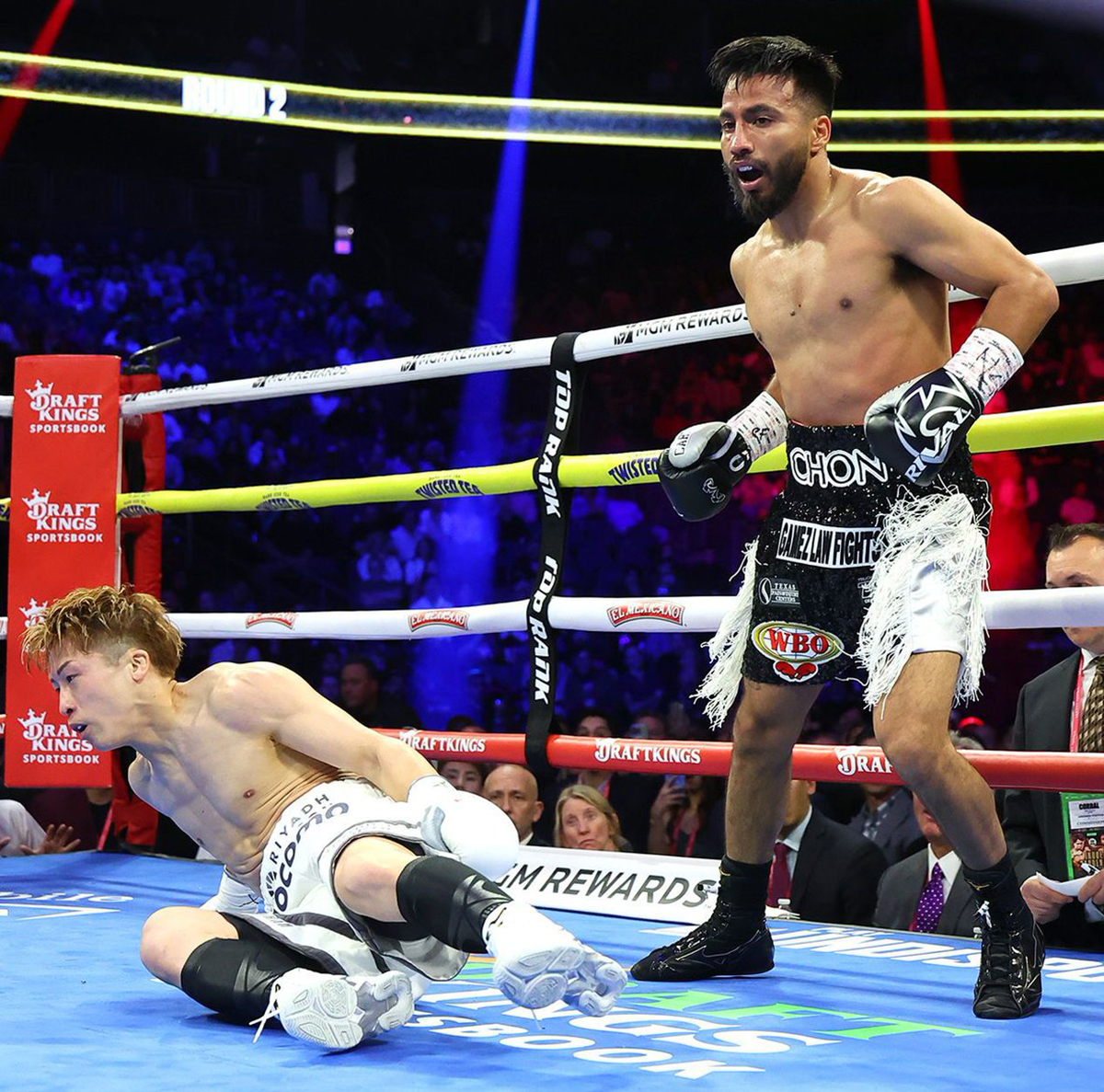
Resilience is the key intangible that often decides a true 50/50 fight like this one. Inoue has got a resume with plenty of resilience on display.
The Donaire I Vision Quest Fight (2019): To fight 10 rounds with a fractured orbital bone and double vision against a puncher like Nonito Donaire requires sheer survival skills. It proved Inoue’s mental threshold for pain is off the charts.
The Nery Wake-Up Call Fight (2024): Being dropped in the first round at the Tokyo Dome in front of 50,000 people is a nightmare scenario. Many fighters would panic. Inoue looked annoyed at himself over his mistake. He got up and methodically dismantled Nery. His recovery speed is another of his elite skills.
The Cardenas Cinco de Mayo Scare (2025): When Naoya Inoue took a hard left hook from Ramon Cardenas last May, it might have been the hardest shot to ever land on Inoue. He was genuinely hurt, and the shock in the T-Mobile Arena was serious. Coming back to stop a game Cardenas in the eighth round proved that even at age 32, Inoue’s will to win hasn’t waned one bit.
Our Prediction for Inoue vs Nakatani
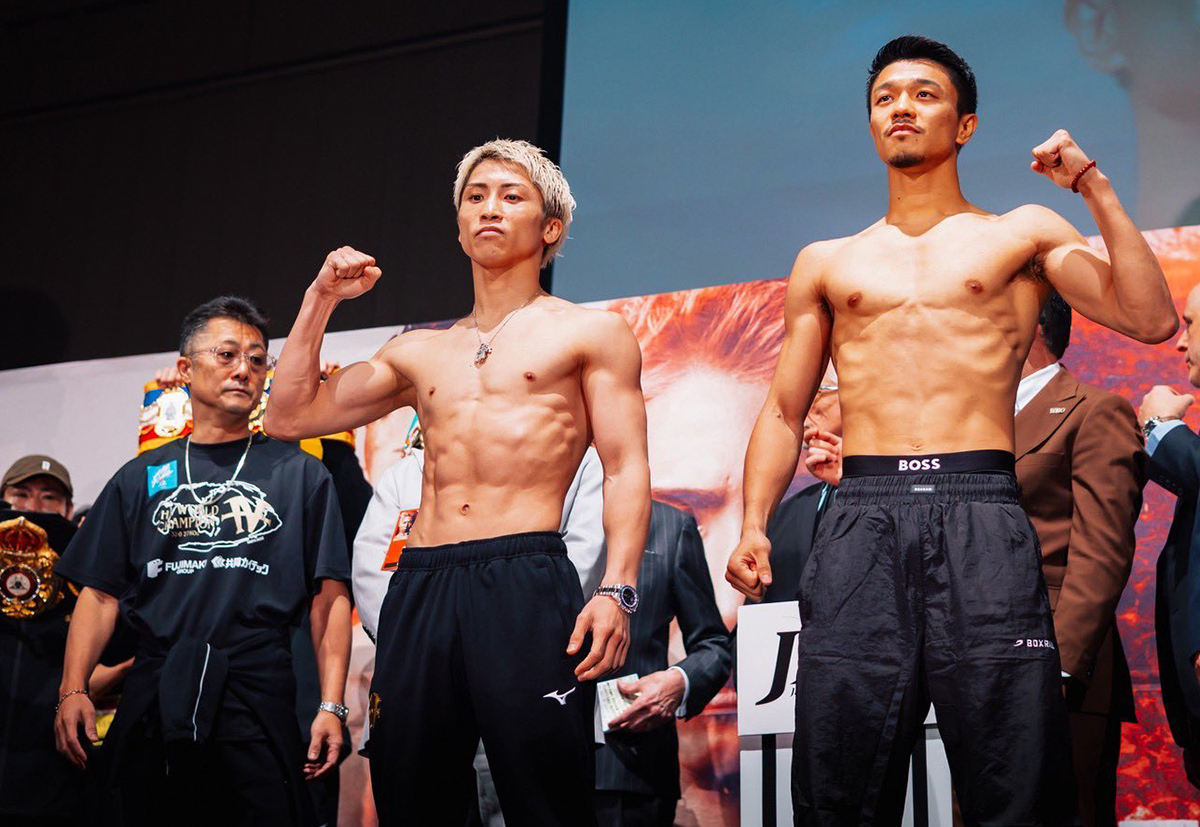
If Inoue lands one of his signature overhand rights or a liver shot that knocks Nakatani down, we are going to see something we’ve never seen, and that’s Junto Nakatani in survival mode.
Will he have the same composure demonstrated by Inoue to clear his head and adjust? Or will the shock of being vulnerable for the first time cause him to unravel?
In a fight this close, going through adversity and coming out the other side victorious is often the tie-breaker. Inoue knows he can live in the dark and find his way out. Nakatani might need to fumble for a flashlight.
It’s why we see Inoue winning this fight. Nakatani would be wise to use his height and reach advantage and fight at distance. But Inoue will pressure Nakatani and cause him to make mistakes. If Inoue has success going to the body without taking significant incoming fire, especially from a left hook he doesn’t see, he has more tools than Nakatani to rely on.
We predict Nakatani will be durable enough to go the distance, but this will be a tense fight with speed, power, and footwork on display with Inoue winning by decision.
The co-main event matches two-time bantamweight champion Takuma Inoue (21-2, 5 KOs), Naoya’s younger brother, who will make his first defense of the WBC title against countryman Kazuto Ioka (32-4-1, 17 KOs). With a win, Ioka would become Japan’s first male five-division champion.
Also on the Inoue vs Nakatani undercard:
Featherweights Toshiki Shimomachi of Osaka (22-1-3, 12 KOs) vs. Reiya Abe of Kanagawa (28-4-2, 10 KOs)
Welterweights Sora Tanaka of Yokohama 5-0, 5 KOs) vs. Jin Sasaki of Tokyo (20-2-1, 18 KOs), for the Oriental and Pacific Boxing Federation title
Flyweights Kosuke Tomioka of Saitama (11-4, 8 KOs) vs. Shogo Tanaka of Yokohama (5-0, 3 KOs), for the WBO Asia Pacific title
Super middleweights Deok No Yun of South Korea (10-2-1, 8 KOs) vs. Yuito Moriwaki of Tokyo (1-0-1) for the WBO Asia Pacific and Oriental and Pacific Boxing Federation titles
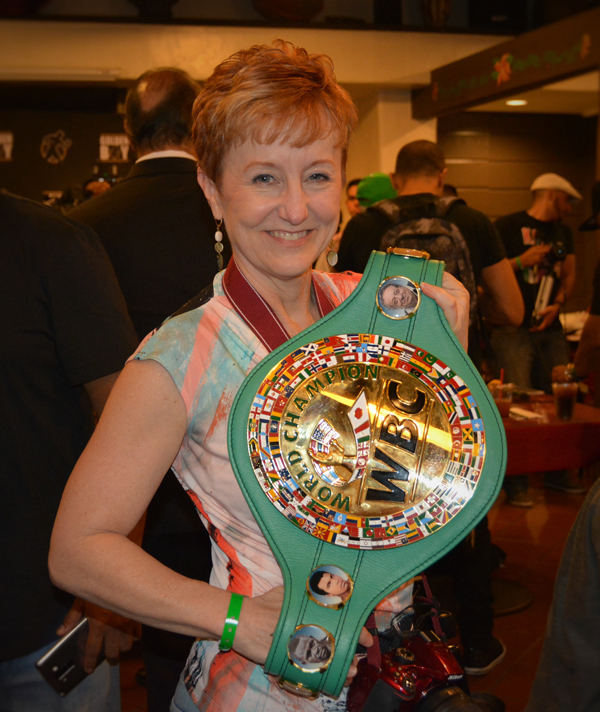
Gayle Falkenthal is an award-winning boxing journalist with more than four dozen awards for both written and video coverage from the Boxing Writers Association of America, Society of Professional Journalists, and San Diego Press Club, where she is the past president. She is the only woman journalist who is a full voting member of the BWAA. She is the Boxing Editor for NY Fights based in San Diego, California.