Jim Miller has stepped into the UFC octagon more than anyone else in history. For nearly twenty years, he has endured wars and signed contract after contract in the world’s most grueling promotion. Despite his longevity, Miller pays for his family’s health insurance out of pocket — a monthly expense he told MMA Junkie costs him “a fortune.”
That reality hit different over the past 13 months, when Miller’s 14-year-old son, Wyatt, was diagnosed with aggressive cancer called rhabdomyosarcoma. It required two rounds of chemotherapy and five weeks of daily radiation sessions. Miller stepped away from competition to be present for every treatment, every $50 copay, and every 90-minute drive down to Rutgers for his son’s sessions
His son beat it. Miller is now set to return this Saturday at UFC 328 in Newark to face Jared Gordon. During pre-fight interviews this week, he has been vocal about the reality of his bills, which remain a burden even as he prepares for his record-extending 47th walk to the octagon.
Jim Miller Opens Up on UFC Healthcare Gap After Son Beats Rhabdomyosarcoma
Miller was careful with his words. He acknowledged that he is in a better financial position than many families he met during his son’s treatment. After 40 fights, he is grateful that his pay reflects his experience, but he noted that the structural issues he described affect the entire UFC roster.
As an independent contractor, Miller has no employer-sponsored health insurance. While the UFC covers injuries sustained during fights or training camps, full family healthcare is the fighter’s responsibility.
Miller told MMA Junkie, “I’ve been paying for health insurance for my family for quite a while now, and we pay a fortune. And some of those fights are still ongoing with the insurance company, but for the most part, they pay for some of the big stuff. So we’re still trying to make sure that they uphold their end of the bargain.”
#UFC328‘s Jim Miller discusses the challenges of having no full health care through UFC as his son beat a rare form of cancer.
“I’ve been paying health insurance for my family for a while now, and we pay a fortune.”
(via @MikeBohn) pic.twitter.com/hUvx3PBIX7
— MMA Junkie (@MMAJunkie) May 6, 2026
He also described how hidden costs like parking, gas, and $50 copays stack up over weeks of daily treatment.
“It all adds up,” he said. “But I see some of the situations that some of the other patients are in, and their parents are in, and I’d rather bring light to them.”
ALSO READ: Something Historic Awaits the Winner of Tyson Fury vs Anthony Joshua
Now the million-dollar question is where the UFC’s billions in revenue are going if a veteran like Jim Miller still struggles with family health insurance.
UFC’s $7.7B Paramount Deal Failing to Boost Fighter Pay as Expected
When the UFC announced its seven-year, $7.7 billion broadcast deal with Paramount, Dana White told Front Office Sports that the money would benefit fighters. He claimed the promotion has always looked to increase pay and would do so again.
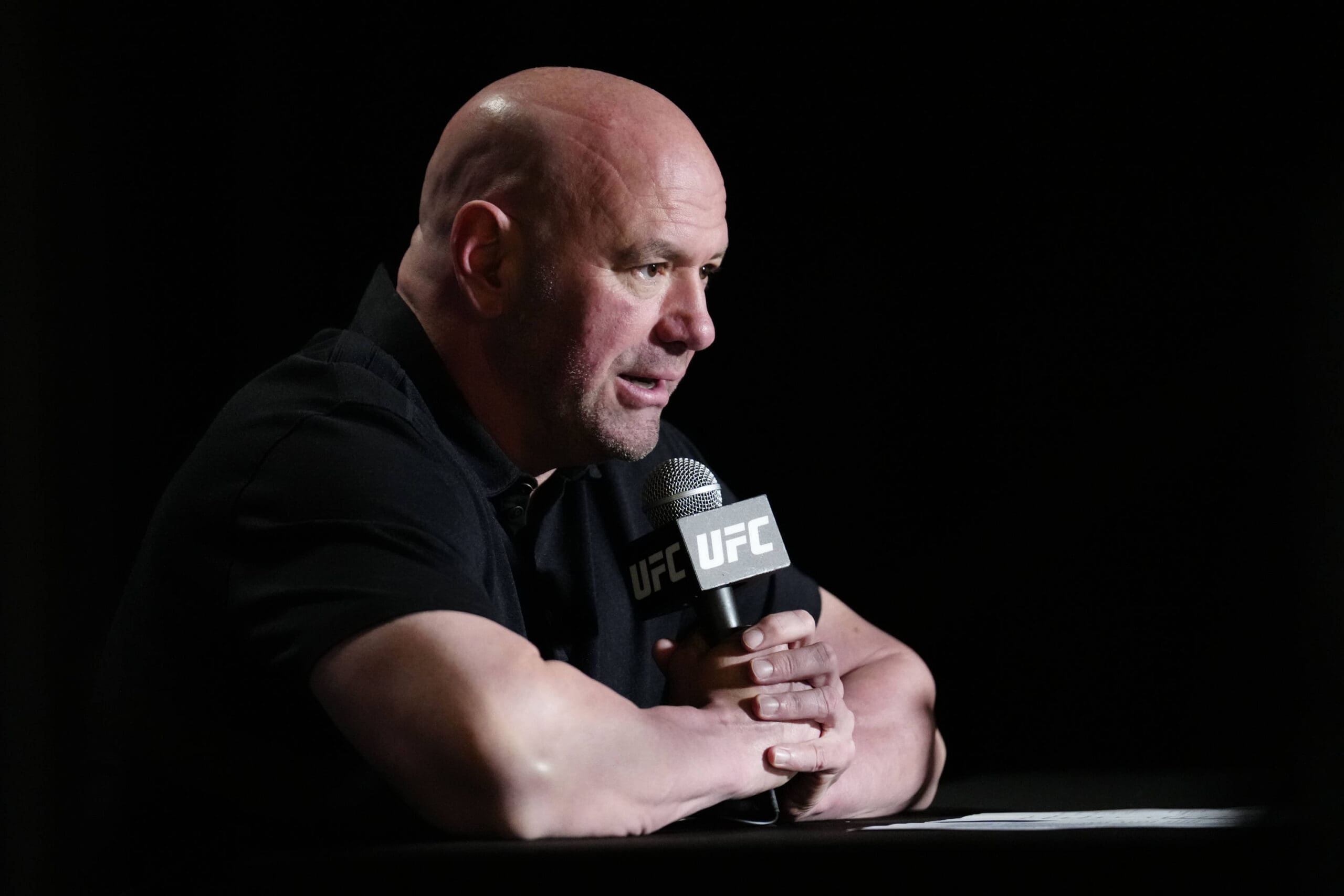
After the Paramount deal began in January, the UFC doubled post-fight bonuses from $50,000 to $100,000 and added a $25,000 “finish” bonus. However, healthcare was never part of the deal.
The core of the issue is that UFC fighters are independent contractors, not employees. While top boxers like Canelo Alvarez can earn roughly the equivalent of the entire UFC roster’s annual salary in a single night, the gap between the UFC’s record profits and what the athletes actually take home is wider than ever.