The Man with Two Names
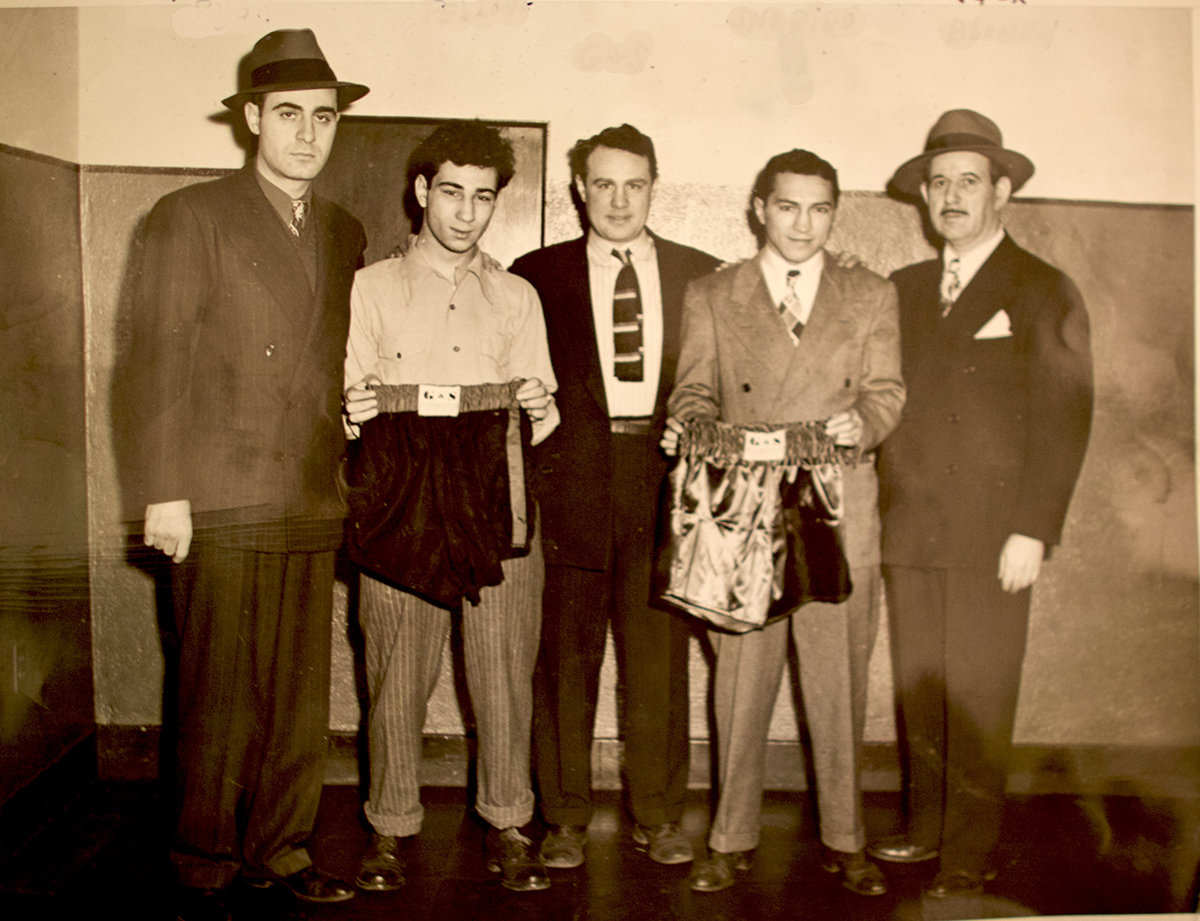
In the smoke-filled balconies of the old Madison Square Garden, he was Tommy Ryan, but his real name was Thomas Eboli. This duality was a survival tactic born in the concrete canyons of New York City. Ryan/Eboli was a product of Jacobs Beach at a time when the line between the boxing commissioner’s office and the local mob hangout was as thin as a Hoyle playing card.
Despite what his other life entailed, Ryan’s boxing passion was genuine. According to his son, Xavier, he fought ten pro bouts under the Ryan alias, borrowed from the 1890s middleweight champ, to keep his career a secret from his father. The promise was that once he lost, he would retire. When he finally tasted defeat and hung up the gloves, he moved to the corner.
“He became a manager, I think in his late 30s, it would be around 1937-38, maybe 1940,” said Xavier Eboli, the son of Tommy Ryan. His father never really talked about details.
“You couldn’t sit and ask him questions. He had the feeling he was being grilled,” Eboli said.
Unlike other alleged mafia frontmen, Ryan understood and knew the sweet science. He knew how to wrap a hand and call a counterpunch. This earned him a rare commodity: a legitimate New York State Athletic Commission manager’s license.
The Stable: Building Champions and Enforcers
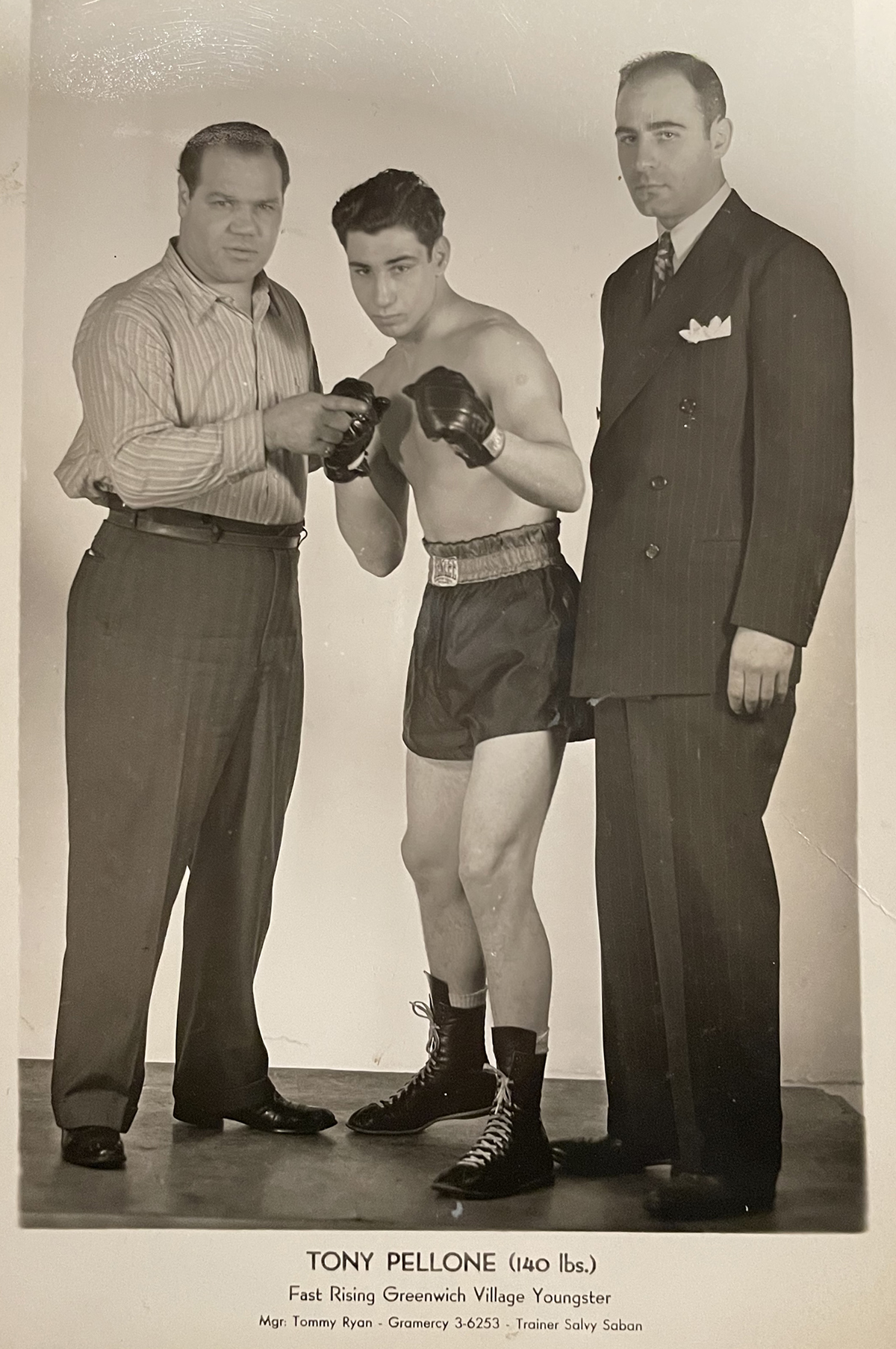
Ryan’s stable reflected the Genovese family’s neighborhood roots, a collection of men who weren’t just assets, but extensions of his inner circle.
- Tony Pellone (The Crown Jewel): A flashy, talented welterweight from the Village, Pellone was Eboli’s favorite. In Boss in the Shadows, Xavier Eboli recounts how his father treated Pellone like royalty, he was best man at Pellone’s wedding and godfather to his son. When Pellone fought, the Village shut down; he was the local hero who proved Eboli could produce a world-class contender.
- Rocky Castellani (The Workhorse): A hard-charging, brilliant technician from Pennsylvania. Even after Ryan was officially banned from boxing for the 1952 Madison Square Garden incident, he briefly continued to manage Castellani. He would allegedly sneak into arenas just to watch Rocky work. Castellani battled Sugar Ray Robinson, losing a split decision.
- Vincent “The Chin” Gigante (The Enforcer): A young light heavyweight with a 21-4 record. Long before he was the “Oddfather,” Gigante was Ryan’s young protégé. The bond between the future boss and his mentor was forged in the glow of the boxing gym lights, long before the street politics began.
- Salvi “Baby” Saban (The Loyal Trainer): A promising middleweight in the 1930s whose career ended tragically when he lost a leg in a truck accident. Demonstrating the deep loyalty he felt for his boys, Ryan didn’t discard him; instead, he hired Saban as a trainer, entrusting him with the development of Pellone and Gigante.
- Wayland Douglas (The Lifelong Friend): A welterweight club fighter who retired in 1947. Decades later, when Douglas was going blind from ring injuries, Ryan personally paid for the surgery to restore his sight and found him a job. Douglas remained so grateful that he had a boxing glove bronzed for Ryan, inscribed: “To the World’s Greatest Manager and My Best Friend.”
The Retreat at The Lake
When Ryan’s fighters needed to sharpen their steel, they headed to Greenwood Lake. This was “The Lake,” a sprawling retreat where the Eboli family lived in a cottage and the fighters stayed during camp.
“When (the fighters) contracted for a fight, he would bring them up there. Sometimes they would stay at our house,” Xavier shared.
The fighters became family to the Ebolis, with Xavier’s mother cooking for them and Xavier sometimes training with the fighters. When not training, Rocky Castellani used to take Xavier to the movies, even defending Xavier by flattening rowdy teenagers at the theater. “Rocky made sure I didn’t tell my father about that,” Xavier laughed.
Life at the lake was a surreal blend of athletic discipline and underworld luxury. While Castellani or Pellone were out on five-mile roadwork runs around the lake, men like Vito Genovese or Anthony “Tony Bender” Strollo might be sitting on the porch.
For Tommy Ryan, it was where his two worlds merged perfectly: the sweat and leather of the ring meeting the quiet power of the alleged Cosa Nostra hierarchy.
‘He Treated Him Like a Son’: The Pellone Connection
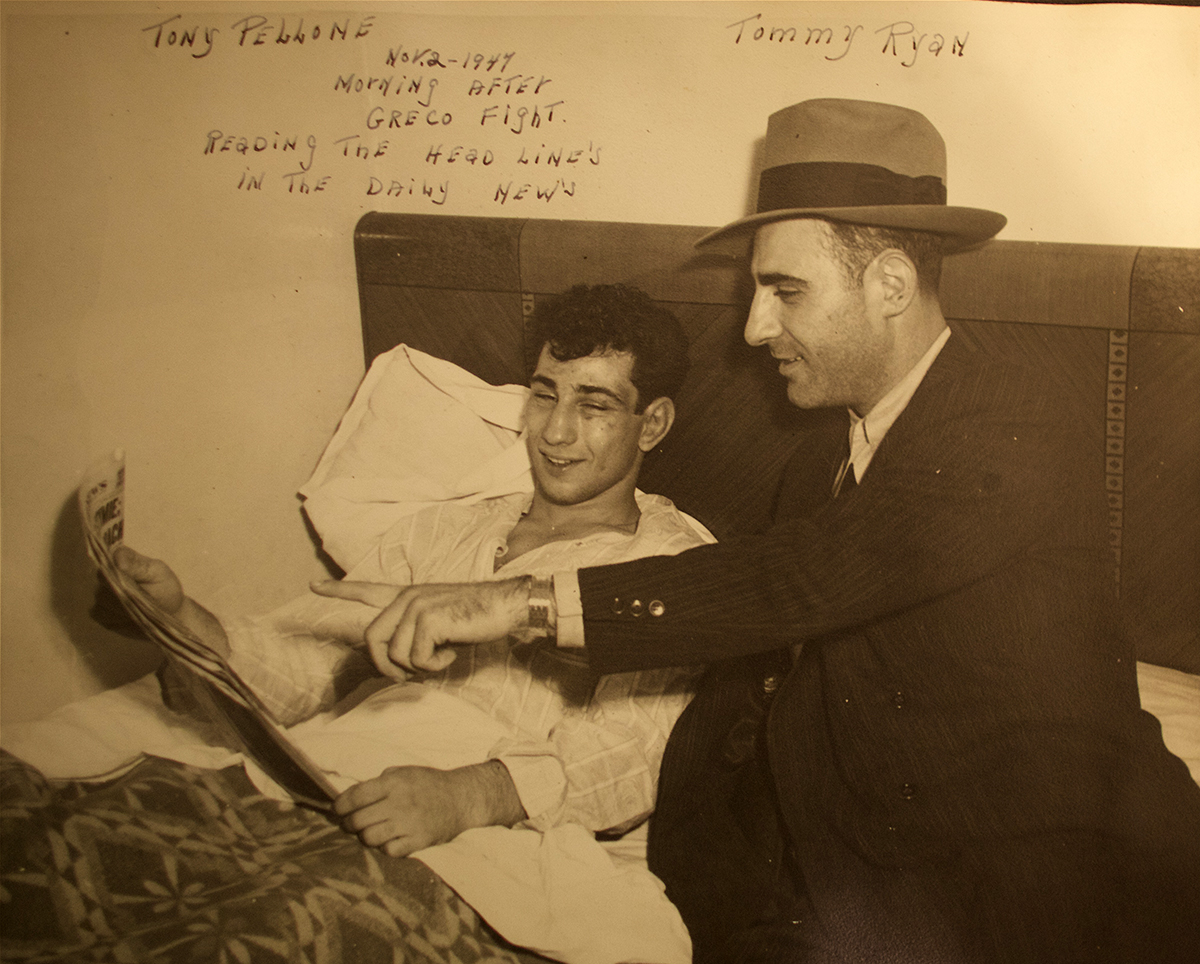
The relationship between Eboli and Tony Pellone transcended the typical manager-fighter contract. As Xavier Eboli notes:
“Tony was a fine addition to the house. He was very astute and religious about his training… My father used to treat him more like a son. It was more than a business relationship. They were best friends.”
Eboli stood as the best man at Pellone’s wedding and became the godfather to his son. Even the cynical matchmaker Teddy Brenner admitted, “Ryan treated Pellone pretty good. He gave the kid a clean deal when they split up purses.”
The Night the Lights Went Out: January 11, 1952
The turning point for Tommy Ryan occurred at Madison Square Garden on the “Gillette Cavalcade of Sports.” Rocky Castellani was facing Ernie “The Rock” Durando. Castellani was putting on a masterclass, boxing circles around the heavy-handed Durando for six rounds.
But in the seventh, the fight would take a turn that would change boxing forever. Durando caught Castellani with a big right uppercut, dropping him. Castellani beat the count and got back up. Referee Ray Miller, a former fighter himself, waved the fight over at 2:32 of the round.
“I think Weill was in cahoots with the referee,” speculates Xavier.
Al Weill was not only the matchmaker for The Garden, but he served as Durando’s manager.
“Weill was out of line for even managing Durando. It is not acceptable for the matchmaker to be representing a fighter,” Xavier continued.
As for the stoppage, Miller looks to be pushing Castellani backward, while holding his gloves, after the knockdown, and then stopped the fight.
“(Castellani) got hit with a pretty good punch. When he got up, Miller was wiping his gloves on his shirt; it was obvious he was pushing him backward,” said Xavier.
Castellani contended that he got caught, but he was never hurt. He was ready to go again. He couldn’t understand why Miller was pushing him backward. He was in shock when the fight was halted.
What happened next was pure bedlam. The Garden erupted, but no one was more explosive than Tommy Ryan. Convinced that the fight was a job orchestrated by Al Weill (the matchmaker, who was also the nefarious manager of Rocky Marciano), Ryan charged into the ring.
“It was the scene out of a bad movie,” Xavier said.
Ryan stormed the canvas and swung at Miller, landing a punch that nearly ignited a riot. Still fuming, Ryan tracked Weill to the dressing room area. In front of witnesses, he leveled the most powerful promoter in boxing with a single blow.
NYSAC Chairman Robert Christenberry didn’t hesitate: “If boxing is to be a brawl, I want no part of it.” Ryan was banned for life and sentenced to 60 days in the can, his only prison time in a 40-year alleged criminal career.
“He was out for all intents and purposes. I do think he was pulling the strings behind the scenes for a while longer,” said Xavier.
Ryan would eventually sell Castellani’s contract to Alvin Naiman out of Cleveland.
“He had a lifetime banishment. I don’t think an appeal would have gone very far. He wasn’t going to fight it,” shared Xavier.
The Rise and Fall of a Genovese Boss
With his license gone, Ryan focused on cigarette vending machines and other enterprises. He leaned fully into his other business. When Vito Genovese went to prison in 1959, Ryan was tapped for the “ruling panel.” By the mid-60s, he was the Acting Boss.
He traded sweatpants for silk suits but never completely left the sport. He still was in the shadows, ensuring Jacobs Beach paid its taxes. But his volatility remained. By 1972, rumors swirled that he owed $4 million to Carlo Gambino for a failed drug deal.
On July 16, 1972, after leaving a girlfriend’s apartment in Brooklyn, the man who managed world-class fighters met a world-class hit. As he walked to his Cadillac, he was gunned down in traditional gangland style on a quiet residential street in the Crown Heights district of Brooklyn. Five bullets ended the life of the ‘Boss in the Shadows.’
The Tommy Ryan Legacy
Thomas Ryan Eboli remains a ghost in boxing history. To his son Xavier, he was a father and a man who genuinely loved his fighters. To the FBI, he was a racketeer. In the end, Ryan’s life proves that in the 20th-century fight game, everyone eventually had to take their count.
Sources and References
- Brenner, Teddy & Nagler, Barney. Only the Ring Was Square. Prentice-Hall, (1981).
- Eboli, Xavier & Cassidy, Bobby. Boss in the Shadows: The Life and Death of Thomas “Tommy Ryan” Eboli. (2024).
- Hannibal Boxing. “Rat Bastards: Thomas (Tommy Ryan) Eboli.” (2020).
- Perlmutter, Emanuel. “A key gang figure slain in Brooklyn,” New York Times.
- FBI Vault. Thomas Ryan Eboli Surveillance Records, Part 2 of 5.

A lifelong resident of Long Island, New York, Matthew Pomara, MMP, has always followed the sweet science. He caught the tail end of the Ali era, was a staunch follower of the Four Kings of the 80’s, loved the great expansion of the sport in the 90’s and has stayed with boxing through the 2000s. He has been published in The Ring Magazine and loves contributing to @NYFights. He can be found on Twitter @pomara_matt