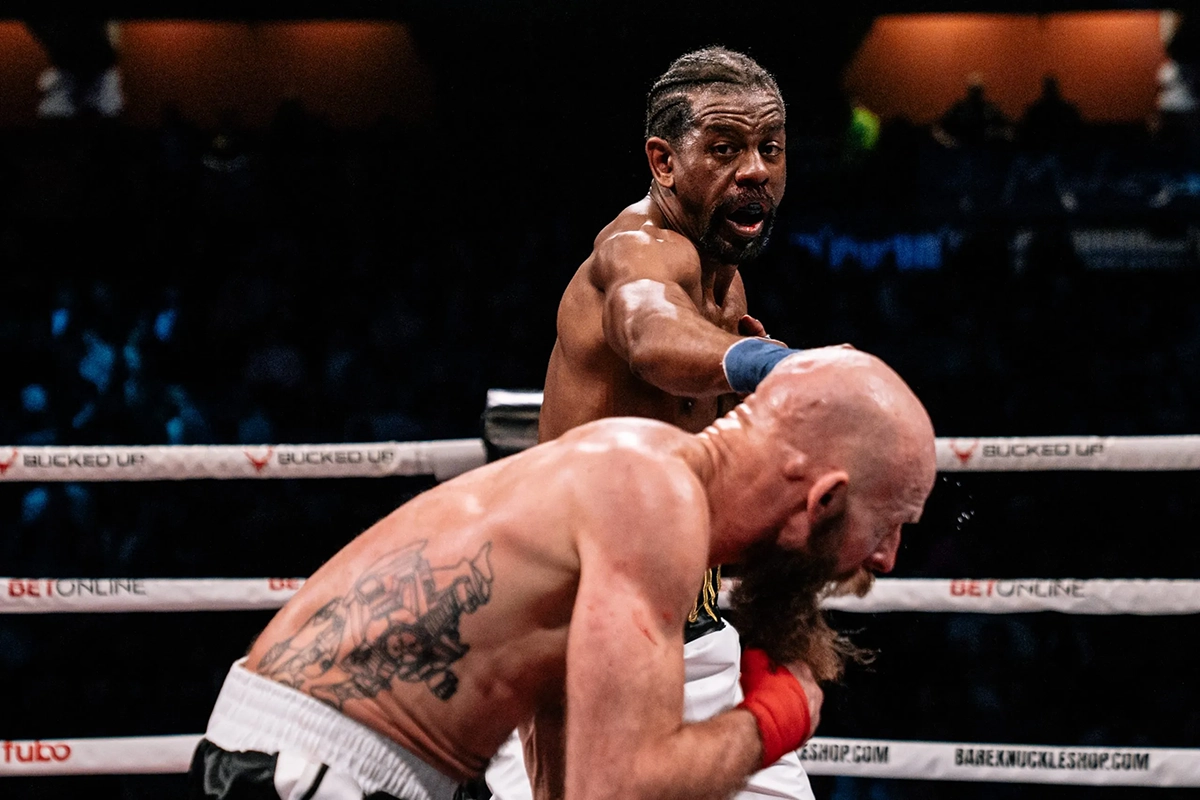
At 40, Jamel Herring has lived several lives. Marine Corps combat veteran. United States Olympic Team member. Former WBO World Junior Lightweight champion. Major network color commentator. Author.
But Herring is far from finished with his career as a professional athlete. What comes next for the man nicknamed “Semper Fi” is an improbable return to combat sports. This Saturday, May 22, Herring will attempt to become a two-time world champion in a second discipline: bare-knuckle boxing.
In just his second bare-knuckle fight, Herring (1-0) will step into a desert setting that should feel familiar after tours in the Middle East: the Acrisure Arena in Palm Desert, California, taking on a late replacement in Michael Larrimore (3-1) as the favorite in his bantamweight division title fight, with his sights set firmly on another championship belt.
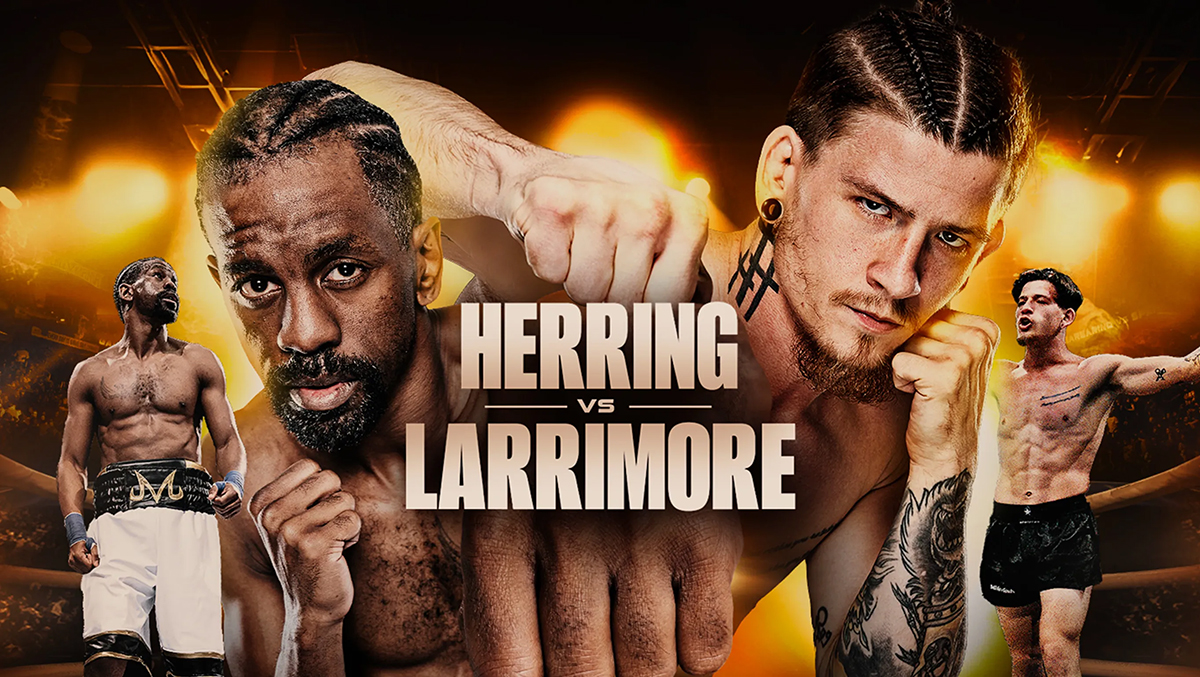
The entire BKFC card airs on DAZN Boxing on Friday at 10 p.m. ET/7 p.m. PT.
Herring was originally scheduled to face UFC veteran Nate Maness at BKFC 89. However, Maness was forced to withdraw due to medical issues 10 days ago, and Larrimore will get his shot.
From the Front Lines to the Limelight
Herring’s journey to the Acrisure Arena may have made many twists and turns along the road, but that road has been paved with the foundational discipline required in the United States Marine Corps. Herring’s nickname is earned just as he earned his stripes as a Sergeant. A two-tour Iraq War veteran, Herring originally honed his athletic skills within the Marine Corps boxing program. He eventually rose through the amateur ranks, becoming the captain of the 2012 U.S. Olympic boxing team.
From his Olympic experience, Herring made a successful transition to a professional boxing career, achieving his goal of becoming a champion with a sensational sixth-round TKO victory over former world champion Carl Frampton of Ireland in April 2021 in Dubai. Frampton retired after the loss.
Herring then took on Shakur Stevenson, a hill no one has been able to climb. He continued but took several losses and moved on to new projects. Still, his need for competition drove him to pursue a new fighting discipline.
Herring wasn’t completely sold until he had a conversation with former world title challenger Austin Trout, who famously gave a young Saul Alvarez a run for his money and has a win over Miguel Cotto.
“I just started watching it, having the time away from the ring,” recalled Herring in a recent interview. “So I started just looking at it from a different lens. Watching Austin, really is (the) one who got me into wanting to try it.” Herring then began watching other bare-knuckle fights, assessing how his boxing skills might translate.
“As a Marine. I just got tired of just sitting around doing nothing, so I needed to find something to do with my free time. And I just really missed training, but I wanted to do something different and add something else to my resume.” The BKFC competitor in Herring was born, and he won his first bout in January against Matt Guymon.
Speaking with Herring several weeks before his title fight as he trained in Los Angeles with Henry Ramirez, he was ready to go. “I’m definitely in shape. I could fight today, thanks to Henry Ramirez and the team.”
The Transition: Why Bare-Knuckle for Jamel Herring?
The move to bare-knuckle boxing, a sport that moves at a quick pace with five two-minute rounds, requires a reset of a boxer’s internal clock and a second reset of ring generalship and gauging distance, says Herring. Without the two inches of padding extending professional boxing gloves, the margin for error is razor-thin and the tactical approach changes.
“It’s a faster pace,” said Herring. “In a professional boxing match, you have three-minute rounds. Here, you have to have a sense of idea of what you want to do as soon as the bell rings.” Herring said what’s been most difficult for him initially is finding the right punching range. He found that without the gloves, lateral and upper body movement becomes even more critical to avoid the resulting mpact of a bare fist.
Understanding the risks, Herring was drawn to the legitimacy of the sport. Watching Trout’s success from a distance convinced him it not just a sport for the bloodthirsty fan base, but instead a legitimate athletic challenge that could add a unique chapter to his resume.
Jamel Herring reporting for duty 🫡 Friday’s mission: BANTAMWEIGHT GOLD 😈#BKFC89 | Friday | Watch exclusively on DAZN pic.twitter.com/I8LPbuNngb
— Bare Knuckle FC (@bareknucklefc) May 20, 2026
Using Boxing as Therapy
While the physical challenge is undeniable, the activity serves a much deeper purpose for Jamel Herring. Like many military veterans, Herring continues to work through the aftermath of his military service. Herring is remarkably candid about his struggles with Post-Traumatic Stress Disorder (PTSD), depression, and anxiety.
For him, the grueling structure of a fight camp is more than preparation. It has been his lifeline for decades.
“I just like keeping myself busy,” explains Herring. “Especially as a Marine dealing with PTSD and depression and anxiety at times. Boxing, for me, is the medicine to keep me up and going on the right path.”
The structure and purpose of athletic competition replace the discipline and purpose many veterans miss when they transition back to civilian life. The loss of the day-to-day structure can create an opening sometimes filled by the shadows of trauma. For Herring, the gym is the place where a light shines, and the shadows vanish.
See our full interview with Jamel Herring.
A Beacon for the Veteran Community
Herring values having a platform that allows him to speak to a community that often suffers in silence. He views his current career move not just as a personal quest, but as a way to show other veterans that their stories and their struggles matter to someone.
“I’m not perfect. I’ve had my ups and downs. But I got up, dusted myself off, and continued to grow. I want to reach out to more people and let them know, ‘listen, you’re not alone.’ Trust me, I’m one of the guys more than willing to listen to your story. And if you think your story is small or doesn’t matter, it actually does matter to somebody, especially somebody like me.
Herring says this is the motivation behind his combat sports platform. “I just want to reach out to people and let them know that it’s not over until they say it’s over. They have the strength and mental capabilities to keep pushing forward.”
His advice to fellow veterans is simple: stay busy and stay structured.
Prepping For A Championship Fight – Again
Herring remains a student of the game despite more than two decades of high-level experience. Working with Ramirez, he focuses on the basics while adjusting to the unique demands of bare-knuckle combat.
Recently, Herring has become the source of advice to other fighters, as Austin Trout did for Herring. He fielded calls from Vargas brothers Amado (13-0, 6 KOs) and Fernando Vargas, Jr. (17-1, 15 KOs) who announced in April they had signed with BKFC after pursuing professional boxing alongside brother Emiliano Vargas and training with their Hall of Fame father Fernando Vargas Sr.
Herring’s friend and former stablemate, the recently retired four-division world champion Terence “Bud” Crawford, initially thought he was crazy for the move to bare-knuckle, but now Crawford watches in support of Herring.
Outside the intensity of training, Herring’s ultimate motivation is his family. Asked how he spends his time when he isn’t training these days, Herring said, “I just want to be a dad.”
Jamel Herring’s journey to the Acrisure Arena this Friday should remind fans and all Americans that for a veteran, the fight never really ends. It merely changes. Whether he’s fighting for a title, fighting for his mental health, or fighting to inspire his fellow veterans, Herring continues to live by the Marine Corps motto: Semper Fidelis: Always Faithful.
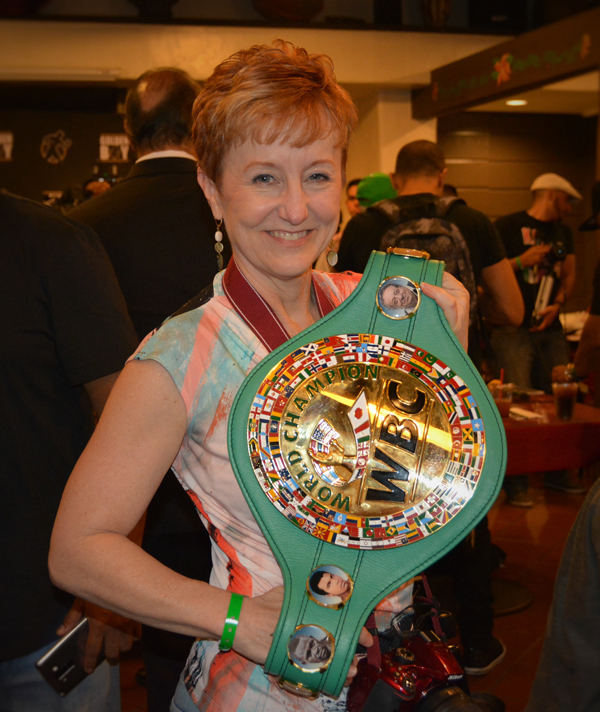
Gayle Falkenthal is an award-winning boxing journalist with more than four dozen awards for both written and video coverage from the Boxing Writers Association of America, Society of Professional Journalists, and San Diego Press Club, where she is the past president. She is the only woman journalist who is a full voting member of the BWAA. She is the Boxing Editor for NY Fights based in San Diego, California.