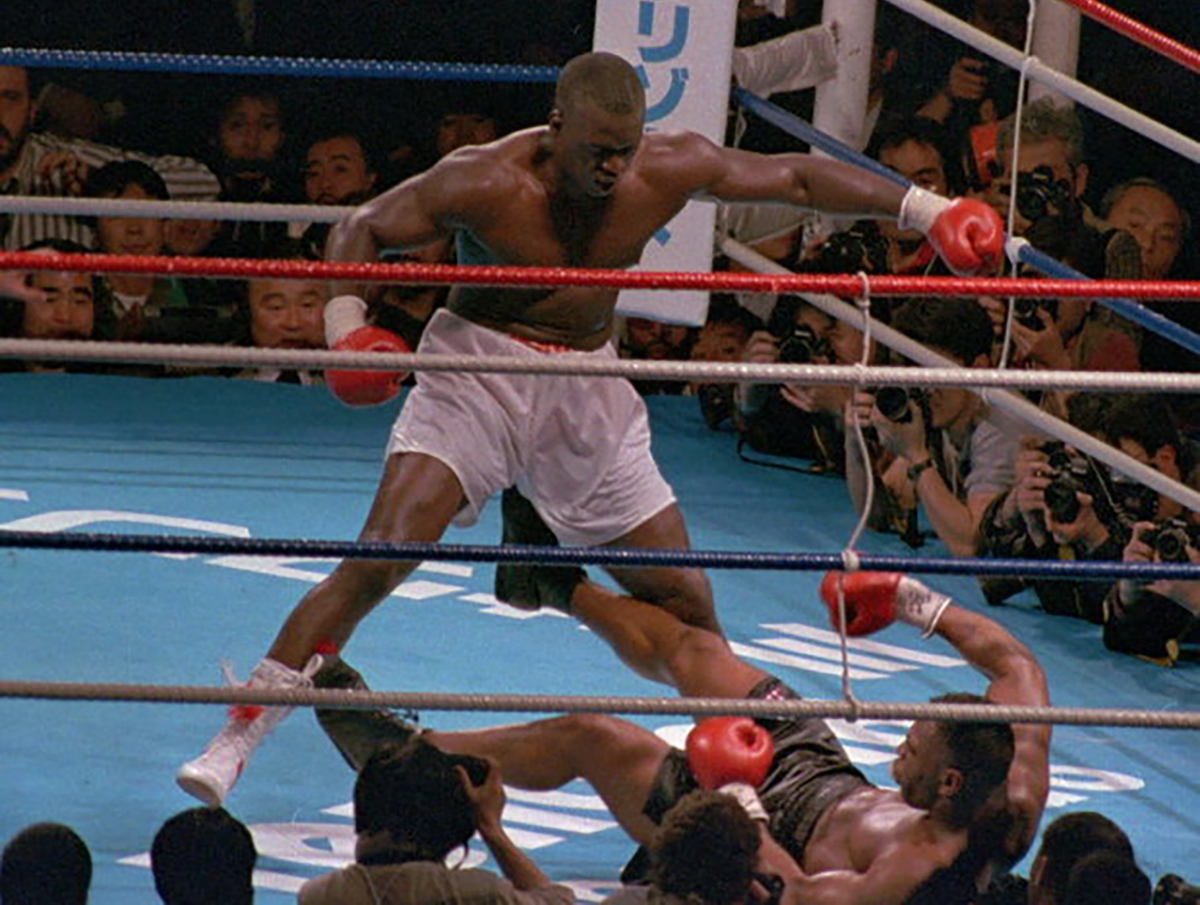
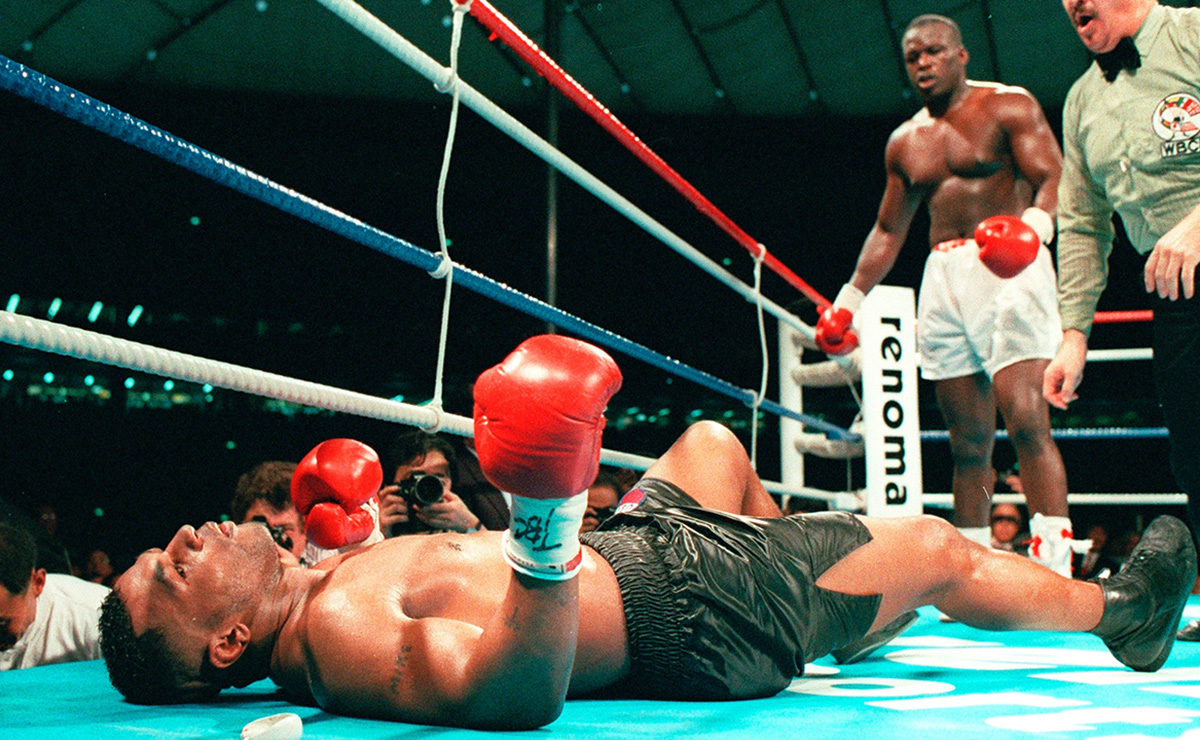
On February 11, 1990, the boxing world didn’t just witness an upset; it witnessed an event that would be a ‘where were you when it happened’ moment. When James “Buster” Douglas sent Mike Tyson’s mouthpiece flying in the tenth round at the Tokyo Dome, the shockwaves felt like an act of God.
We called it a miracle. We called it a fluke. It is arguably the greatest upset not only in boxing history, but in the history of sports.
But for those who weren’t blinded by the aura of Iron Mike, the blueprints for that night had been drafted years earlier. The narrative says Tyson was invincible until he wasn’t. The tape, however, says something different. The clues weren’t just there; they were screaming. We just didn’t see them; we saw someone who was invincible.
Highlights: Tyson vs Douglas
Tyson vs Douglas: Appointment Television
Back then, Mike Tyson was more than a fighter. He was appointment television. I remember it vividly. I was on a date in high school and left early just to get home and watch the Larry Holmes fight.
Later, when Tyson fought Frank Bruno, one of my favorite fighters, I was at a birthday party. I proceeded to shut the music off and put the fight on. (I was never invited back.) While Bruno gave Tyson some legitimate trouble, he eventually succumbed to the barrage. Then Tyson blew out Carl Williams in 93 seconds, and the aura of invincibility was reasserted.
I was working as a stock boy in a grocery store that fateful February night in 1990. There would be no leaving early and no way to “shut the music” to watch. I was working until 11 p.m. East Coast time. Because of the Williams fight, the general feeling was that Tyson would simply blow out the perennial underachiever Douglas.
Something nagged at me, though: the Bruno fight. Frank Bruno had made it last five rounds and rocked Tyson early. My feeling was that if Bruno could make a fight of it, Douglas could too. My hope was that I’d get home in time to watch Tyson finally put him away.
My Dad picked me up from work and said we had to hurry, that Douglas was “making a fight of it.”
He was doing more than that. He was following a blueprint years in the making.
The Architecture of Struggle
The “Peek-a-Boo” style was designed for a shorter man to get inside, but it required relentless head movement and discipline. By the time he arrived in Tokyo, Tyson had fired Kevin Rooney and moved away from the technical nuances that made him the most feared fighter since Sonny Liston. He was walking in straight lines, head-hunting, and waiting for one big shot.
Against a tall, disciplined fighter with a heartbeat who was not afraid, it became a recipe for disaster.
Ghosts of Fights Past for Mike Tyson
- James “Quick” Tillis (1986): The first man to take Tyson the distance. Tillis used lateral movement that made Tyson look “straight-legged.” It proved that if you survived the first three rounds, Tyson’s frustration began to outweigh his ferocity.
- Mitch “Blood” Green (1986): At 6’5″, Green provided the blueprint for the “ugly” fight. He smothered Tyson’s explosive hooks by clinching and leaning. Tyson won the decision, but he was visibly puzzled by a giant who refused to be knocked out.
- Jose Ribalta (1986): A massive harbinger for Tokyo. The 6’3” Ribalta absorbed everything and stayed in the pocket. He proved a big man with a chin could drag Tyson into deep water.
- James “Bonecrusher” Smith (1987): Smith neutralized Tyson’s inside game by simply leaning on him. It was a slog, but Smith proved Tyson could be rattled.
- Tyrell Biggs (1987): In the first round, the 6’5” Biggs actually won the frame with a textbook jab. The former Olympian fought the elusive perfect round. The technical vulnerability was exposed: Tyson could be outboxed by a long, disciplined reach.
Tyson vs Douglas: A Perfect Storm
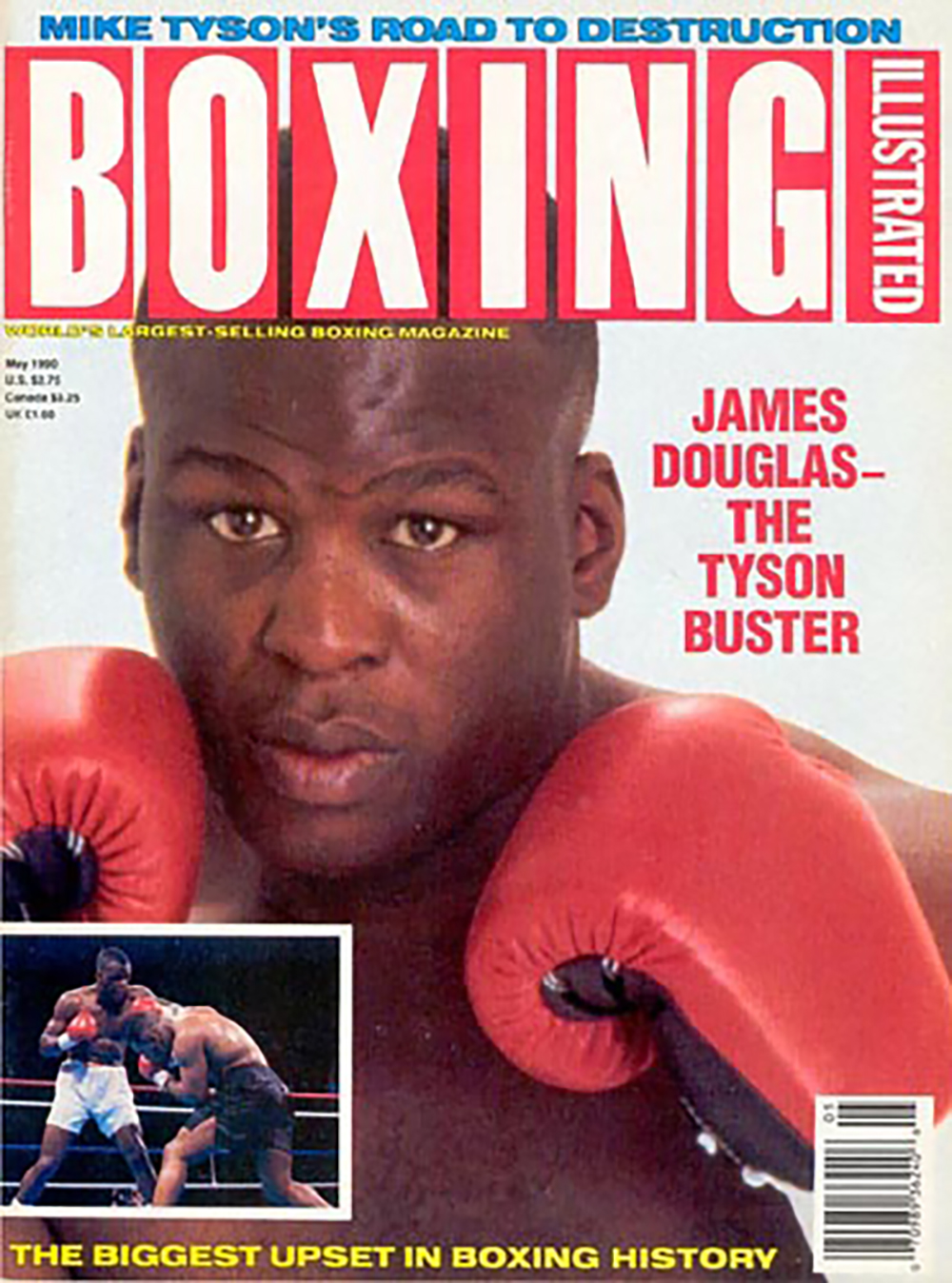
In Tokyo, Tyson collided with the final evolution of this tactical kryptonite. Buster Douglas was 6’4″ with a 12-inch reach advantage. He took the heart of Smith, the jab of Biggs, the clinching of Green, and the durability of Ribalta and combined them into one focused performance.
Unlike the others, Douglas had a ‘why’ that outweighed his fear. Fighting just 23 days after the death of his mother, Lula Pearl, Douglas was a man possessed. When Tyson landed his signature uppercut in the 8th, Douglas didn’t stay down. He beat the count and came back even more aggressive. The boxing world had never seen that version of Douglas before or since.
Legacy of the Reach
When that final four-punch combination landed in the 10th, with the crescendo kill shot that nearly took Tyson’s head off his shoulders, it wasn’t a lucky punch. It was the inevitable conclusion of a technical struggle Tyson had been having for a long time.
Buster Douglas didn’t just beat Mike Tyson. He exposed the fact that even a force of nature can be neutralized if you have the right reach and a reason to stand your ground.
We were all shocked, and it was unfathomable that Douglas, of all people, could beat Mike Tyson. My family sat there stunned and couldn’t believe what we witnessed.
Thirty-six years later, it’s time to stop calling Tyson vs Douglas a surprise and start calling it what it was: the perfect collision of a fighter who lost his way and a man who finally found his.

A lifelong resident of Long Island, New York, Matthew Pomara, MMP, has always followed the sweet science. He caught the tail end of the Ali era, was a staunch follower of the Four Kings of the 80’s, loved the great expansion of the sport in the 90’s and has stayed with boxing through the 2000s. He has been published in The Ring Magazine and loves contributing to @NYFights. He can be found on Twitter @pomara_matt