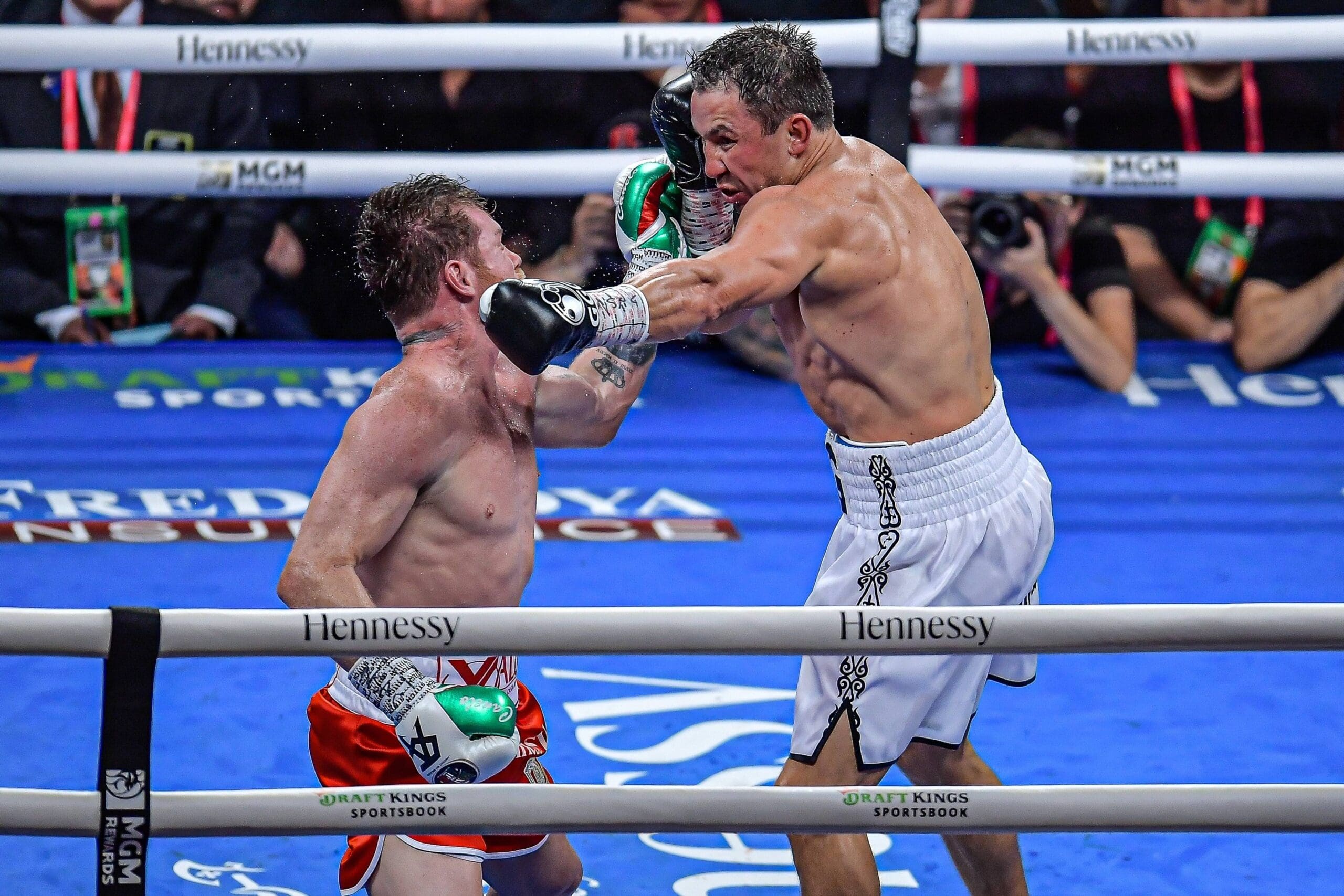
You’re ringside at Madison Square Garden. The crowd’s deafening. Canelo Alvarez and Gennady Golovkin are trading leather in the middle of the ring when—crack—GGG lands a flush left hook that echoes through the arena. Canelo’s head snaps. The crowd gasps.
Then Canelo grins and walks forward like nothing happened.
Sports scientists estimate a clean elite-level hook like that can generate around 4,000 Newtons of force—roughly in the same neighborhood as what your head experiences in a 30 mph car crash without restraints. The same impact that would send most New Yorkers to the ER with a traumatic brain injury just made one of boxing’s greatest fighters smile.
Welcome to the science behind what makes boxers truly built different.
The Physics of Punishment: What a Punch Really Is
Let’s talk numbers, because reality is more insane than you think.
An amateur boxer throws punches with roughly 2,500 Newtons of force—about 3.5 times their body weight if they’re a 70kg fighter. Solid, but we’re just getting started.
Elite professional heavyweights? We’re talking 4,000 to 6,000 Newtons. That translates to 450-1,400 pounds of peak force. In a landmark study on heavyweight champion Frank Bruno, researchers measured a single punch at 0.63 tons of force, generating 53 G’s of brain acceleration. To put that in perspective, that’s comparable to head forces in a 25-35 mph collision scenario.
Here’s where it gets wild: In a typical championship bout, a fighter absorbs 300 to 700 punches. That’s not 300 love taps—that’s hundreds of impacts in that same force range, delivered over 36 minutes.
And we’re just talking about one fight. Professional boxers accumulate thousands of these impacts across sparring sessions and fights throughout their careers. Research suggests that the majority of professional boxers—often estimated near 80-90%—suffer at least one concussion during their careers, and roughly one in five develop signs of chronic brain injury.
These aren’t just athletes. They’re walking crash tests who’ve learned to keep smiling.
The Iron Men of Madison Square Garden
New York has always been boxing’s spiritual home, and MSG—”The Mecca”—has hosted some of the toughest human beings ever to lace up gloves.
George Chuvalo fought 93 professional fights and was never knocked down. Not once. The Canadian warrior went toe-to-toe with Muhammad Ali twice, battled George Foreman and Joe Frazier, and despite losing many of those fights on the scorecards, he finished every single one on his feet. After their 1966 title fight at Maple Leaf Gardens, Ali said it best: “He’s the toughest guy I ever fought.”
Then there’s Jake LaMotta—The Bronx Bull himself. In 106 professional fights, LaMotta hit the canvas exactly one time. He fought Sugar Ray Robinson six times, and even the greatest pound-for-pound fighter in history couldn’t put Jake down. LaMotta made MSG his second home, personifying New York City toughness in the 1940s and 50s, absorbing punishment that would hospitalize ordinary men.
Marvelous Marvin Hagler took it to another level. The only time Hagler was “knocked down” in his entire career was what many still view as a bogus slip against Juan Roldan (Hagler got up and gave Roldan 68 stitches in return). He faced murderous punchers like Thomas Hearns and John Mugabi and never wavered. His battles at MSG defined an era of middleweight excellence.
What made these warriors different? Years of neck-strengthening exercises that reduced head snap. Technical mastery of “rolling with punches” to dissipate force. Progressive exposure that built neurological tolerance most humans will never develop.
That’s the difference between a body forged for impact and one built for office chairs and subway poles.
But here’s the sobering part: Even these iron-chinned legends paid the price. Ali’s Parkinsonism. Speech difficulties. Cognitive decline. Balance issues that emerged decades after their final bells.
The toughest men in boxing history absorbed that punishment—and it still caught up with them.
The Vulnerable Rest of Us: NYC’s Daily Reality
Now let’s zoom out from the romance of the ring to the reality of New York streets.
New York State statistics reveal traumatic brain injuries cause over 2,200 deaths, 17,000 hospitalizations, and 38,000 emergency room visits every single year. That’s 157 new brain injury incidents daily. Many of these come from “moderate” impacts at city speeds—20 to 35 mph collisions, hard braking incidents, rear-endings at intersections around venues like MSG and Barclays Center.
Here’s the difference that matters: Fighters spend years conditioning their bodies for known blows. They’re surrounded by doctors, neurologists, and commissions that mandate baseline brain scans, medical suspensions, and ringside physicians. They train defensive reflexes. They develop neck muscles that would make a linebacker jealous.
Everyday New Yorkers commuting to work? They have exactly zero preparation for impacts their bodies were never designed to manage. That single 30 mph crash generates forces that trained athletes spend entire careers learning to absorb—and even they don’t walk away unscathed.
From Ring to Real Life: A New York Lawyer’s View
Howard Raphaelson, a car accident attorney at Raphaelson & Levine Law Firm, sees this reality regularly:
“I’ve worked with countless New Yorkers who experienced impact forces similar to what boxers face in the ring—except they had no training, no protective reflex, and no medical team standing by. A rear-end collision at 30 mph can generate the same brain acceleration as a professional punch. The difference is, boxers are conditioned for it. Everyday New Yorkers aren’t. That’s why proper medical evaluation and legal representation after any significant impact is essential for protecting your future.“
As fight fans and brain injury lawyers, we understand the difference between fight-night toughness and long-term trauma, and we take both seriously.
Why “Walking It Off” Is Dangerous
Here’s where boxing teaches us a critical lesson; ironically, about when NOT to be tough.
Concussion and traumatic brain injury symptoms often appear hours or even days after impact: persistent headaches, mental fog, mood changes, sleep disruption, sensitivity to light and noise. Post-concussion syndrome affects 10-20% of people and can interfere with work and daily life for months. In the first year after a TBI, over 50% of patients experience major depression.
Think about this…
If Canelo Alvarez eats a hard shot and the Nevada State Athletic Commission forces him to sit out a month with medical monitoring, why would a Brooklyn office worker go right back to their desk the day after a 30 mph rear-ender?
Even trained fighters with world-class medical oversight pay long-term prices for head trauma. The rest of us should be more cautious, not less.
Respect the Warriors, Protect Everyone Else
Next time you’re ringside at Madison Square Garden or Barclays Center watching a championship fight, take a moment to appreciate what you’re really witnessing. You’re watching outliers. Physical specimens who’ve dedicated their lives to surviving forces that would destroy untrained bodies.
Canelo shrugging off that GGG hook isn’t just toughness. It’s years of neck strengthening, defensive training, neurological adaptation, and frankly, genetic lottery winnings that most of us will never possess.
We honor fighters by understanding the extraordinary trauma their bodies endure. What’s “one more round” for a conditioned athlete could be “one catastrophic, life-altering event” for everyone else.

Michael is an experienced writer and editor in sports media circles. As the founder and owner of Last Word On Sports INC, a partner at Sports Heroics, he brings a wealth of experience to the ownership group at Sports & Media Investors Group, LLC, which owns NYFights.com.